LIBER XII · CAPUT 9
TREES OF BACTRIANA, BDELLIUM, OR BROCHON, OTHERWISE MALACHA, OR MALDACON, SCORDASTUM. ADULTERATIONS USED IN ALL SPICES AND AROMATICS; THE VARIOUS TESTS OF THEM AND THEIR RESPECTIVE VALUES
Latine · Mayhoff 1906
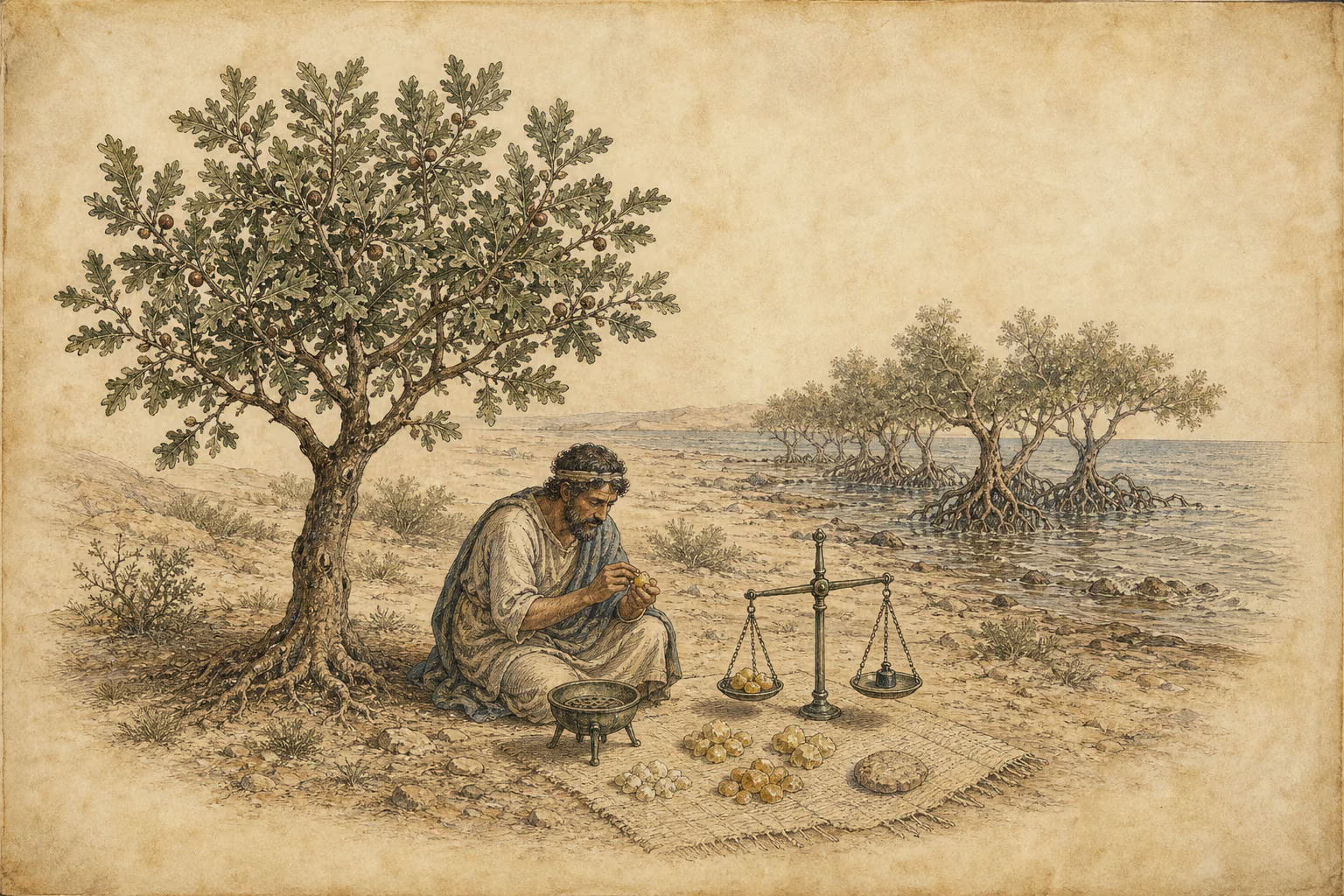
Vicina est Bactriana, in qua bdellium laudatissimum. arbor nigra, magnitudine oleae, folio roboris, fructu caprifici. ipsi natura quae cummi. alii brochon appellant, alii malacham, alii maldacon, nigrum vero et in offas convolutum hadrobolon. esse autem debet tralucidae simile cerae, odoratum et, cum frietur, pingue, gustu amarum citra acorem. in sacris vino perfusum odoratius. nascitur et in Arabia Indiaque et Media ac Babylone. aliqui peraticum vocant ex Media advectum. fragilius hoc et crustosius amariusque, at Indicum umidius et cumminosum. adulteratur amygdala nuce, cetera eius genera cortice et scordasti—ita vocatur arbor aemulo cummi —, sed deprehenduntur semel quod dixisse et in ceteros odores satis sit, odore, colore, pondere, gustu, igne. Bactrio nitor siccus multique candidi ungues, praeterea suum pondus, quo gravius esse aut levius non debeat. pretium sincero in libras $X$ III.
Gentes supra dictas Persis attingit. Rubro mari, quod ibi Persicum vocavimus, longe in terrain aestus agente, mira arborum natura. namque erosae sale, invectis derelictisque similes, sicco litore radicibus nudis polyporum modo amplexae steriles arenas spectantur. eaedem mari adveniente fluctibus pulsatae resistunt inmobiles; quin et pleno aestu operiuntur totae, adparetque rerum argumentis asperitate aquarum illas ali. magnitudo miranda est, species similis unedoni, pomum amygdalis extra, intus contortis nucleis.
English · Bostock & Riley 1855–57
In the vicinity, too, of India, is Bactriana, in which region we find bdellium, that is so highly esteemed. This tree is of a black colour, and about the size of the olive; it has leaves like those of the robur, and bears a fruit similar to that of the wild fig, and in nature resembling a kind of gum. This fruit is by some persons called brochon, by others malacha, and by others, again, maldacon. When of a black colour, and rolled up in cakes, it bears the name of hadrobolon. This substance ought to be transparent and the colour of wax, odoriferous, unctuous when subjected to friction, and bitter to the taste, though without the slightest acidity. When used for sacred purposes, it is steeped in wine, upon which it emits a still more powerful odour. The tree is a native of both India and Arabia, as well as Media and Babylon; some persons give to the bdellium that is imported by way of Media, the name of peraticum. This last is remarkable for its brittleness, while, at the same time, it is harder and more bitter than the other kinds; that of India, on the other hand, is moister, and gummy. This last sort is adulterated by means of almonds, while the various other kinds are falsified with the bark of scordastum, that being the name of a tree the gum of which strongly resembles bdellium. These adulterations, however, are to be detected—and let it suffice to mention it here, in relation to all other perfumes as well—by the smell, the colour, the weight, the taste, and the action of fire. The bdellium of Bactriana is shining and dry, and covered with numerous white spots resembling the finger-nails; besides which, it should be of a certain weight, heavier or lighter than which it ought not to be. The price of bdellium, in its pure state, is three denarii per pound.
Adjoining the countries which we have previously mentioned is Persis, lying along the shores of the Red Sea, which, when describing it, we have mentioned as the Persian Sea, the tides of which penetrate far into the land. The trees in these regions are of a marvellous nature; for, corroded by the action of the salt, and bearing a considerable resemblance to vegetable substances that have been thrown up and abandoned by the tide, they are seen to embrace the arid sands of the sea-shore with their naked roots, just like so many polypi. When the tide rises, buffeted by the waves, there they stand, fixed and immoveable; nay, more, at high water they are completely covered; a fact which proves to conviction, that they derive their nutriment from the salt contained in the water. The size of these trees is quite marvellous; in appearance they strongly resemble the arbute; the fruit, which on the outside is very similar to the almond, has a spiral kernel within.