LIBER XII · CAPUT 8
MACIR
Latine · Mayhoff 1906
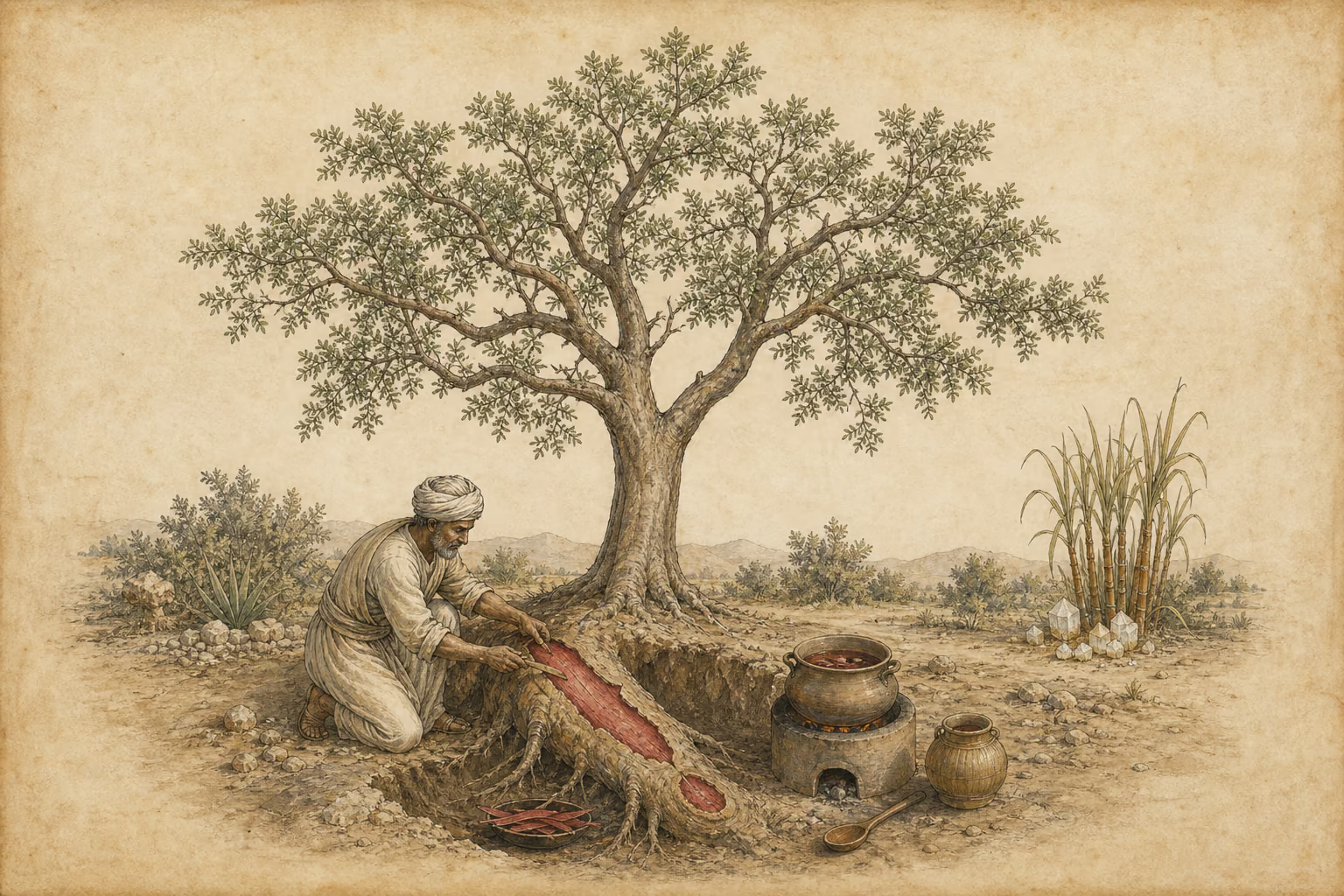
Et macir ex India advehitur, cortex rubens radicis magnae, nomine arboris suae. qualis sit ea incompertum habeo. corticis melle decocti usus in medicina ad dysintericos praecipuus habetur.
Saccaron et Arabia fert, sed laudatius India. est autem mel in harundinibus collectum, cummium modo candidum, dentibus fragile, amplissimum nucis abellanae magnitudine, ad medicinae tantum usum.
Contermina Indis gens Ariana appellatur, cui spina lacrima pretiosa murrae simili, difficili accessu propter aculeos adnexos. ibi et frutex pestilens,... raphani, folio lauri, odore equos invitans, qui paene equitatu orbavit Alexandrum primo introitu. quod et in Gedrosis accidit item laureo folio. et ibi spina tradita est, cuius liquor adspersus oculis caecitatem inferret omnibus animalibus, nec non et herba praecipui odoris, referta minutis serpentibus, quarum ictu protinus moriendum esset. Onesicritus tradit in Hyrcaniae convallibus fico similes esse arbores quae vocentur occhi, ex quibus defluat mel horis matutinis duabus.
English · Bostock & Riley 1855–57
Macir, too, is a vegetable substance that is brought from India, being a red bark that grows upon a large root, and bears the name of the tree that produces it; what the nature of this tree is, I have not been able to ascertain. A decoction of this bark, mixed with honey, is greatly employed in medicine, as a specific for dysentery.
Arabia, too, produces sugar; but that of India is the most esteemed. This substance is a kind of honey, which collects in reeds, white, like gum, and brittle to the teeth. The larger pieces are about the size of a filbert; it is only employed, however, in medicine.
On the frontiers of India is a country called Ariana, which produces a thorny shrub, rendered precious by the tears which it distils. It bears some resemblance to myrrh, but is very difficult of access, by reason of the thorns with which it is armed. Here, too, a poisonous shrub is found, with a root like the radish, and leaves like those of the laurel. By its powerful odour it attracts horses, and was very nearly depriving Alexander of all his cavalry upon his first arrival there, an accident which also happened in Gedrosia. A thorny shrub has been also spoken of as a native of the same country, with leaves like those of the laurel, the juice of which, if sprinkled upon the eyes, is productive of blindness in all animals. Another plant is also mentioned, with a most remarkable odour, and full of diminutive serpents, the sting of which is sure to cause instant death. Onesicritus states, that in the vallies of Hyrcania, there is a tree resembling the fig, and known as the occhus, from which a honey distils for two hours every morning.