LIBER XIII · CAPUT 13
THE BOOKS OF NUMA
Latine · Mayhoff 1906
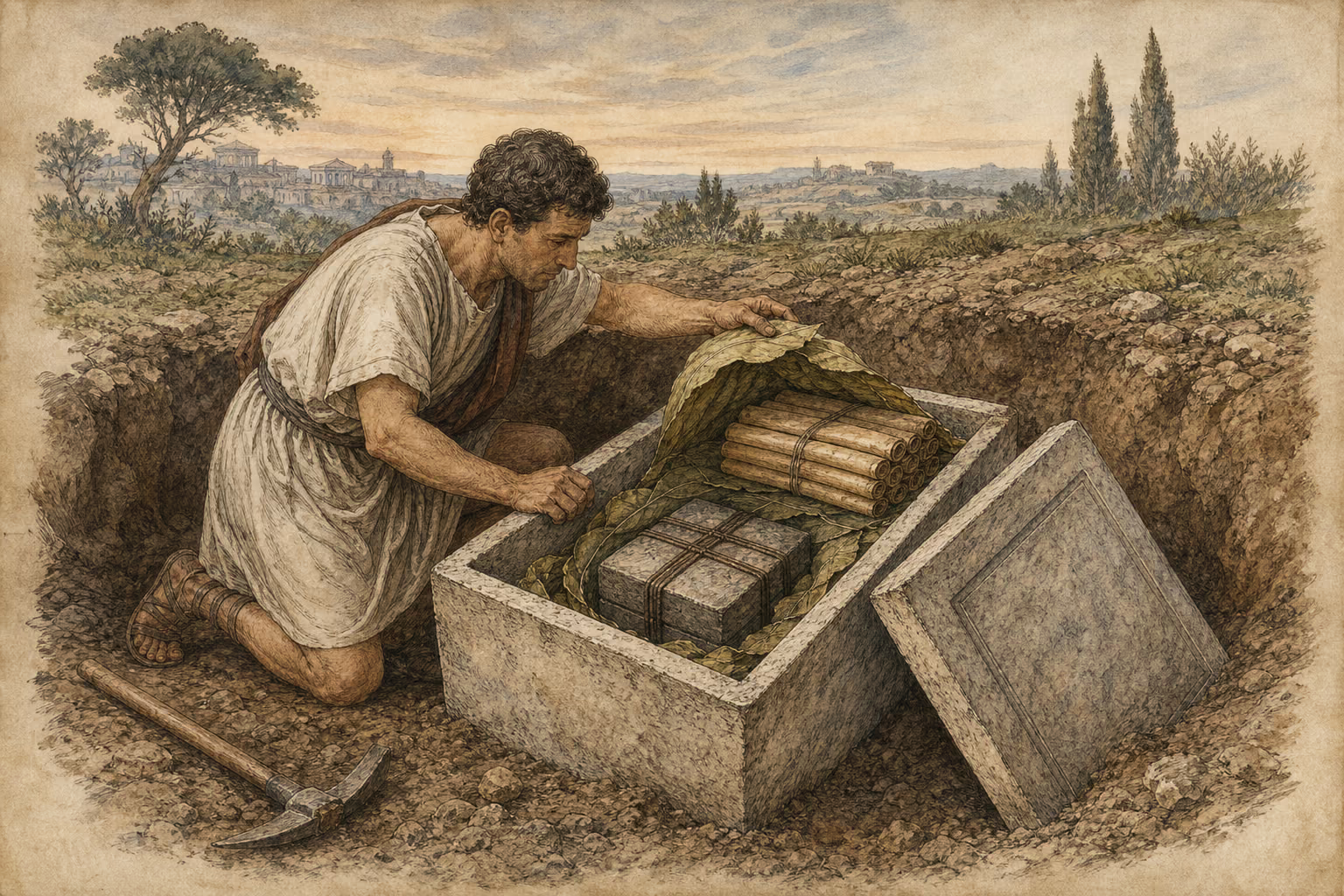
Ingentia exempla contra M. Varronis sententiam de chartis reperiuntur. namque Cassius Hemina, vetustissimus auctor annalium, quarto eorum libro prodidit Cn. Terentium scribam agrum suum in laniculo repastinantem effodisse arcam, in qua Numa, qui Romae regnavit, situs fuisset. in eadem libros eius repertos P. Cornelio L. filio Cethego, M. Baebio Q. filio Tamphilo cos., ad quos a regno Numae colliguntur anni DXXXV. hos fuisse e charta, maiore etiamnum miraculo, quod infossi duraverint — quapropter in re tanta ipsius Heminae verba ponam: Mirabantur alii, quomodo illi libri durare possent; ille ita rationem reddebat: lapidem fuisse quadratum circiter in media area evinctum candelis quoquoversus. in eo lapide insuper libros III sitos fuisse; propterea arbitrarier non computuisse. et libros citratos fuisse; propterea arbitrarier tineas non tetigisse. in iis libris scripta erant philosophiae Pythagoricae — eosque combustos a Q. Petilio praetore, quia philosophiae scripta essent. hoc idem tradit Piso censorius primo commentariorum, sed libros septem iuris pontificii, totidem Pythagoricos fuisse; Tuditanus tertio decimo Numae decretorum fuisse fuisse XII pontificales Latinos, totidem Graecos praecepta philosophiae continentes; idem tertio et SC. ponit quo comburi eos placuerit. inter omnes vero convenit Sibyllam ad Tarquinium Superbum tres libros adtulisse, ex quibus sint duo cremati ab ipsa, tertius cum Capitolio Sullanis temporibus. praeterea Mucianus ter cos. prodidit nuper se legisse, cum praesideret Lyciae, Sarpedonis ab Troia scriptam in quodam templo epistulae chartam, quod eo magis miror, si etiamnum Homero condente Aegyptus non erat. aut cur, si iam hic erat usus, in plumbeis linteisque voluminibus scriptitatum constet, curve Homerus in illa ipsa Lycia Bellerophonti codicillos datos, non epistulas, tradiderit? sterilitatem sentit hoc quoque, factumque iam Tiberio principe inopia chartae ut e senatu darentur arbitri dispensandis; alias in tumultu vita erat.
English · Bostock & Riley 1855–57
There are some facts of considerable importance which make against the opinion expressed by M. Varro, relative to the invention of paper. Cassius Hemina, a writer of very great antiquity, has stated in the Fourth Book of his Annals, that Cneius Terentius, the scribe, while engaged in digging on his land in the Janiculum, came to a coffer, in which Numa had been buried, the former king of Rome, and that in this coffer were also found some books of his. This took place in the consulship of Publius Cornelius Cethegus, the son of Lucius, and of M. Bæbius Tamphilus, the son of Quintus, the interval between whose consulship and the reign of Numa was five hundred and thirty-five years. These books were made of paper, and, a thing that is more remarkable still, is the fact that they lasted so many years buried in the ground. In order, therefore, to establish a fact of such singular importance, I shall here quote the words of Hemina himself—“Some persons expressed wonder how these books could have possibly lasted so long a time—this was the explanation that Terentius gave: ‘In nearly the middle of the coffer there lay a square stone, bound on every side with cords enveloped in wax; upon this stone the books had been placed, and it was through this precaution, he thought, that they had not rotted. The books, too, were carefully covered with citrus leaves, and it was through this, in his belief, that they had been protected from the attacks of worms.’ In these books were written certain doctrines relative to the Pythagorean philosophy; they were burnt by Q. Petilius, the prætor, because they treated of philosophical subjects.”
Piso, who had formerly been censor, relates the same facts in the First Book of his Commentaries, but he states in addition, that there were seven books on Pontifical Rights, and seven on the Pythagorean philosophy. Tuditanus, in his Fourteenth Book, says that they contained the decrees of Numa: Varro, in the Seventh Book of his “Antiquities of Mankind,” states that they were twelve in number; and Antias, in his Second Book, says that there were twelve written in Latin, on pontifical matters, and as many in Greek, containing philosophical precepts. The same author states also in his Third Book why it was thought proper to burn them.
It is a fact acknowledged by all writers, that the Sibyl brought three books to Tarquinius Superbus, of which two were burnt by herself, while the third perished by fire with the Capitol in the days of Sylla. In addition to these facts, Mucianus, who was three times consul, has stated that he had recently read, while governor of Lycia, a letter written upon paper, and preserved in a certain temple there, which had been written from Troy, by Sarpedon; a thing that surprises me the more, if it really was the fact that even in the time of Homer the country that we call Egypt was not in existence. And why too, if paper was then in use, was it the custom, as it is very well known it was, to write upon leaden tablets and linen cloths? Why, too, has Homer stated that in Lycia tablets were given to Bellerophon to carry, and not a paper letter?
Papyrus, for making paper, is apt to fail occasionally; such a thing happened in the time of the Emperor Tiberius, when there was so great a scarcity of paper that members of the senate were appointed to regulate the distribution of it: had not this been done, all the ordinary relations of life would have been completely disarranged.