LIBER XIII · CAPUT 19
THE TREES OF CYRENAICA. THE PALIURUS
Latine · Mayhoff 1906
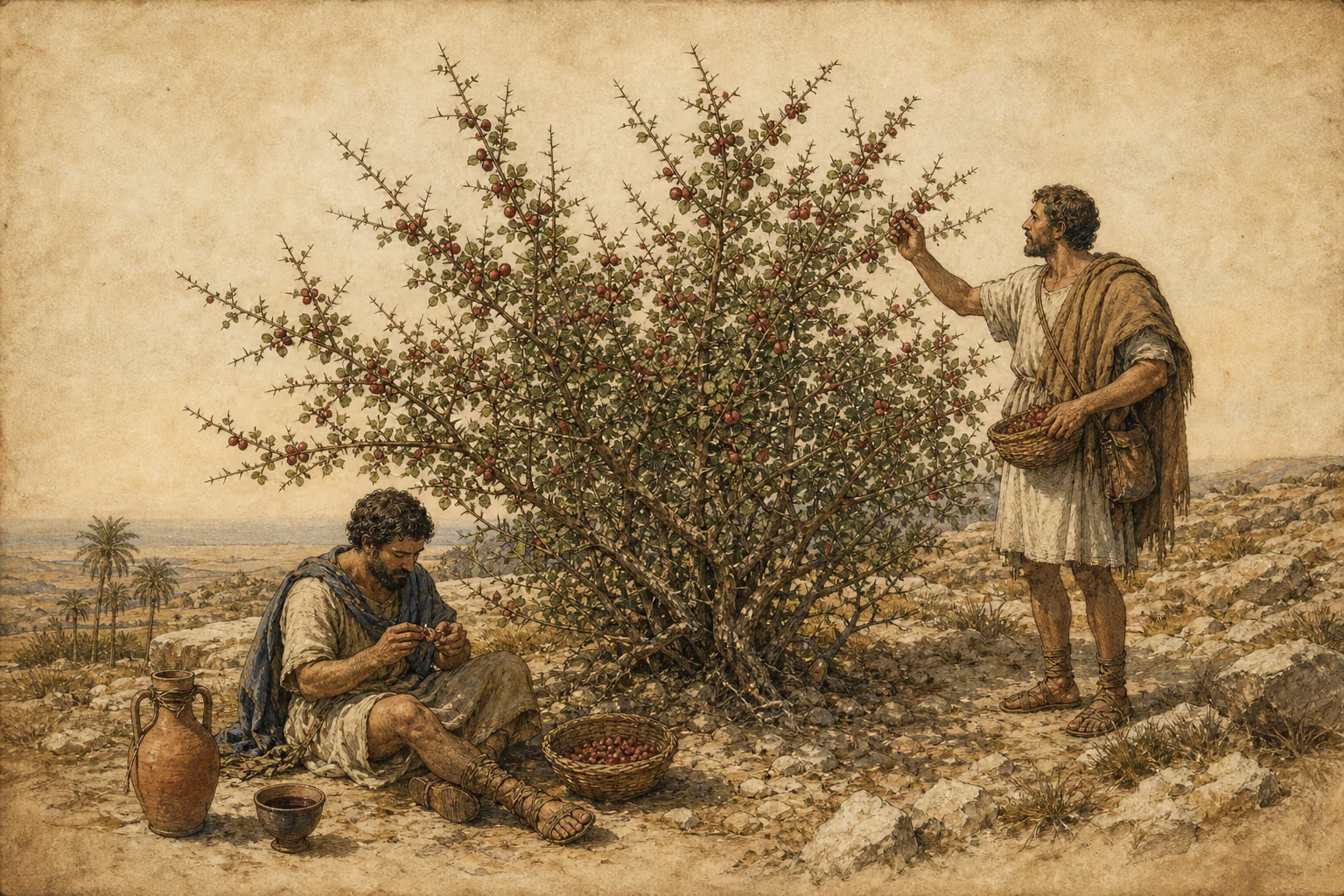
Cyrenaica regio loton auae postponit paliuro. fruticosior haec fructuque magis rubens, cuius nucleus non simul mandatur; iucundus per se ac suavior e vino, quin et vina suco suo commendans. interior Africa ad Garamantas usque et deserta palmarum magnitudine et suavitate constat, nobilibus maxime circa delubrum Hammonis, sed circa Carthaginem Punicum malum cognomine sibi vindicat; aliqui granatum appellant. divisit et in genera apyrenum vocando cui lignosus nucleus abesset; candidior ei natura et blandiores acini minusque amaris distincti membranis. alias structura eorum quaedam ut in favis, communis nucleos habentium. horum quinque species:dulcia, acria, mixta, acida, vinosa. Samia et Aegyptia distinguntur erythrocomis et leucocomis. corticis maior usus ex acerbis ad perficienda coria. flos balaustium vocatur, et medicis idoneus et tinguendis vestibus, quarum color inde nomen accepit.
English · Bostock & Riley 1855–57
The region of Cyrenaica places before the lotus its paliurus, which is more like a shrub in character, and bears a fruit of a redder colour. This fruit contains a nut, the kernel of which is eaten by itself, and is of a very agreeable flavour. The taste of it is improved by wine, and, in fact, the juices are thought to be an improvement to wine. The interior of Africa, as far as the Garamantes and the deserts, is covered with palms, remarkable for their extraordinary size and the lusciousness of their fruit. The most celebrated are those in the vicinity of the Temple of Jupiter Hammon.
But the vicinity of Carthage is claimed more particularly as its own by the fruit the name of which is the “Punic apple;” though by some it is called “granatum.” This fruit has been distinguished into a variety of kinds; the name of “apyrenum” being given to the one which has no woody seeds inside, but is naturally whiter than the others, the pips being of a more agreeable flavour, and the membranes by which they are separated not so bitter. Their conformation in other respects, which is very similar to the partitions of the cells in the honeycomb, is much the same in all. Of those that have a kernel there are five kinds, the sweet, the acrid, the mixed, the acid, and the vinous: those of Samos and Egypt are distinguished into those with red, and those with white foliage. The skin, while the fruit is yet sour, is held in high esteem for tanning leather. The flower of this tree is known by the name of “balaustium,” and is very useful for medicinal purposes; also for dyeing cloths a colour which from it has derived its name.