LIBER XIII · CAPUT 21
THE TRAGION: TRAGACANTHE
Latine · Mayhoff 1906
et in quo nascitur granum Cnidium, quod aliqui linum vocant, fruticem vero thymelaean, alii chamelaean, alii pyros achnen, aliqui cnestorem, alii cneorum. est similis oleastro, foliis angustioribus, cumminosis, si mordeantur, myrti magnitudine. semen colore et specie farris, ad medicinae tantum usum.
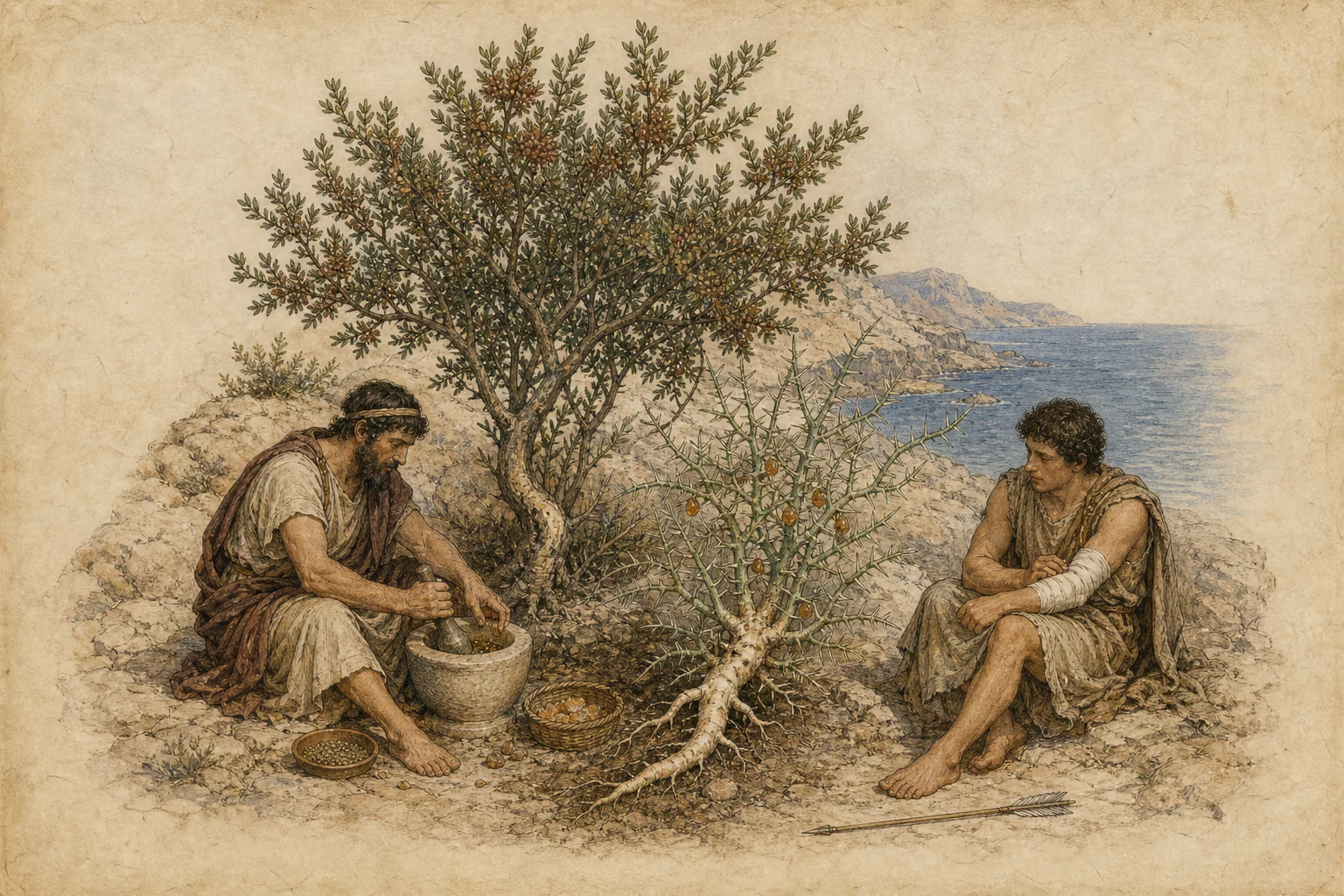
Tragion fruticem sola Creta insula gignit, terebintho similem et semine, quod contra sagittarum ictus efficacissimum tradunt. eadem et tragacantham spinae albae radice, multum praelatam apud Medos aut in Achaia nascenti. pretium eius in libras $X$ III.
Tragon et Asia fert sive scorpionem, veprem sine foliis, racemis rubentibus, ad medicinae usum. myricen et Italia, quam tamaricen vocat, Achaia autem bryan silvestrem. insigne in ea quod sativa tantum fert gallae similem fructum. in Syria et Aegypto copiosa haec est, cuius infelicia ligna appellamus, qua tamen in: eliciora sunt Graeciae. gignit enim arborem ostryn, quam et ostryam vocant, solitariam circa saxa aquosa, similem fraxino cortice et ramis, folio piris, paulo tamen longioribus crassioribusque ac rugosis incisuris, quae per tota discurrunt, semine hordeo simili et colore. materies est dura atque firma, qua in domum inlata difficiles 5 partus fieri produnt mortesque miseras.
English · Bostock & Riley 1855–57
Here is also found another shrub, upon which grows the grain of Cnidos, by some known as “linum;” the name of the shrub itself being thymelæa, while others, again, call it “chamelæa”, others pyrosachne, others cnestron, and others cneorum; it bears a strong resemblance to the wild olive, but has a narrow leaf, which has a gummy taste in the mouth. The shrub is of about the size of the myrtle; its seed is of the same colour and appearance, but is solely used for medicinal purposes.
The island of Crete is the only place that produces the shrub called “tragion.” It is similar in appearance to the terebinth; a similarity which extends to the seed even, said to be remarkably efficacious for healing wounds made by arrows. The same island produces tragacanthe also, with a root which resembles that of the white thorn; it is very much preferred to that which is grown in Media or in Achaia; the price at which it sells is three denarii per pound.
Asia, too, produces the tragos or scorpio, a thorny shrub, destitute of leaves, with red clusters upon it that are employed in medicine. Italy produces the myrica, which some persons call the “tamarix;” and Achaia, the wild brya, remarkable for the circumstance that it is only the cultivated kind that bears a fruit, not unlike the gall-nut. In Syria and Egypt this plant is very abundant. It is to the trees of this last country that we give the name of “unhappy;” but yet those of Greece are more unhappy still, for that country produces the tree known as “ostrys,” or, as it is sometimes called, “ostrya,” a solitary tree that grows about rocks washed by the water, and very similar in the bark and branches to the ash. It resembles the pear-tree in its leaves, which, however, are a little longer and thicker, with wrinkled indentations running down the whole length of the leaf. The seed of this tree resembles barley in form and colour. The wood is hard and solid; it is said, that if it is introduced into a house, it is productive of painful deliveries and of shocking deaths.