LIBER XIV · CAPUT 13
WINES DRUNK BY THE ANCIENT ROMANS
Latine · Mayhoff 1906
non licebat id feminis Romae bibere. invenimus inter exempla Egnati Maetenni uxorem, quod vinum bibisset e dolio, interfectam fusti a marito, eumque caedis a Romulo absolutum. Fabius Pictor in annalibus suis scripsit matronam, quod loculos in quibus erant claves cellae vinariae resignavisset, a suis inedia mori coactam, Cato ideo propinquos feminis osculum dare, ut scirent an temetum olerent. hoc tum nomen vino erat, unde et temulentia appellata. Cn. Domitius iudex pronuntiavit mulierem videri plus vini bibisse quam valitudinis causa, viro insciente, et dote multavit. diuque eius rei magna parsimonia fuit. L. Papirius imperator adversus Samnites dimicaturus votum fecit, si vicisset, Iovi pocillum vini. denique inter dona sextarios datos lactis invenimus, nusquam vini. idem Cato cum in Hispaniam navigasset, unde cum triumpho rediit: Non aliud vinum, inquit, bibi quam remiges, in tantum dissimilis istis qui etiam convivis alia quam sibimet ipsis ministrant aut procedente mensa subiciunt.
Lautissima apud priscos vina erant murrae odore condita, ut apparet in Plauti fabulis, quamquam in ea quae Persa inscribitur et calamum addi iubet. ideo quidam aromatite delectatos maxime credunt. sed Fabius Dossennus his versibus decernit: Mittebam vinum pulchrum, murrinam, et in Acharistione: Panem et polentam, vinum murrinam.Scaevolam quoque et L. Aelium et Ateium Capitonem in eadem sententia fuisse video, quoniam in Pseudolo sit: Quod si opus est, ut dulce promat indidem,ecquid habet? —Rogas?Murrinam, passum, defrutum, mella, quibus apparent non inter vina modo murrinam, sed inter dulcia quoque nominatum.
English · Bostock & Riley 1855–57
At Rome it was not lawful for women to drink wine. Among the various anecdotes connected with this subject, we find that the wife of Egnatius Mecenius was slain by her husband with a stick, because she had drunk some wine from the vat, and that he was absolved from the murder by Romulus. Fabius Pictor, in his Book of Annals, has stated that a certain lady, for having opened a purse in which the keys of the wine-cellar were kept, was starved to death by her family: and Cato tells us, that it was the usage for the male relatives to give the females a kiss, in order to ascertain whether they smelt of “temetum;” for it was by that name that wine was then known, whence our word “temulentia,” signifying drunkenness. Cn. Domitius, the judge, once gave it as his opinion, that a certain woman appeared to him to have drunk more wine than was requisite for her health, and without the knowledge of her husband, for which reason he condemned her to lose her dower. For a very long time there was the greatest economy manifested at Rome in the use of this article. L. Papirius, the general, who, on one occasion, commanded against the Samnites, when about to engage, vowed an offering to Jupiter of a small cupfull of wine, if he should gain the victory. In fact, among the gifts presented to the gods, we find mention made of offerings of sextarii of milk, but never of wine.
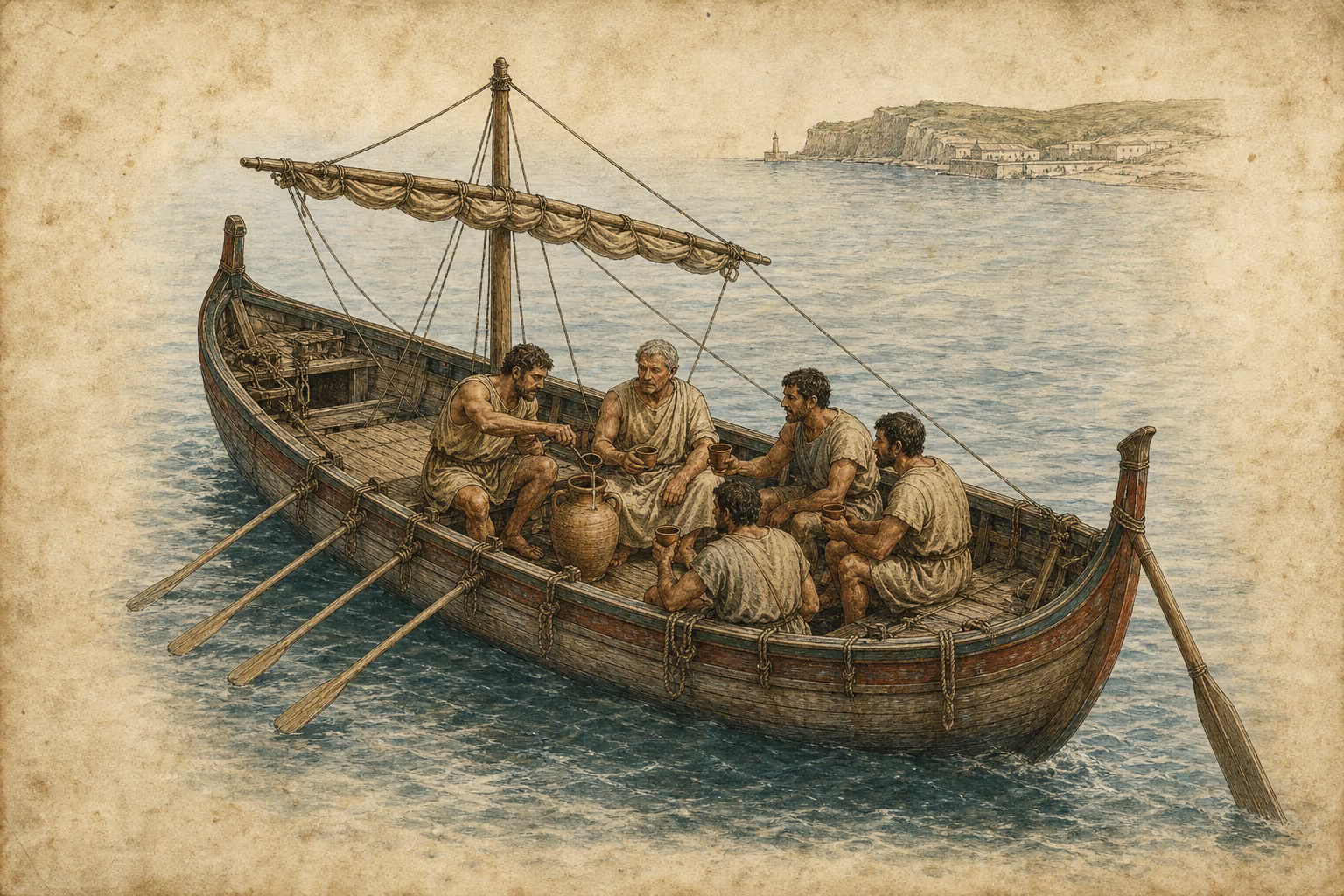
The same Cato, while on his voyage to Spain, from which he afterwards returned triumphant, would drink of no other wine but that which was served out to the rowers—very different, indeed, to the conduct of those who are in the habit of giving to their guests even inferior wine to that which they drink themselves, or else contrive to substitute inferior in the course of the repast.
The wines that were the most esteemed among the ancient Romans were those perfumed with myrrh, as mentioned in the play of Plautus, entitled the “Persian,” though we find it there stated that calamus ought to be added to it. Hence it is, that some persons are of opinion that they were particularly fond of aromatites: but Fabius Dossennus quite decides the question, in the following line:—“I sent them good wine, myrrh-wine;” and in his play called “Acharistio,” we find these words—“Bread and pearled barley, myrrh-wine too.” I find, too, that Scævola and L. Ælius, and Ateius Capito, were of the same opinion; and then we read in the play known as the “Pseudolus:” —“But if it is requisite for him to draw forth what is sweet from the place, has he aught of that?” to which Charinus makes answer, “Do you ask the question? He has myrrh wine, raisin wine, defrutum, and honey;” from which it would appear that myrrh wine was not only reckoned among the wines, but among the sweet wines too.