LIBER XIV · CAPUT 14
SOME REMARKABLE FACTS CONNECTED WITH WINE-LOFTS. THE OPIMIAN WINE
Latine · Mayhoff 1906
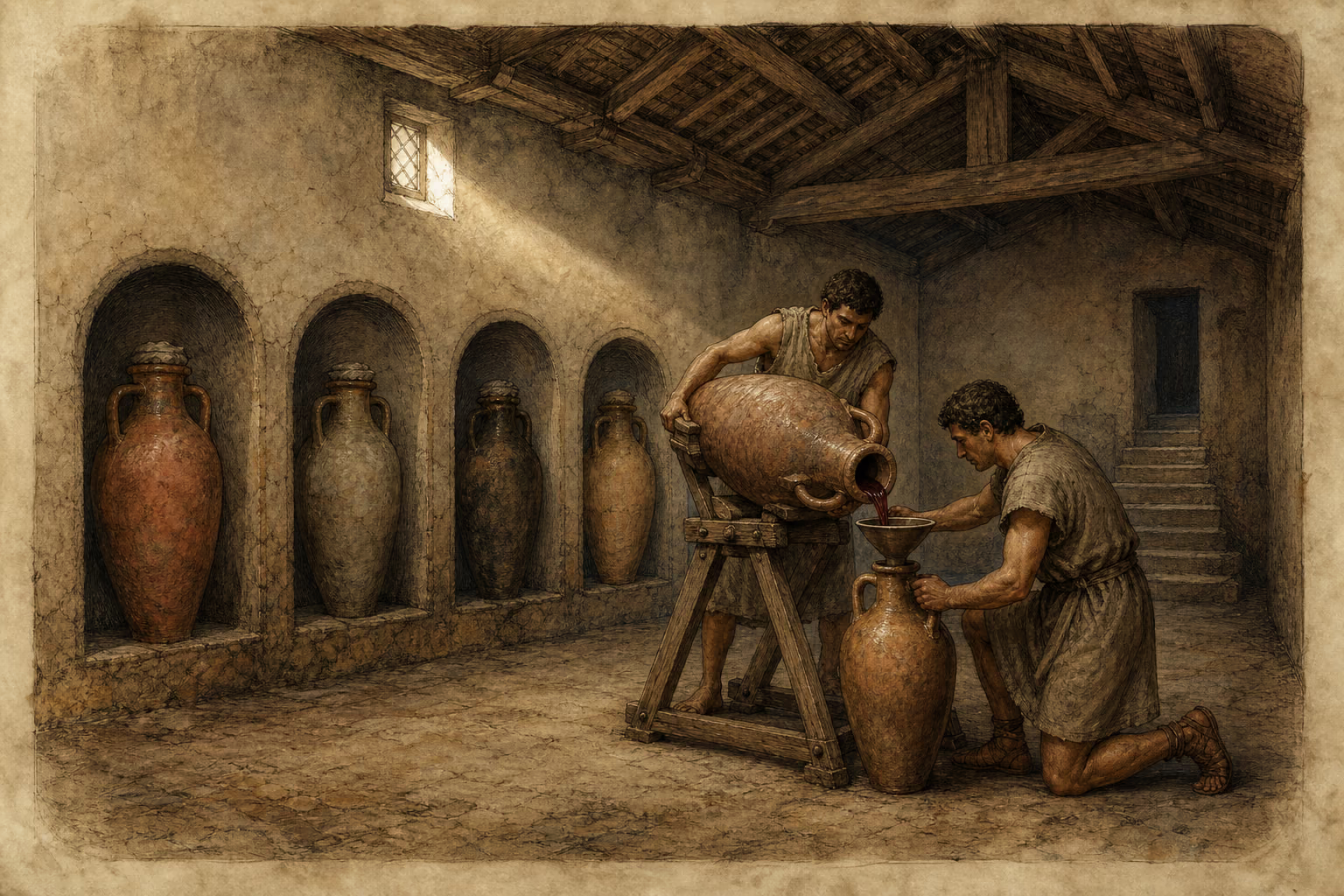
Apothecas fuisse et diffundi solita vina anno DCXXXIII urbis apparet indubitato Opimiani vini argumento. iam intellegentis suum bonum Italiae nondum tamen ista genera in claritate erant; itaque omnia tune genita unum habent consulis nomen. sic quoque postea diu transmarina in auctoritate fuerunt et ad avos usque nostros, quin et Falerno iam reperto, sicut apparet ex illo comico versu: Quinque Thasi vini depromam, bina Falerni. P. Licinius Crassus L. Iulius Caesar censores anno urbis conditae DCLXV edixerunt, ne quis vinum Graecum, Aminniumque octonis aeris singula quadrantalia venderet. haec enim verba sunt. tanta vero Graeco vino gratia erat, ut singulae potiones in convictu darentur. quibus vinis auctoritas fuerit sua iuventa, M. Varro his verbis tradit: L. Lucullus puer apud patrem numquam lautum convivium vidit, in quo plus semel Graecum vinum daretur: ipse cum rediit ex Asia, milia cadum congiarium divisit amplius centum. C. Sentius, quem praetorem vidimus, Chium vinum suam domum inlatum dicebat tum primum, cum sibi cardiaco medicus dedisset: Hortensius super X cadum heredi reliquit. hactenus Varro.
English · Bostock & Riley 1855–57
The fact of the existence of the Opimian wine gives undoubted proof that there were wine-lofts, and that wine was racked off in the year of Rome 633, Italy being already alive to the blessings she enjoyed. Still, however, the several varieties that are now so celebrated were not so in those days; and hence it is that all the wines that were grown at that period have only the one general name of “Opimian” wines, from the then consul Opimius. So, too, for a long time afterwards, and, indeed, so late as the times of our grandfathers, the wines from beyond sea were held in the highest esteem, even though Falernian was already known, a fact which we learn from the line of the Comic writer, “I shall draw five cups of Thasian and two of Falernian.”
P. Licinius Crassus, and L. Julius Cæsar, who were Censors in the year from the Building of the City 665, issued an edict forbidding the sale of either Greek or Aminean wine at a higher price than eight asses the quadrantal —for such, in fact, are the exact words of the edict. Indeed, the Greek wines were so highly valued, that not more than a single cup was served to a guest during the repast.
M. Varro gives us the following statement as to the wines that were held in the highest esteem at table in his day: “L. Lucullus, when a boy, never saw an entertainment at his father’s house, however sumptuous it might be, at which Greek wine was handed round more than once during the repast: whereas he himself, when he returned from Asia, distributed as a largess among the people more than a hundred thousand congiaria of the same wine. C. Sentius, whom we have seen Prætor, used to say that Chian wine never entered his house until his physician prescribed it to him for the cardiac disease. On the other hand, Hortensius left ten thousand casks of it to his heir.” Such is the statement made by Varro.