LIBER XIV · CAPUT 18
TWELVE KINDS OF WINE WITH MIRACULOUS PROPERTIES
Latine · Mayhoff 1906
Sunt et in vino prodigia. dicitur in Arcadia fieri quod fecunditatem feminis inportet, viris rabiem, at in Achaia maxime circa Ceryniam abigi partum vino atque etiam si uvam edant gravidae, cum differentia in gustatu non sit. Troezenium vinum qui bibant negantur generare. Thasios duo genera vini diversa facere proditur, quo somnus concilietur, alterum vero quo fugetur. apud eosdem vitis theriaca vocatur, cuius et vinum et uva contra serpentium ictus medetur; libanodes turis odore, ex qua diis prolibant. e diverso aspendios damnata aris; ferunt eam nec ab alite ulla attingi. Thasiam uvam Aegyptus vocat apud se praedulcem, quae solvit alvum; est contra Lycia, quae solutam firmat. Aegyptus et ecbolada habet abortus facientem. vina in apothecis canis ortu mutantur quaedam posteaque restituuntur sibi. sic et mari navigate, cuius iactatus iis quae duraverint tantum vetustatis adicere sentitur, quantum habuerint.
English · Bostock & Riley 1855–57
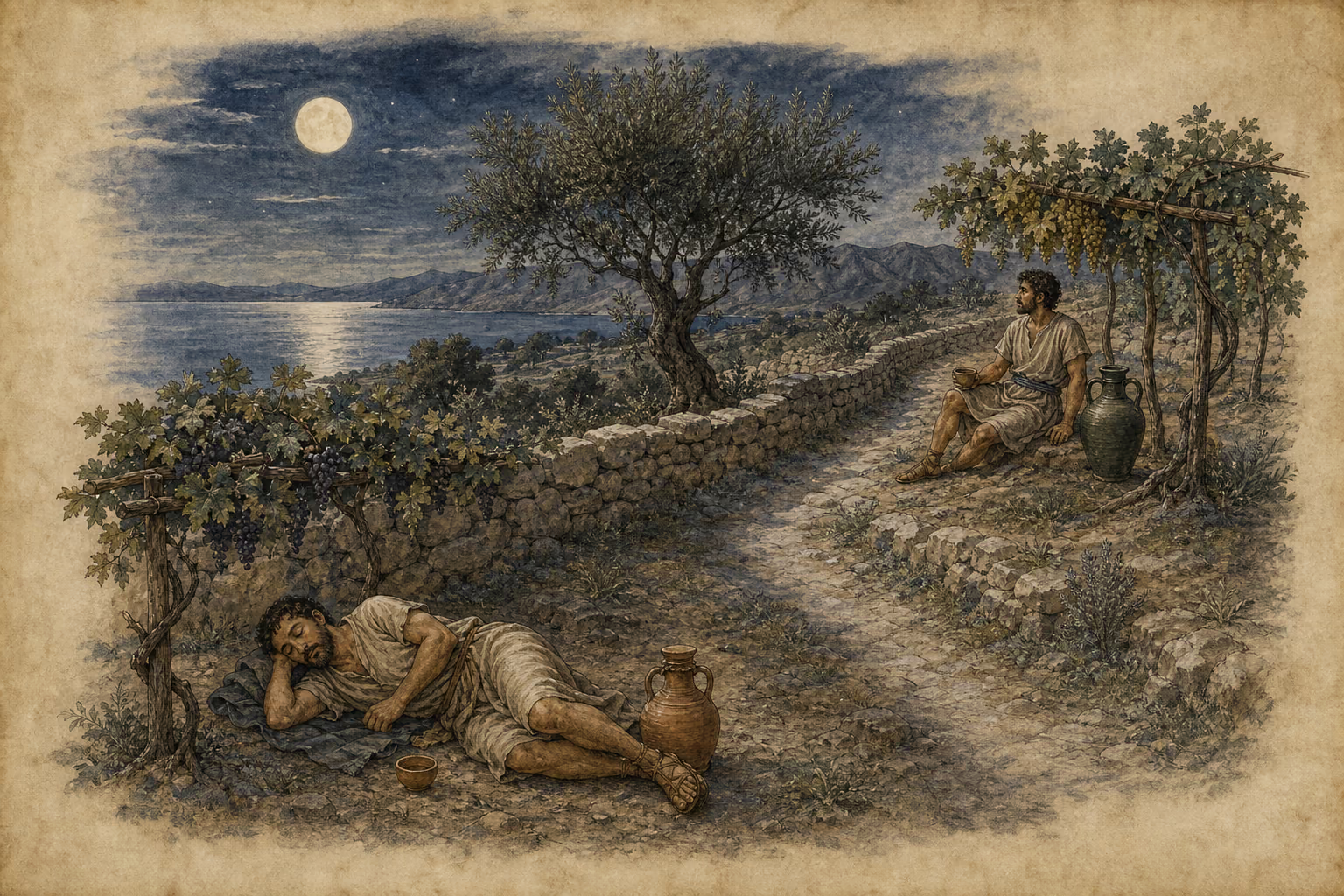
There are some miraculous properties, too, in certain wines. It is said that in Arcadia there is a wine grown which is productive of fruitfulness in women, and of madness in men; while in Achaia, and more especially in the vicinity of Carynia, there is a wine which causes abortion; an effect which is equally produced if a woman in a state of pregnancy happens only to eat a grape of the vine from which it is grown, although in taste it is in no way different from ordinary grapes: again, it is confidently asserted that those who drink the wine of Trœzen never bear children. Thasos, it is said, produces two varieties of wine with quite opposite properties. By one kind sleep is produced, by the other it is prevented. There is also in the same island a vine known as the “theriaca,” the wine and grapes of which are a cure for the bites of serpents. The libanian vine also produces a wine with the smell of frankincense, with which they make libations to the gods, while, on the other hand, the produce of that known as “aspendios,” is banished from all the altars: it is said, too, that this last vine is never touched by any bird.
The Egyptians call by the name of “Thasian,” a certain grape of that country, remarkable for its sweetness and its laxative qualities. On the other hand, there is in Lycia a certain grape which proves astringent to the stomach when relaxed. Egypt has a wine, too, known as “ecbolas,” which is productive of abortion. There are some wines, which at the rising of the Dog-star change their nature in the wine-lofts where they are kept, and afterwards recover their original quality. The same is the case, too, with wines when carried across the seas: those that are able to withstand the motion of the waves, appear afterwards to be twice as old as they really are.