LIBER XIV · CAPUT 19
WHAT WINES IT IS NOT LAWFUL TO USE IN THE SACRED RITES
Latine · Mayhoff 1906
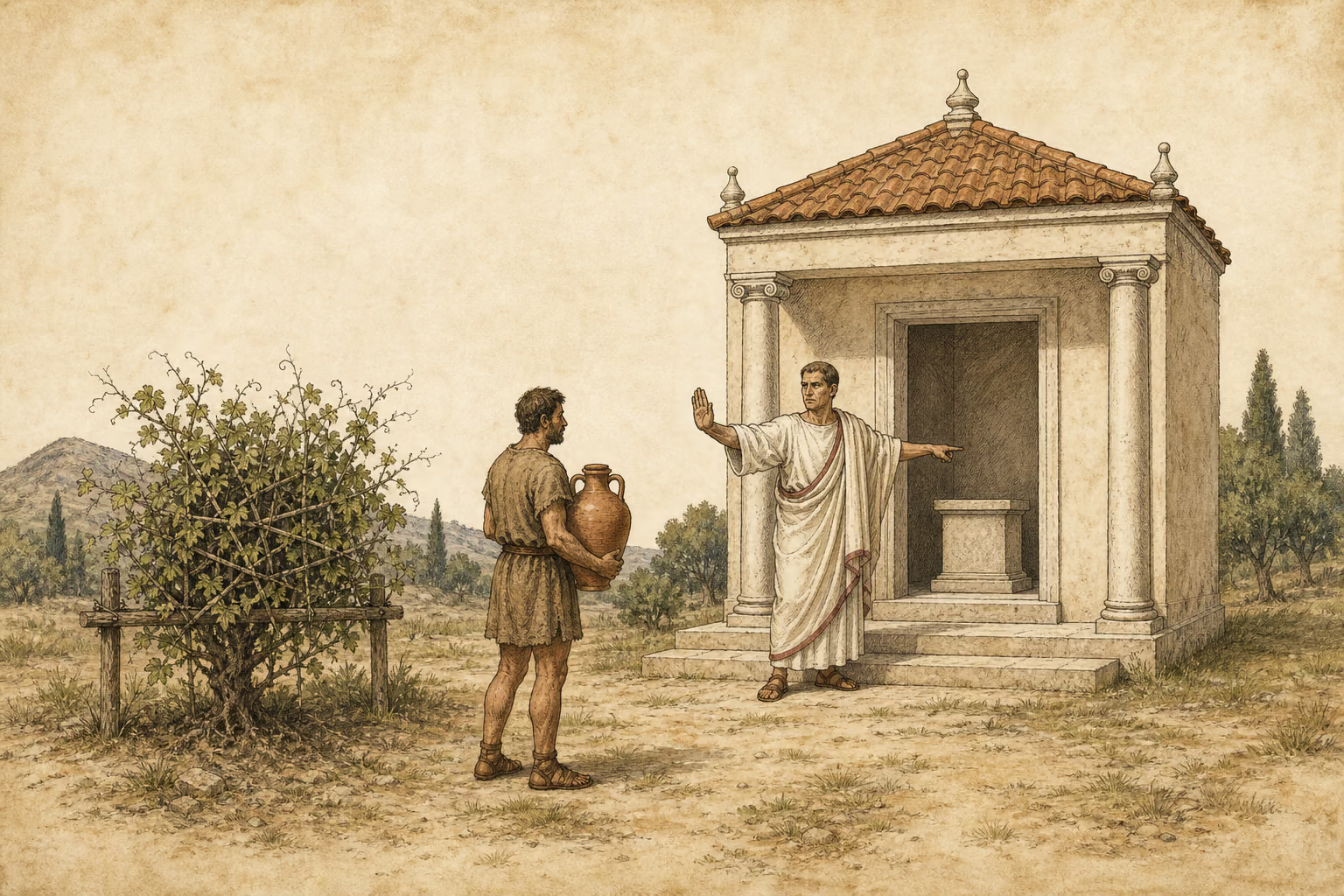
Et quoniam religione vita constat, prolibare diis nefastum habetur vina — praeter inputatae — vitis ss fulmine tactae quamque iuxta hominis mors laqueo pependerit aut vulneratis pedibus calcatae, et quod circumcisis vinaceis profluxerit, aut superne deciduo inmundiore lapsu aliqud polluta, item Graeca, quoniam aquam habeant.— Vitis ipsa quoque manditur decoctis caulibus summis, qui et condiuntur in aceto ac muria.
Verum et de apparatu vini dixisse conveniat, cum Graeci privatim ea praecepta condiderint artemque fecerint, sicut Euphronius et Aristomachus et Commiades et Hicesius. Africa gypso mitigat asperitatem nec non aliquibus partibus sui calce. Graecia argilla aut marmore aut sale aut mari lenitatem excitat, Italiae pars aliqua crapulana pice, ac resina condire musta volgare ei est provinciisque finitimis. nonnusquam prioris vini faece acetove condiunt. nec non et ex ipso musto fiunt medicamina. decoquitur ut dulcescat portione virium, nec durare ultra annuum spatium tale proditur. aliquibus in locis decocunt ad sapas musta infusisque iis ferociam frangunt. et in hoc tamen genere et in omni alio subministrant vasa ipsa condimentis picis, cuius faciendae ratio proximo dicetur volumine.
English · Bostock & Riley 1855–57
As religion is the great basis of the ordinary usages of life, I shall here remark that it is considered improper to offer libations to the gods with any wines which are the produce of an unpruned vine, or of one that has been struck by lightning, or near to which a dead man has been hung, or of grapes that have been trodden out by sore feet, or made of must from husks that have been cut, or from grapes that have been polluted by the fall of any unclean thing upon them. The Greek wines are excluded also from the sacred ministrations, because they contain a portion of water.
The vine itself is sometimes eaten; the tops of the shoots are taken off and boiled, and are then pickled in vinegar and brine.
It will be as well now to make some mention of the methods used in preparing wines; indeed, several of the Greeks have written separate treatises on this subject, and have made a complete art of it, such, for instance, as Euphronius, Aristomachus, Commiades, and Hicesius. The people of Africa are in the habit of neutralizing such acidity as may be found with gypsum, and in some parts with lime. The people of Greece, on the other hand, impart briskness to their wines when too flat, with potters’ earth, pounded marble, salt, or sea-water; while in Italy, again, brown pitch is used for that purpose in some parts, and it is the universal practice both there as well as in the adjoining provinces to season their new wines with resin: sometimes, too, they season them with old wine-lees or vinegar. They make various medicaments, also, for this purpose with the must itself. They boil it down till it becomes quite sweet, and has lost a considerable portion of its strength; though thus prepared, they say it will never last beyond a single year. In some places they boil down the must till it becomes sapa, and then mix it with their wines for the purpose of modifying their harshness. Both for these kinds of wines, as, indeed, all others, they always employ vessels which have themselves received an inner coat of pitch; the method of preparing them will be set forth in a succeeding Book.