LIBER XIV · CAPUT 20
PITCH AND RESIN
Latine · Mayhoff 1906
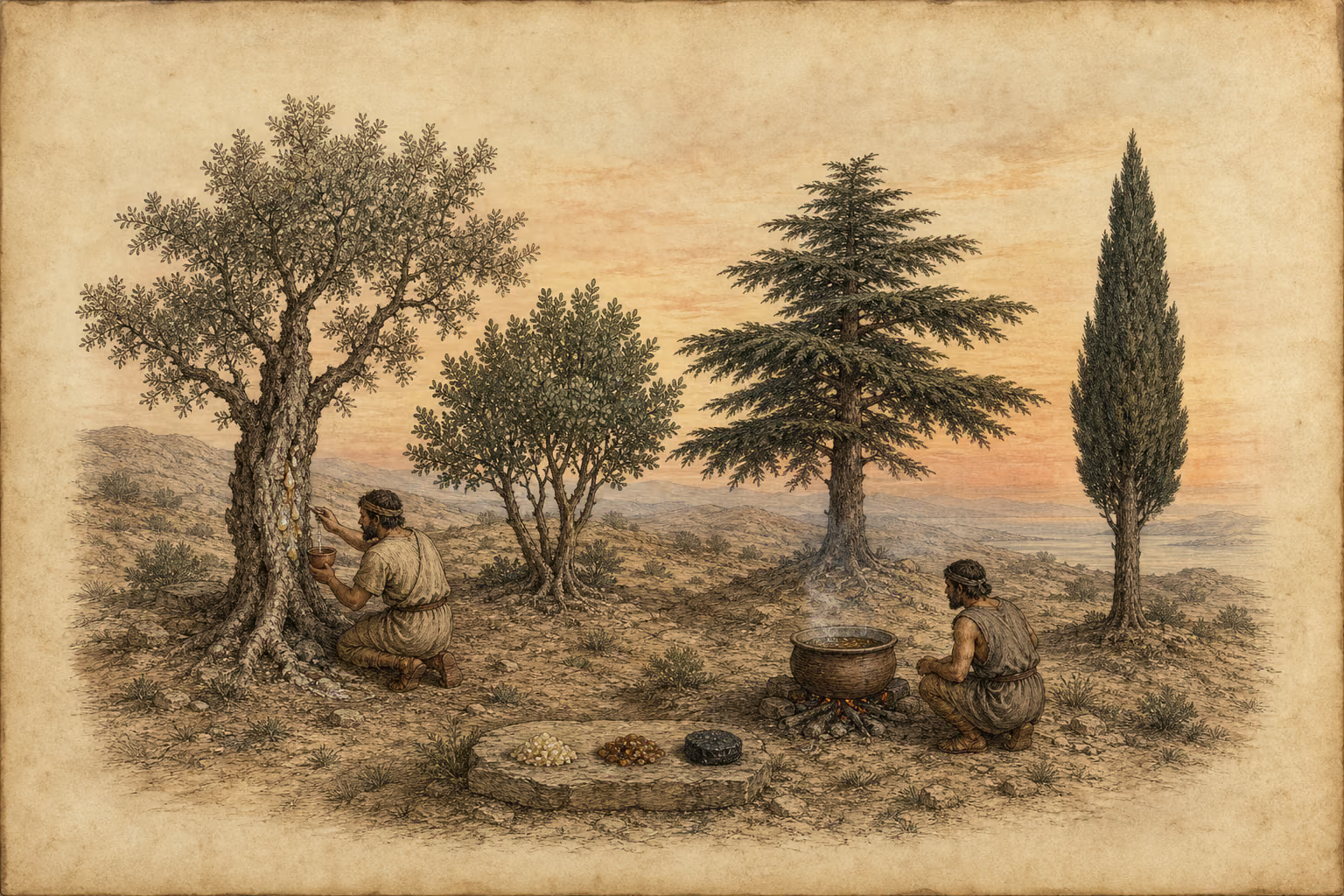
Arborum suco manantium picem resinamque aliae ortae in oriente, aliae in Europa ferunt. quae interest Asia utrimque quasdam habet. in oriente optimam tenuissimamque terebinthi fundunt, dein lentisci, quam et mastichen vocant, postea cupressi, acerrimam sapore, liquidam omnes et tantum resinam, crassiorem vero et ad pices faciendas cedrus. Arabica resina alba est, acri odore, difficilis coquenti, Iudaea callosior et terebinthina quoque odoratior, Syriaca Attici mellis similitudinem habet. Cypria antecedit omnes, item melleo colore, carnosa. Colophonia, praeter ceteras fulva, si teratur, alba fit, gravior odore; ob id non utuntur ea unguentarii. in Asia quae fit e picea, admodum candida, psagdas vocatur. resina omnis dissolvitur oleo — quidam et creta figulinarum hoc fieri arbitrantur —, pudetque confiteri maximum iam honorem eius esse in evellendis virorum corpori pilis.
Ratio autem condiendi musta in primo fervore, qui novem diebus cum plurimum peragitur, adspersu picis, ut odor vino contingat et saporis quaedam acumina. vehementius id fieri arbitrantur crudo flore resinae excitarique lenitatem, e diverso crapula conpesci feritatem nimiam frangique virus aut, ubi pigra lenitas torpeat, virus addi, Liguriae maxime Circumpadanisque mustis. utilitas discernitur hoc modo: pugnacibus mustis crapulae plus inditur, lenibus parcius. sunt qui et utroque condiri velint, nec non aliqua est musti picea natura vitiumque musto quibusdam in locis iterum sponte fervere, qua calamitate deperit sapor: vappae accipit nomen, probrosum etiam hominum, cum degeneravit animus. aceti enim nequitiae inest virtus magnos ad usus et sine quis mitior vita degi non possit. cetero vinorum medicaminis tanta cura est, ut cinere apud quosdam, ceu gypso alibi et quibus diximus modis, instaurentur; sed cinerem e vitis sarmentis ant quercu praeferunt. quin et marinam aquam eiusdem rei gratia ex alto peti iubent servarique ab aequinoctio verno, aut certe nocte solstitio et aquilone flante hauriri vel, si circa vindemiam hauriatur, decoqui.
Pix in Italia ad vasa vino condendo maxime probatur Bruttia. fit e piceae resina, in Hispania autem e pinastris minime laudata. est enim resina earum amara et arida et gravi odore. differentiam rationemque faciendi proximo volumine demonstrabimus inter arbores feras. vitia praeter supra dicta acor aut fumidum virus, picis autem adustio; experimentum vero, si fragmenta subluceant ac sub dente lentescant acore iucundo. Asia picem Idaeam maxime probat, Graecia Piericam, Vergilius Naryciam. diligentiores admiscent nigram mastichen, quae in Ponto bitumini similis gignitur, et iris radicem oleumque. nam ceram accipientibus vasis conpertum vina acescere. sed transferre in ea vasa, in quibus acetum fuerit, utilius quam in ea, in quibus dulce aut mulsum. Cato iubet vina concinnari — hoc enim utitur verbo — cineris lixivi cum defruto cocti parte quadr agesimain culleum vel salis sesquilibra, interim et tuso marmore. facit et sulpuris mentionem, resinae vero in novissimis. super omnia addi maturescente iam vino iubet mustum, quod ille tortivum appellat, nos intellegimus novissime expressum. et addi scimus tinguendi gratia colores, ut pigmentum aliquod vini, atque ita pinguius fieri. totveneficiis placere cogitur, et miramur noxium esse! in vitium inclinantis experimentum est lamnae plumbeae mutatus in eo colos.
Proprium autem inter liquores vino mucescere aut in acetum verti, extantque medicinae volumina. faex vini siccata recipit ignes ac sine alimento per sese flagrat. cinis eius nitri naturam habet easdemque vires, hoc amplius quod pinguior sentitur.
English · Bostock & Riley 1855–57
Of the trees from which pitch and resin distil, there are some which grow in the East, and others in Europe: the province of Asia, which lies between the two, has also some of both kinds. In the East, the very best commodity of this kind, and of the finest quality, is that produced by the terebinth, and, next to it, that from the lentisk, which is also known as the mastich. The next in quality to these is the juice of the cypress, being of a more acrid flavour than any other. All the above juices are liquid and of a resinous nature only, but that of the cedar is comparatively thick, and of a proper consistency for making pitch. The Arabian resin is of a pale colour, has an acrid smell, and its fumes are stifling to those employed in boiling it. That of Judæa is of a harder nature, and has a stronger smell than that from the terebinth even. The Syrian resin has all the appearance of Attic honey, but that of Cyprus is superior to any other; it is the colour of honey, and is of a soft, fleshy nature. The resin of Colophon is yellower than the other varieties, but when pounded it turns white; it has a stifling smell, for which reason the perfumers do not employ it. That prepared in Asia from the produce of the pitch-tree is very white, and is known by the name of “spagas.”
All the resins are soluble in oil; some persons are of opinion also that potters’ chalk may be so dissolved: I feel ashamed to avow that the principal esteem in which the resins are held among us is as depilatories for taking the hair off men’s bodies.
The method used for seasoning wines is to sprinkle pitch in the must during the first fermentation, which never lasts beyond nine days at the most, so that a bouquet is imparted to the wine, with, in some degree, its own peculiar piquancy of flavour. It is generally considered, that this is done most effectually by the use of raw flower of resin, which imparts a considerable degree of briskness to wine: while, on the other hand, it is thought that crapula itself, if mixed, tends to mitigate the harshness of the wine and subdue its asperity, and when the wine is thin and flat, to give it additional strength and body. It is in Liguria more particularly, and the districts in the vicinity of the Padus, that the utility is recognized of mixing crapula with the must, in doing which the following rule is adopted: with wines of a strong and generous nature they mix a larger quantity, while with those that are poor and thin they use it more sparingly. There are some who would have the wine seasoned with both crapula and flower of resin at the same time. Pitch too, when used for this purpose, has much the same properties as must when so employed.
In some places, the must is subject to a spontaneous fermentation a second time: when this unfortunately happens it loses all its flavour, and then receives the name of “vappa,” a word which is applied as an opprobrious appellation even to worthless men of degenerate spirit: in vinegar, on the other hand, notwithstanding its tart and acrid taste, there are very considerable virtues, and without it we should miss many of the comforts of civilized life.
In addition to what we have already stated, the treatment and preparation of wines are the object of such remarkable attention, that we find some persons employing ashes, and others gypsum and other substances of which we have already spoken, for the purpose of improving its condition: the ashes, however, of the shoots of vines or of the wood of the quercus, are in general preferred for this purpose. It is recommended also, to take sea-water far out at sea, and to keep it in reserve, to be employed for this purpose: at all events, it ought to be taken up in the night and during the summer solstice, while the north-east wind is blowing; but if taken at the time of the vintage, it should be boiled before being used.
The pitch most highly esteemed in Italy for preparing vessels for storing wine, is that which comes from Bruttium. It is made from the resin that distils from the pitch-tree; that which is used in Spain is held in but little esteem, being the produce of the wild pine; it is bitter, dry, and of a disagreeable smell. While speaking of the wild trees in a succeeding Book, we shall make mention of the different varieties of pitch, and the methods used in preparing it. The defects in resin, besides those which we have already mentioned, are a certain degree of acridity, or a peculiar smoky flavour, while the great fault in pitch is the being over-burnt. The ordinary test of its goodness is a certain luminous appearance when broken to pieces; it ought to stick, too, to the teeth, with a pleasant, tart flavour.
In Asia, the pitch which is most esteemed is that of Mount Ida, in Greece of Pieria; but Virgil gives the preference to the Narycian pitch. The more careful makers mix with the wine black mastich, which comes from Pontus, and resembles bitumen in appearance, as also iris -root and oil. As to coating the vessels with wax, it has been found that the wine is apt to turn acid: it is a better plan to put wine in vessels that have held vinegar, than in those which have previously contained sweet wine or mulsum. Cato recommends that wines should be got up— concinnari is his word—by putting of lie-ashes boiled down with defrutum, one-fortieth part to the culeus, or else a pound and a half of salt, with pounded marble as well: he makes mention of sulphur also, but only gives the very last place to resin. When the fermentation of the wine is coming to an end, he recommends the addition of the must to which he gives the name of “tortivum,” meaning that which is pressed out the very last of all. For the purpose of colouring wine we also add certain substances as a sort of pigment, and these have a tendency to give it a body as well. By such poisonous sophistications is this beverage compelled to suit our tastes, and then we are surprised that it is injurious in its effects!
It is a proof that wine is beginning to turn bad, if a plate of lead, on being put in it, changes its colour.
It is a peculiarity of wine, among the liquids, to become mouldy, or else to turn to vinegar. There are whole volumes which treat of the various methods of preventing this.
The lees of wine when dried will take fire and burn without the addition of fuel: the ashes so produced have very much the nature of nitre, and similar virtues; the more so, indeed, the more unctuous they are to the touch.