LIBER XIV · CAPUT 21
WINE-VESSELS—WINE-CELLARS
Latine · Mayhoff 1906
Magna et collecto iam vino differentia in caelo. circa Alpes ligneis vasis condunt tectisque cingunt atque etiam hieme gelida ignibus rigorem arcent. rarum dictu, sed aliquando visum, ruptis vasis stetere glaciatae moles, prodigii modo, quoniam vini natura non gelascit; alias ad frigus stupet tantum. mitiores plagae doliis condunt infodiuntque terrae tota aut ad portionem situs. ita caelum prohibent, alibi vero inpositis tectis arcent, traduntque et haec praecepta: latus cellae vinariae aut certe fenestras obverti in aquilonem oportere vel utique in exortum aequinoctialem. sterculinia et arborum radices procul abesse omniaque odoris evitandi, facillimo in vina transitu, ficos utique et caprificos; doliis etiam intervalla dari, ne inter sese vitia serpant contagione vini semper ocissima. quin et figuras referre; ventriosa ac patula minus utilia. picari oportere protinus a canis ortu, postea perfundi marina aqua aut salsa, dein cinere e sarmentis aspergi vel argilla, abstersa murra suffiri ipsasque saepius cellas. inbecilla vina demissis in terram doliis servanda, valida expositis. numquam inplenda, et quod supersit passo aut defruto perunguendum admixto croco pistave iri cum sapa. sic opercula doliorum medicanda addita mastiche aut pice Bruttia. aperiri vetant nisi sereno die, vetant austro flante lunave plena. flos vini candidus probatur; rubens triste signum esse, si non is vini colos sit, item vasa incalescentia operculave sudantia. quod celeriter florere coeperit odoremque trahere, non fore diutinum. ipsa quoque defruta ac sapas, cum sit caelum sine luna, hoc est in sideris eius coitu, neque alio die coqui iubent, praeterea plumbeis vasis, non aereis, nucibusque iuglandibus additis; eas enim fumum excipere. Campaniae nobilissima exposita sub diu in cadis verberari sole, luna, imbre, ventis aptissimum videtur.
English · Bostock & Riley 1855–57
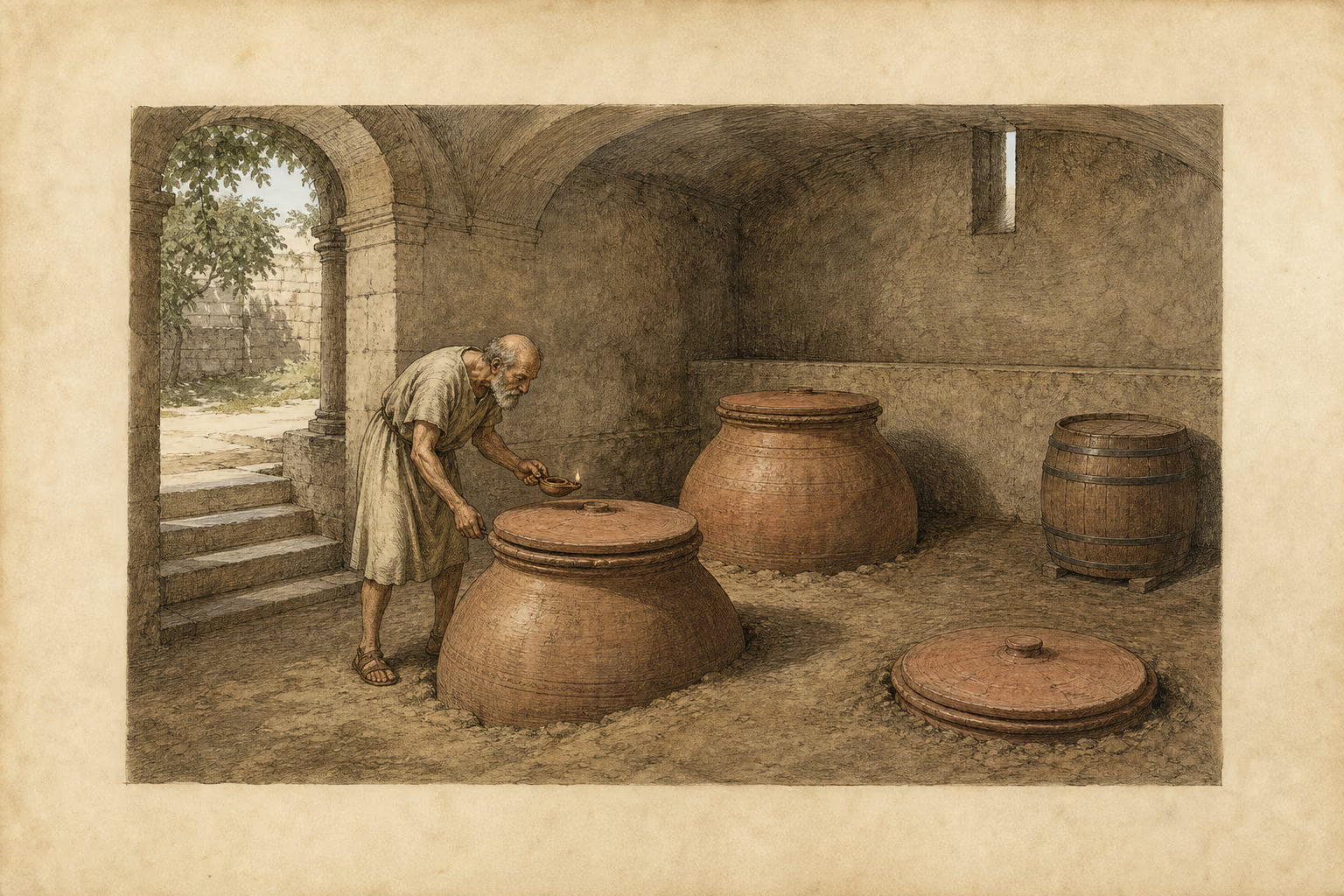
The various methods of keeping and storing wines in the cellar are very different. In the vicinity of the Alps, they put their wines in wooden vessels hooped around; during their cold winters, they even keep lighted fires, to protect the wines from the effects of the cold. It is a singular thing to mention, but still it has been occasionally seen, that these vessels have burst asunder, and there has stood the wine in frozen masses; a miracle almost, as it is not ordinarily the nature of wine to freeze, cold having only the effect of benumbing it. In more temperate climates, they place their wines in dolia, which they bury in the earth, either covering them entirely or in part, according to the temperature. Sometimes, again, they expose their wines in the open air, while at others they are placed beneath sheds for protection from the atmosphere.
The following are among the rules given for the proper management of wines:—One side of the wine-cellar, or, at all events, the windows, ought to face the north-east, or at least due east. All dunghills and roots of trees, and everything of a repulsive smell, ought to be kept at as great a distance as possible, wine being very apt to contract an odour. Fig-trees too, either wild or cultivated, ought not to be planted in the vicinity. Intervals should also be left between the vessels, in order to prevent infection, in case of any of them turning bad, wine being remarkably apt to become tainted. The shape, too, of the vessels is of considerable importance: those that are broad and bellying are not so good. We find it recommended too, to pitch them immediately after the rising of the Dog-star, and then to wash them either with sea or salt water, after which they should be sprinkled with the ashes of tree-shoots or else with potters’ earth; they ought then to be cleaned out, and perfumed with myrrh, a thing which ought to be frequently done to the wine-cellars as well. Weak, thin wines should be kept in dolia sunk in the ground, while those in which the stronger ones are kept should be more exposed to the air. The vessels ought on no account to be entirely filled, room being left for seasoning, by mixing either raisin wine or else defrutum flavoured with saffron; old pitch and sapa are sometimes used for the same purpose. The lids, too, of the dolia ought to be seasoned in a similar manner, with the addition of mastich and Bruttian pitch.
It is strongly recommended never to open the vessels, except in fine weather; nor yet while a south wind is blowing, or at a full moon.
The flower of wine when white is looked upon as a good sign; but when it is red, it is bad, unless that should happen to be the colour of the wine. The vessels, too, should not be hot to the touch, nor should the covers throw out a sort of sweat. When wine very soon flowers on the surface and emits an odour, it is a sign that it will not keep.
As to defrutum and sapa, it is recommended to commence boiling them when there is no moon to be seen, or, in other words, at the conjunction of that planet, and at no other time. Leaden vessels should be used for this purpose, and not copper ones, and walnuts are generally thrown into them, from a notion that they absorb the smoke. In Campania they expose the very finest wines in casks in the open air, it being the opinion that it tends to improve the wine if it is exposed to the action of the sun and moon, the rain and the winds.