LIBER XV · CAPUT 1
THE OLIVE.—HOW LONG IT EXISTED ONLY IN GREECE. AT WHAT PERIOD IT WAS FIRST INTRODUCED INTO ITALY, SPAIN, AND AFRICA
Latine · Mayhoff 1906
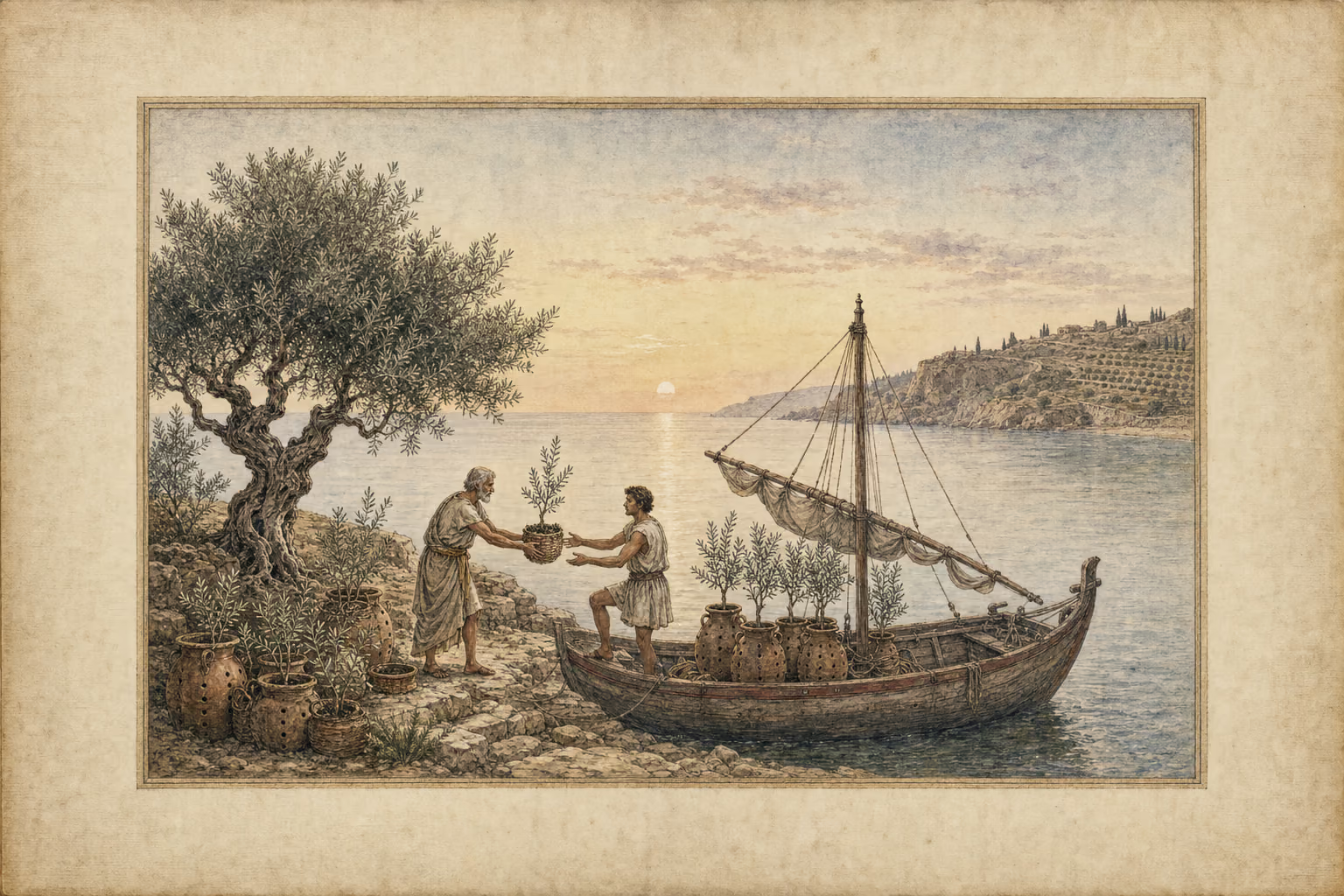
Oleam Theophrastus e celeberrimis Graecorum auctoribus urbis Romae anno circiter CCCCXL negavit nisi intra XXXX passuum ab mari nasci, Fenestella vero omnino non fuisse in Italia Hispaniaque aut Africa Tarquinio Prisco regnante, ab annis populi Romani CLXXIII, quae nunc pervenit trans Alpis quoque et in Gallias Hispaniasque medias. urbis quidem anno DV Appio Claudio Caeci nepote L. Iunio cos. olei librae duodenaedenis assibus veniere, et mox anno DCLXXX M. Seius L. F. aedilis curulis olei denas libras singulis assibus praestitit populo Romano per totum annum. minus ea miretur qui sciat post annos XXII Cn. Pompeio III cos. oleum provinciis Italiam misisse. Hesiodus quoque, in primis culturam agrorum docendam arbitratus vitam, negavit oleae satorem fructum ex ea percepisse quemquam: tam tarda tunc res erat. at nune etiam in plantariis ferunt, translatarumque altero anno decerpuntur bacae. Fabianus negat provenire in frigidissimis oleam neque in calidissimis.
Genera earum tria dixit Vergilius, orchites et radios et posias, nec desiderare rastros aut falces ullamve curam. sine dubio et in iis solum maxime caelumque refert. verum tamen et tondentur, cum et vites, atque etiam interradi gaudent. consequens earum vindemia est arsque vel maior olei musta temperandi. ex eadem quippe oliva differunt suci. primum omnium crudadat atque nondum inchoatae maturitatis; hoc sapore praestantissimum. quin et ex eo prima unda preli lautissima ac deinde per deminutiones, sive in sportis prematur sive, ut nuper inventum est, exilibus regulis pede incluso. quanto maturior baca, tanto pinguior sucus minusque gratus. optima autem aetas ad decerpendum inter copiam bonitatemque incipiente baca nigrescere, cum vocant druppas, Graeci vero drypetidas. cetero distattum, maturitas illa in torcularibus fiat an ramis, rigua fuerit arbor an suo tantum baca suco nihilque aliud quam rores caeli biberit.
English · Bostock & Riley 1855–57
Theophrastus, one of the most famous among the Greek writers, who flourished about the year 440 of the City of Rome, has asserted that the olive does not grow at a distance of more than forty miles from the sea. Fenestella tells us that in the year of Rome 173, being the reign of Tarquinius Priscus, it did not exist in Italy, Spain, or Africa; whereas at the present day it has crossed the Alps even, and has been introduced into the two provinces of Gaul and the middle of Spain. In the year of Rome 505, Appius Claudius, grandson of Appius Claudius Cæcus, and L. Junius being consuls, twelve pounds of oil sold for an as; and at a later period, in the year 680, M. Seius, son of Lucius, the curule ædile, regulated the price of olive oil at Rome, at the rate of ten pounds for the as, for the whole year. A person will be the less surprised at this, when he learns that twenty-two years after, in the third consulship of Cn. Pompeius, Italy was able to export olive oil to the provinces.
Hesiod, who looked upon an acquaintance with agriculture as conducive in the very highest degree to the comforts of life, has declared that there was no one who had ever gathered fruit from the olive-tree that had been sown by his own hands, so slow was it in reaching maturity in those times; whereas, now at the present day, it is sown in nurseries even, and if transplanted will bear fruit the following year.
Fabianus maintains that the olive will grow neither in very cold climates, nor yet in very hot ones. Virgil has mentioned three varieties of the olive, the orchites, the radius, and the posia; and says that they require no raking or pruning, nor, in fact, any attention whatever. There is no doubt that in the case of these plants, soil and climate are the things of primary importance; but still, it is usual to prune them at the same time as the vine, and they are improved by lopping between them every here and there. The gathering of the olive follows that of the grape, and there is even a greater degree of skill required in preparing oil than in making wine; for the very same olives will frequently give quite different results. The first oil of all, produced from the raw olive before it has begun to ripen, is considered preferable to all the others in flavour; in this kind, too, the first droppings of the press are the most esteemed, diminishing gradually in goodness and value; and this, whether the wicker-work basket is used in making it, or whether, following the more recent plan, the pulp is put in a stick strainer, with narrow spikes and interstices. The riper the berry, the more unctuous the juice, and the less agreeable the taste. To obtain a result both abundant and of excellent flavour, the best time to gather it is when the berry is just on the point of turning black. In this state it is called “druppa” by us, by the Greeks, “drypetis.”
In addition to these distinctions, it is of importance to observe whether the berry ripens in the press or while on the branch; whether the tree has been watered, or whether the fruit has been nurtured solely by its own juices, and has imbibed nothing else but the dews of heaven.