LIBER XV · CAPUT 11
THE QUINCE. FOUR KINDS OF CYDONIA, AND FOUR VARIETIES OF THE STRUTHEA
Latine · Mayhoff 1906
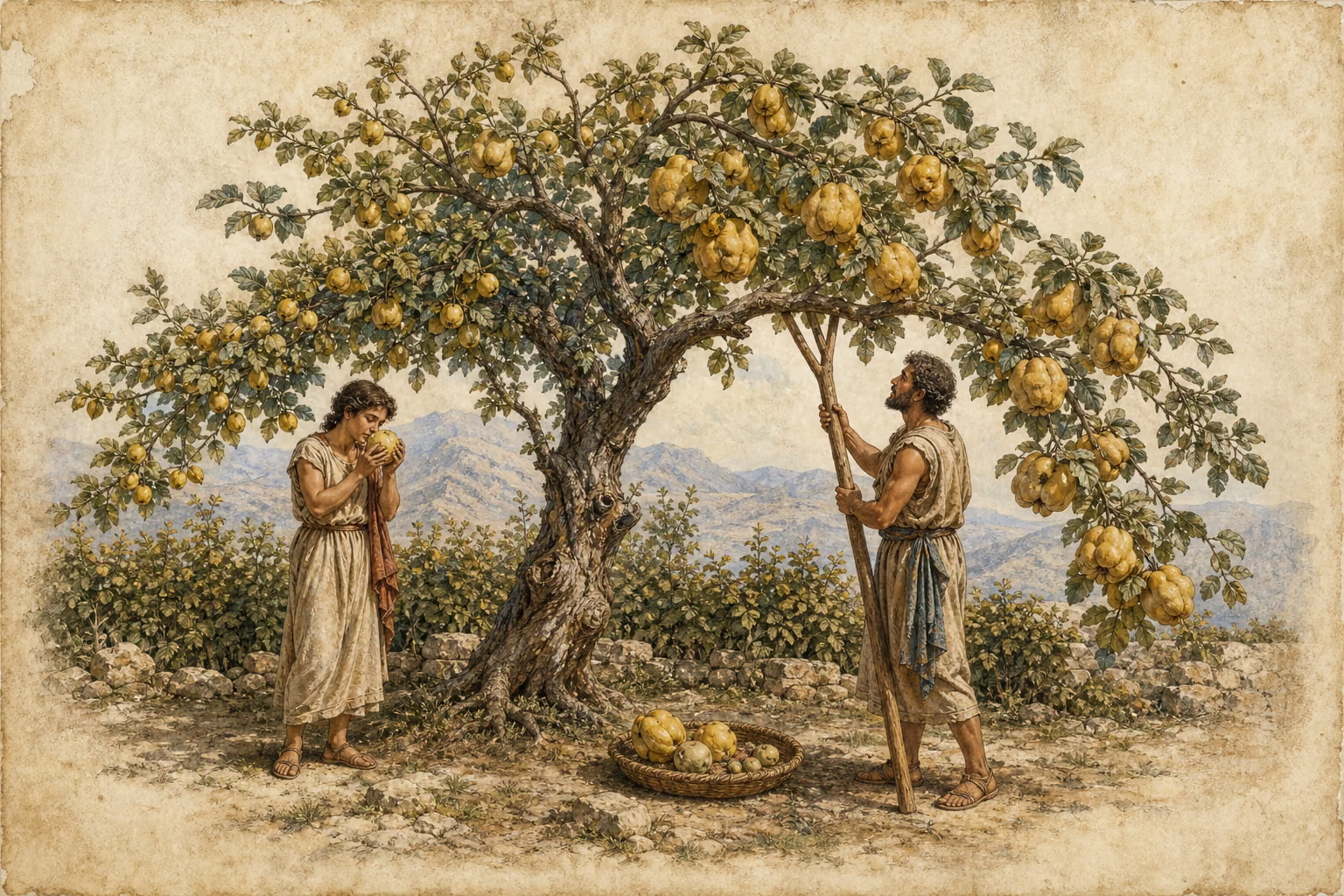
His proxima amplitudine mala quae vocamus cotonea et Graece cydonea, e Creta insula advecta. incurvatos trahunt ramos prohibentque crescere parentem. plura eorum genera: chrysomela incisuris distincta, colore ad aurum inclinato, qui candidior nostratia cognominat, odoris praestantissimi. est et Neapolitanis suus honos. minora ex eodem genere struthea odoratiusvibrant, serotino proventu,. praecoci vero mustea. strutheis autem cotonea insita suum genus fecere Mulvianum, quae sola ex iis vel cruda manduntur, iam et virorum salutatoriis cubiculis inclusa ac simulacris noctium consciis inposita. sunt praeterea parva silvestria, e strutheis odoratissima et in saepibus nascentia.
Mala appellamus, quamquam diversi generis, Persica et granata, quae in Punicis arboribus novem generum dicta sunt. his acinus sub cortice intus, illis lignum in corpore. nec non et quaedam e piris libralia appellata amplitudinem sibi ponderis nomine adserunt.
English · Bostock & Riley 1855–57
Next in size after these are the fruit called by us “cotonea,” by the Greeks “Cydonia,” and first introduced from the island of Crete. These fruit bend the branches with their weight, and so tend to impede the growth of the parent tree. The varieties are numerous. The chrysomelum is marked with indentations down it, and has a colour inclining to gold; the one that is known as the “Italian” quince, is of a paler complexion, and has a most exquisite smell: the quinces of Neapolis, too, are held in high esteem. The smaller varieties of the quince which are known as the “struthea,” have a more pungent smell, but ripen later than the others; that called the “musteum,” ripens the soonest of all. The cotoneum engrafted on the strutheum, has produced a peculiar variety, known as the “Mulvianum,” the only one of them all that is eaten raw. At the present day all these varieties are kept shut up in the antechambers of great men, where they receive the visits of their courtiers; they are hung, too, upon the statues that pass the night with us in our chambers.
There is a small wild quince also, the smell of which, next to that of the strutheum, is the most powerful; it grows in the hedges.
Under the head of apples, we include a variety of fruits, although of an entirely different nature, such as the Persian apple, for instance, and the pomegranate, of which, when speaking of the tree, we have already enumerated nine varieties. The pomegranate has a seed within, enclosed in a skin; the peach has a stone inside. Some among the pears, also, known as “libralia,” show, by their name, what a remarkable weight they attain.