LIBER XV · CAPUT 17
THE MODE OF KEEPING VARIOUS FRUITS AND GRAPES
Latine · Mayhoff 1906
Cotoneis in concluso spiramentum omne adimendum aut incoqui melle ea mergive oportere. Punica aqua marina fervente indurari, mox triduo sole siccata ita ne nocturno rore contingantur suspendi et, cum libeat uti, aqua dulci perlui. M. Varro et in doliis harenae servari iubet; et inmatura obrui terra in ollis fundo effracto, sed spiritu excluso ac surculo pice inlito: sic etiam crescere amplitudine maiore quam possint in arbore. cetera mala et foliis ficulnis, praeterquam cadivis, singula convolvi cistisque vitilibus condi vel creta figulinarum inlini. — Pira in vasis fictilibus picatis inversis obrui scrobe. Tarentina serissima legi, Aniciana servari et in passo, sorva quoque et scrobibus gypsato operculo, duum pedum terra superiniecta, in loco aprico inversis vasis et in doliis ut uvas interque uvas cum ramis suspendi.
E proximis auctoribus quidam altius curam repetunt deputarique statim poma ac vites ad hunc usum praecipiunt decrescente luna, post horam diei tertiam, caelo sereno aut siccis ventis. similiter deligi et ex locis siccis et ante perfectam maturitatem, addito ut luna infra terram sit, uvas cum malleolo sarmenti duro, demptis forfice corruptoribus acinis, in dolio picato recenti suspendi, exclusa omni aura operculo et gypso. sic et sorva ac pira, inlitis omnium surculis pice. dolia procul ab aqua esse. quidam sic cum palmite ipso condunt, capitibus eius scillae infixis utrimque, alii etiam vina habentibus doliis, dum ne contingant ea uvae, aliqui mala in patinis fictilibus fluitantia, quo genere et vino odorem adquiri putant. aliqui omnia haec in milio servari malunt, plerique vero in scrobe duum pedum altitudinis harena substrato et fictili operculo, dein terra operto. creta quidam figlina etiam uvas inlinunt siccataque sole suspendunt, in usu diluentes cretam. eandem pomis vino subigunt. mala vero generosissima eadem ratione crustant gypso vel cera, quae, nisi maturuerint, incremento calcem rumpunt. semper autem in pediculos conlocant ea. alii decerpunt cum surculis eosque in medullam sabuci additosobruunt, ut supra scriptum est. alii singulis malis pirisque singula vasa fictilia adsignant et operculo eorum picato dolio iterum includunt, nec non aliqui in floccis capsisque, quas luto paleato inlinunt; alii hoc idem in patinis fictilibus, aliqui et in scrobe subiecta harena: ita sicca operiunt mox terra. sunt qui cotonea cera Pontica inlita melle demergant. Columella auctor est in puteos cisternasve uvas in fictilibus vasis pice diligenti cura inlitis mergi. Liguria maritima Alpibus proxima uvas sole siccatas iunci fasceis involvit cadisque conditas gypso includit. hoc idem Graeci platani foliis aut vitis ipsius aut fici uno die in umbra siccatis atque in cado vinaceis interpositis. quo genere Coa uva et Berytia servantur, nullius suavitati postferendae. quidam, ut has faciant, in cinere lixivo tingunt protinus quam detraxere vitibus, mox in sole siccant passasque in aquam calidam mergunt et iterum sole siccant, tum foliis, ut supra dictum est, involutas vinaceis stipant. sunt qui malunt uvas in scobe ramentisve abietis, populi, fraxini servare. sunt qui suspendi procul malis protinusque in granariis iubent, quoniam optime siccetfrumenti pulvis. pensilibus contra vespas remedio est oleo adspergi ex ore. de palmis diximus.
English · Bostock & Riley 1855–57
Quinces ought to be stored in a place kept perfectly closed, so as to exclude all draughts; or else they should be boiled in honey or soaked in it. Pomegranates are made hard and firm by being first put in boiling sea-water, and then left to dry for three days in the sun, care being taken that the dews of the night do not touch them; after which they are hung up, and when wanted for use, washed with fresh water. M. Varro recommends that they should be kept in large vessels filled with sand: if they are not ripe, he says that they should be put in pots with the bottom broken out, and then buried in the earth, all access to the air being carefully shut, and care being first taken to cover the stalk with pitch. By this mode of treatment, he assures us, they will attain a larger size than they would if left to ripen on the tree. As for the other kinds of pomes, he says that they should be wrapped up separately in fig-leaves, the windfalls being carefully excluded, and then stored in baskets of osier, or else covered over with potters’ earth.
Pears are kept in earthen vessels pitched inside; when filled, the vessels are reversed and then buried in pits. The Tarentine pear, Varro says, is gathered very late, while the Anician keeps very well in raisin wine. Sorb apples, too, are similarly kept in holes in the ground, the vessel being turned upside down, and a layer of plaster placed on the lid: it should be buried two feet deep, in a sunny spot; sorbs are also hung, like grapes, in the inside of large vessels, together with the branches.
Some of the more recent authors are found to pay a more scrupulous degree of attention to these various particulars, and recommend that the gathering of grapes or pomes, which are intended for keeping, should take place while the moon is on the wane, after the third hour of the day, and while the weather is clear, or dry winds prevail. In a similar manner, the selection, they say, ought to be made from a dry spot, and the fruit should be plucked before it is fully ripe, a moment being chosen while the moon is below the horizon. Grapes, they say, should be selected that have a strong, hard mallet-stalk, and after the decayed berries have been carefully removed with a pair of scissors, they should be hung up inside of a large vessel which has just been pitched, care being taken to close all access to the south wind, by covering the lid with a coat of plaster. The same method, they say, should be adopted for keeping sorb apples and pears, the stalks being carefully covered with pitch; care should be taken, too, that the vessels are kept at a distance from water.
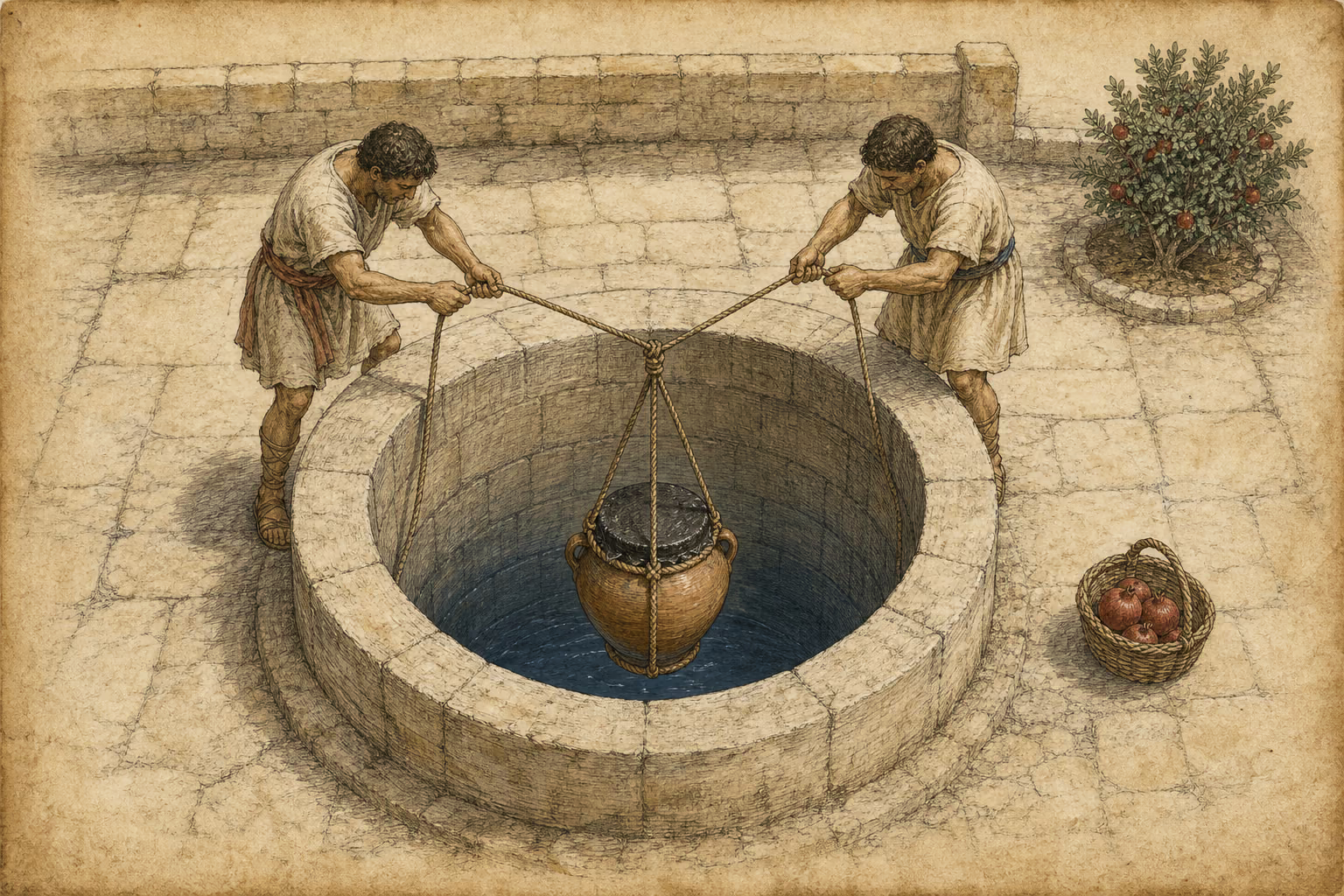
There are some persons who adopt the following method for preserving grapes. They take them off together with the branch, and place them, while still upon it, in a layer of plaster, taking care to fasten either end of the branch in a bulb of squill. Others, again, go so far as to place them within vessels containing wine, taking care, however, that the grapes, as they hang, do not touch it. Some persons put apples in plates of earth, and then leave them to float in wine, a method by which it is thought that a vinous flavour is imparted to them: while some think it a better plan to preserve all these kinds of fruit in millet. Most people, however, content themselves with first digging a hole in the ground, a couple of feet in depth; a layer of sand is then placed at the bottom, and the fruit is arranged upon it, and covered with an earthen lid, over which the earth is thrown. Some persons again even go so far as to give their grapes a coating of potters’ chalk, and then hang them up when dried in the sun; when required for use, the chalk is removed with water. Apples are also preserved in a similar manner; but with them wine is employed for getting off the chalk. Indeed, we find a very similar plan pursued with apples of the finest quality; they have a coating laid upon them of either plaster or wax; but they are apt, if not quite ripe when this was done, by the increase in their size to break their casing. When apples are thus prepared, they are always laid with the stalk downwards. Some persons pluck the apple together with the branch, the ends of which they thrust into the pith of elder, and then bury it in the way already pointed out. There are some who assign to each apple or pear its separate vessel of clay, and after carefully pitching the cover, enclose it again in a larger vessel: occasionally, too, the fruit is placed on a layer of flocks of wool, or else in baskets, with a lining of chaff and clay. Other persons follow a similar plan, but use earthen plates for the purpose; while others, again, employ the same method, but dig a hole in the earth, and after placing a layer of sand, lay the fruit on top of it, and then cover the whole with dry earth. Persons, too, are sometimes known to give quinces a coating of Pontic wax, and then plunge them in honey.
Columella informs us, that fruit is kept by being carefully put in earthen vessels, which then receive a coating of pitch, and are placed in wells or cisterns to sink to the bottom. The people of maritime Liguria, in the vicinity of the Alps, first dry their grapes in the sun, and wrap them up in bundles of rushes, which are then covered with plaster. The Greeks follow a similar plan, but substitute for rushes the leaves of the plane-tree, or of the vine itself, or else of the fig, which they dry for a single day in the shade, and then place in a cask in alternate layers with husks of grapes. It is by this method that they preserve the grapes of Cos and Berytus, which are inferior to none in sweetness. Some persons, when thus preparing them, plunge the grapes into lie-ashes the moment they take them from the vine, and then dry them in the sun; they then steep them in warm water, after which they put them to dry again in the sun: and last of all, as already mentioned, wrap them up in bundles formed of layers of leaves and grape husks. There are some who prefer keeping their grapes in sawdust, or else in shavings of the fir-tree, poplar, and ash: while others think it the best plan to hang them up in the granary, at a careful distance from the apples, directly after the gathering, being under the impression that the very best covering for them as they hang is the dust that naturally arises from the floor. Grapes are effectually protected against the attacks of wasps by being sprinkled with oil spirted from the mouth. Of palm-dates we have already spoken.