LIBER XV · CAPUT 18
TWENTY-NINE VARIETIES OF THE FIG
Latine · Mayhoff 1906
E reliquo genere pomorum ficus amplissima est, quaedamque et piris magnitudine aemulae. de Aegyptiae Cypriaeque miraculis retulimus inter externas. Idaea rubet olivae magnitudine, rotundior tantum, sapore mespili. Alexandrinam hanc ibi vocant, crassitudine cubitali, ramosam, materie validam, lentam, sine lacte, cortice viridi, folio tiliae, sed molli. Onesicritus tradit in Hyrcania multum nostris esse dulciores fertilioresque, ut quae modios CCLXX singulae ferant. ad nos ex aliis transiere gentibus, Chalcide, Chio, quarum plura genera. si quidem et Lydiae, quae sunt purpureae, et mamillanae similitudinem earum habent et callistruthiae farti sapore praestantiores, ficorum omnium frigidissimae. nam de Africanis, quoniam multi praeferunt cunctis, magna quaestio est, cum id genus in Africam nuperrime transient. patriae nomen optinent etiam Alexandrinae ex nigris, candicante rima, cognomine delicatae. nigra et Rhodia est et Tiburtina de praecocibus. sunt et auctorum nomina iis, Liviae, Pompei. siccandis haec sole in annuos usus aptissima cum mariscis et quas harundinum folii macula variat. est et Herculanea et albicerata et aratia alba, pediculo minimo, latissima. primo autem provenit porphyritis, longissimo pediculo. comitatur eam e minimis, vilissimis popularis dicta. contra novissima sub hieme maturatur chelidonia. sunt praeterea eaedem serotinae et praecoces, biferae, alba ac nigra, cum messe vindemiaque maturescentes. serotinae et a corio appellatae duro, ex Chalcidicis quarundam trifero proventu. Tarenti tantum praedulces nascuntur, quas vocant onas. Cato de ficis ita memorat: Ficos mariscas in loco cretoso aut aperto serito, in loco autem crassiore aut stercorato Africanas et Herculaneas, Sacontinas, hibernas, Tellanas atras pediculo longo. postea tot subiere nomina atque genera, ut vel hoc solum aestimantibus appareat mutatam esse vitam. sunt et hibernae quibusdam provinciis, uti Moesiae, sed artis, non naturae. parvarum genusarborum post autumnum fimo contegunt, deprehensasque in his hieme grossos, quae mitiore caelo refossae cum arbore atque in lucem remissae novossoles aliosque, quam quibus vixere, avide tamquam iterum natae accipiunt et curl venientium flore maturescunt, alieno praecoces anno, in tractu vel gelidissimo.
Sed a Catone appellata iam tum Africana admonet Africae ad ingens docimentum usi eo pomo. namque perni ciali odio Carthaginis flagrans nepotumque securitatis anxius, cum clamaret omni senatu Carthaginem delendam, adtulit quodam die in curiam praecocem ex ea provincia ficum ostendensque patribus: Interrogo vos, inquit, quando hanc pomum demptam putetis ex arbore. cum inter omnes recentem esse constaret: Atqui tertium, inquit, ante diem scitote decerptam Carthagine. tam prope a moeris habemus hostem! statimque sumptum est Punicum tertium bellum, quo Carthago deleta est, quamquam Catone anno sequente rapto. quid primum in eo miremur, curam ingeni an occasionem fortuitam, celeritatemque cursus an vehementiam viri? super omnia est, quo nihil equidem duco mirabilius, tantam illam urbem et de terrarum orbe per CXX annos aemulam unius pomi argumento eversam, quod non Trebia aut Trasimenus, non Cannae busto Romani nominis perficere potuere, non castra Punica ad tertium lapidem vallata portaeque Collinae adequitans ipse Hannibal. tanto propius Carthaginem pomo Cato admovit!
Colitur ficus arbor in foro ipso ac comitio Romae nata, sacra fulguribus ibi conditis magisque ob memoriam eius quae, nutrix Romuli ac Remi, conditores imperii in Lupercali prima protexit, ruminalis appellata, quoniam sub ea inventa est lupa infantibus praebens rumim (ita vocabant mammam), miraculo ex aere iuxta dicato, tamquam in comitium sponte transisset Atto Navio augurante. nec sine praesagio aliquo arescit rursusque cura sacerdotum seritur. fuit et ante Saturni aedem, urbis anno.. sublata sacro a Vestalibus facto, cum Silvani simulacrum subverteret. eadem fortuito satu vivit in medio foro, qua sidentia imperii fundamenta ostento fatali Curtius maximis bonis, hoc est virtute ac pietate ac morte praeclara, expleverat. aeque fortuita eodem loco est vitis atque olea, umbrae gratia sedulitate plebeia satae, ara inde sublata gladiatorio munere Divi luli, quod novissime pugnavit in foro.
Admirabilis est pomi huiusce festinatio, unius in cunctis ad maturitatem properantis arte naturae.
English · Bostock & Riley 1855–57
Of all the remaining fruits that are included under the name of “pomes,” the fig is the largest: some, indeed, equal the pear, even, in size. We have already mentioned, while treating of the exotic fruits, the miraculous productions of Egypt and Cyprus in the way of figs. The fig of Mount Ida is red, and the size of an olive, rounder however, and like a medlar in flavour; they give it the name of Alexandrian in those parts. The stem is a cubit in thickness; it is branchy, has a tough, pliant wood, is entirely destitute of all milky juice, and has a green bark, and leaves like those of the linden tree, but soft to the touch. Onesicritus states that in Hyrcania the figs are much sweeter than with us, and that the trees are more prolific, seeing that a single tree will bear as much as two hundred and seventy modii of fruit. The fig has been introduced into Italy from other countries, Chalcis and Chios, for instance, the varieties being very numerous: there are those from Lydia also, which are of a purple colour, and the kind known as the “mamillana,” which is very similar to the Lydian. The callistruthiæ are very little superior to the last in flavour; they are the coldest by nature of all the figs. As to the African fig, by many people preferred to any other, it has been made the subject of very considerable discussion, as it is a kind that has been introduced very recently into Africa, though it bears the name of that country. As to the fig of Alexandria, it is a black variety, with the cleft inclining to white; it has had the name given to it of the “delicate” fig: the Rhodian fig, too, and the Tiburtine, one of the early kinds, are black. Some of them, again, bear the name of the persons who were the first to introduce them, such, for instance, as the Livian and the Pompeian figs: this last variety is the best for drying in the sun and keeping for use, from year to year; the same is the case, too, with the marisca, and the kind which has a leaf spotted all over like the reed. There is also the Herculanean fig, the albicerata, and the white aratia, a very large variety, with an extremely diminutive stalk.
The earliest of them all is the porphyritis, which has a stalk of remarkable length: it is closely followed by the popularis, one of the very smallest of the figs, and so called from the low esteem in which it is held: on the other hand, the chelidonia is a kind that ripens the last of all, and towards the beginning of winter. In addition to these, there are figs that are at the same time both late and early, as they bear two crops in the year, one white and the other black, ripening at harvest-time and vintage respectively. There is another late fig also, that has received its name from the singular hardness of its skin; one of the Chalcidian varieties bears as many as three times in the year. It is at Tarentum only that the remarkably sweet fig is grown which is known by the name of “ona.”
Speaking of figs, Cato has the following remarks: “Plant the fig called the ‘marisca’ on a chalky or open site, but for the African variety, the Herculanean, the Saguntine, the winter fig and the black Telanian with a long stalk, you must select a richer soil, or else a ground well manured.” Since his day there have so many names and kinds come up, that even on taking this subject into consideration, it must be apparent to every one how great are the changes which have taken place in civilized life.
There are winter figs, too, in some of the provinces, the Mœsian, for instance; but they are made so by artificial means, such not being in reality their nature. Being a small variety of the fig-tree, they cover it up with manure at the end of autumn, by which means the fruit on it is overtaken by winter while still in a green state: then when the weather becomes milder the fruit is uncovered along with the tree, and so restored to light. Just as though it had come into birth afresh, the fruit imbibes the heat of the new sun with the greatest avidity—a different sun, in fact, to that which originally gave it life—and so ripens along with the blossom of the coming crop; thus attaining maturity in a year not its own, and this in a country, too, where the greatest cold prevails.
The mention by Cato of the variety which bears the name of the African fig, strongly recalls to my mind a remarkable fact connected with it and the country from which it takes its name.
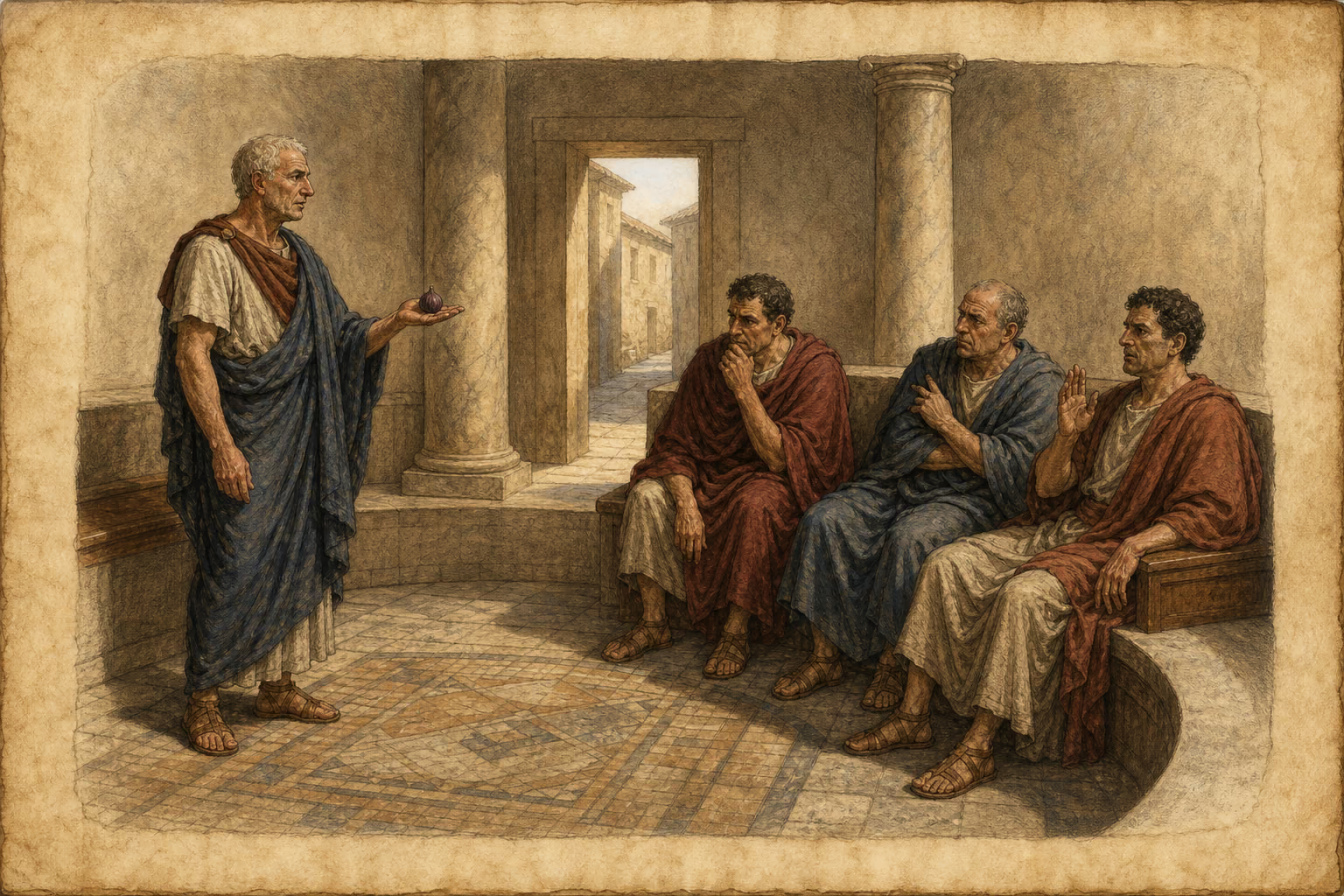
Burning with a mortal hatred to Carthage, anxious, too, for the safety of his posterity, and exclaiming at every sitting of the senate that Carthage must be destroyed, Cato one day brought with him into the Senate-house a ripe fig, the produce of that country. Exhibiting it to the assembled senators, “I ask you,” said he, “when, do you suppose, this fruit was plucked from the tree?” All being of opinion that it had been but lately gathered,—“Know then,” was his reply, “that this fig was plucked at Carthage but the day before yesterday —so near is the enemy to our walls.” It was immediately after this occurrence that the third Punic war commenced, in which Carthage was destroyed; though Cato had breathed his last, the year after this event. In this trait which are we the most to admire? was it ingenuity and foresight on his part, or was it an accident that was thus aptly turned to advantage? which, too, is the most surprising, the extraordinary quickness of the passage which must have been made, or the bold daring of the man? The thing, however, that is the most astonishing of all—indeed, I can conceive nothing more truly marvellous—is the fact that a city thus mighty, the rival of Rome for the sovereignty of the world during a period of one hundred and twenty years, owed its fall at last to an illustration drawn from a single fig!
Thus did this fig effect that which neither Trebia nor Thrasimenus, not Cannæ itself, graced with the entombment of the Roman renown, not the Punic camp entrenched within three miles of the city, not even the disgrace of seeing Hannibal riding up to the Colline Gate, could suggest the means of accomplishing. It was left for a fig, in the hand of Cato, to show how near was Carthage to the gates of Rome!
In the Forum even, and in the very midst of the Comitium of Rome, a fig-tree is carefully cultivated, in memory of the consecration which took place on the occasion of a thunderbolt which once fell on that spot; and still more, as a memorial of the fig-tree which in former days overshadowed Romulus and Remus, the founders of our empire, in the Lupercal Cave. This tree received the name of “ruminalis,” from the circumstance that under it the wolf was found giving the breast— rumis it was called in those days—to the two infants. A group in bronze was afterwards erected to consecrate the remembrance of this miraculous event, as, through the agency of Attus Navius the augur, the tree itself had passed spontaneously from its original locality to the Comitium in the Forum. And not without some direful presage is it that that tree has withered away, though, thanks to the care of the priesthood, it has been since replaced.
There was another fig-tree also, before the temple of Saturn, which was removed on the occasion of a sacrifice made by the Vestal Virgins, it being found that its roots were gradually undermining the statue of the god Silvanus. Another one, accidentally planted there, flourished in the middle of the Forum, upon the very spot, too, in which, when from a direful presage it had been foreboded that the growing empire was about to sink to its very foundations, Curtius, at the price of an inestimable treasure—in other words, by the sacrifice of such unbounded virtue and piety—redeemed his country by a glorious death. By a like accident, too, a vine and an olive-tree have sprung up in the same spot, which have ever since been carefully tended by the populace for the agreeable shade which they afford. The altar that once stood there was afterwards removed by order of the deified Julius Cæsar, upon the occasion of the last spectacle of gladiatorial combats which he gave in the Forum.
The fig, the only one among all the pomes, hastens to maturity by the aid of a remarkable provision of Nature.