LIBER XV · CAPUT 23
EIGHTEEN VARIETIES OF THE CHESNUT
Latine · Mayhoff 1906
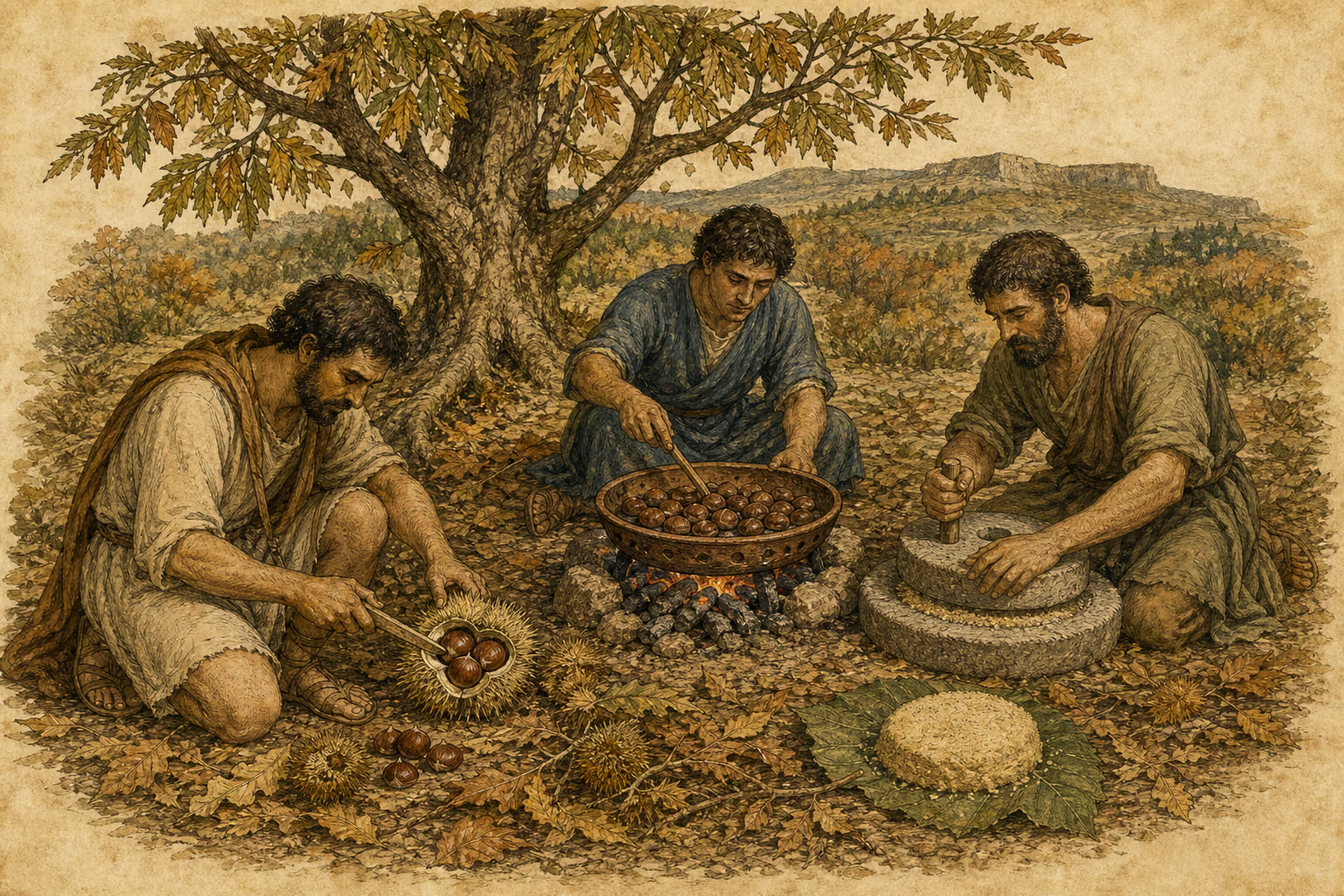
Nuces vocamus et castaneas, quamquam adcommodatiores glandium generi. armatum iis echinato cal yce vallum, quod inchoatum glandibus, mirumque vilissima esse quae tanta occultaverit cura naturae. trini quibusdam partus ex uno calyce; cortexque lentus, proxima vero corpori membrana et in his et in nucibus saporem, ni detrahatur, infestat. torrere has in cibis gratius, modo molantur, et praestant ieiunio feminarum quandam imaginem panis. Sardibus hae provenere primum, ideo apud Graecos Sardianos balanos appellant, nam διὸς βαλάνουnomen postea inposuere excellentioribus satu factis. nunc plura earum genera. Tarentinae faciles nec operosae cibo, planae figura. rotundior quae balanitis vocatur, purgabilis maxime et sponte prosiliens pura. plana est et Salariana, Tarentina minus tractabilis, laudatior Corelliana et ex ea facta quo dicemusin insitis modo Tereiana, quam rubens cortex praefert triangulis et popularibus nigris, quae coctivae vocantur. patria laudatissimis Tarentum et in Campania Neapolis. ceterae suum pabulo gignuntur, scrupulosa corticis intra nucleos quoque ruminatione.
English · Bostock & Riley 1855–57
We give the name of nut, too, to the chesnut, although it would seem more properly to belong to the acorn tribe. The chesnut has its armour of defence in a shell bristling with prickles like the hedge-hog, an envelope which in the acorn is only partially developed. It is really surprising, however, that Nature should have taken such pains thus to conceal an object of so little value. We sometimes find as many as three nuts beneath a single outer shell. The skin of the nut is limp and flexible: there is a membrane, too, which lies next to the body of the fruit, and which, both in this and in the walnut, spoils the flavour if not taken off. Chesnuts are the most pleasant eating when roasted: they are sometimes ground also, and are eaten by women when fasting for religious scruples, as bearing some resemblance to bread. It is from Sardes that the chesnut was first introduced, and hence it is that the Greeks have given it the name of the “Sardian acorn;” for the name “Dios balanon” was given at a later period, after it had been considerably improved by cultivation.
At the present day there are numerous varieties of the chesnut. Those of Tarentum are a light food, and by no means difficult of digestion; they are of a flat shape. There is a rounder variety, known as the “balanitis;” it is very easily peeled, and springs clean out of the shell, so to say, of its own accord. The Salarian chesnut has a smooth outer shell, while that of Tarentum is not so easily handled. The Corellian is more highly esteemed, as is the Etereian, which is an offshoot from it produced by a method upon which we shall have to enlarge when we come to speak of grafting. This last has a red skin, which causes it to be preferred to the three-cornered chesnut and our black common sorts, which are known as “coctivæ.” Tarentum and Neapolis in Campania are the most esteemed localities for the chesnut: other kinds, again, are grown to feed pigs upon, the skin of which is rough and folded inwards, so as to penetrate to the heart of the kernel.