LIBER XV · CAPUT 25
NINE VARIETIES OF THE CHERRY
Latine · Mayhoff 1906
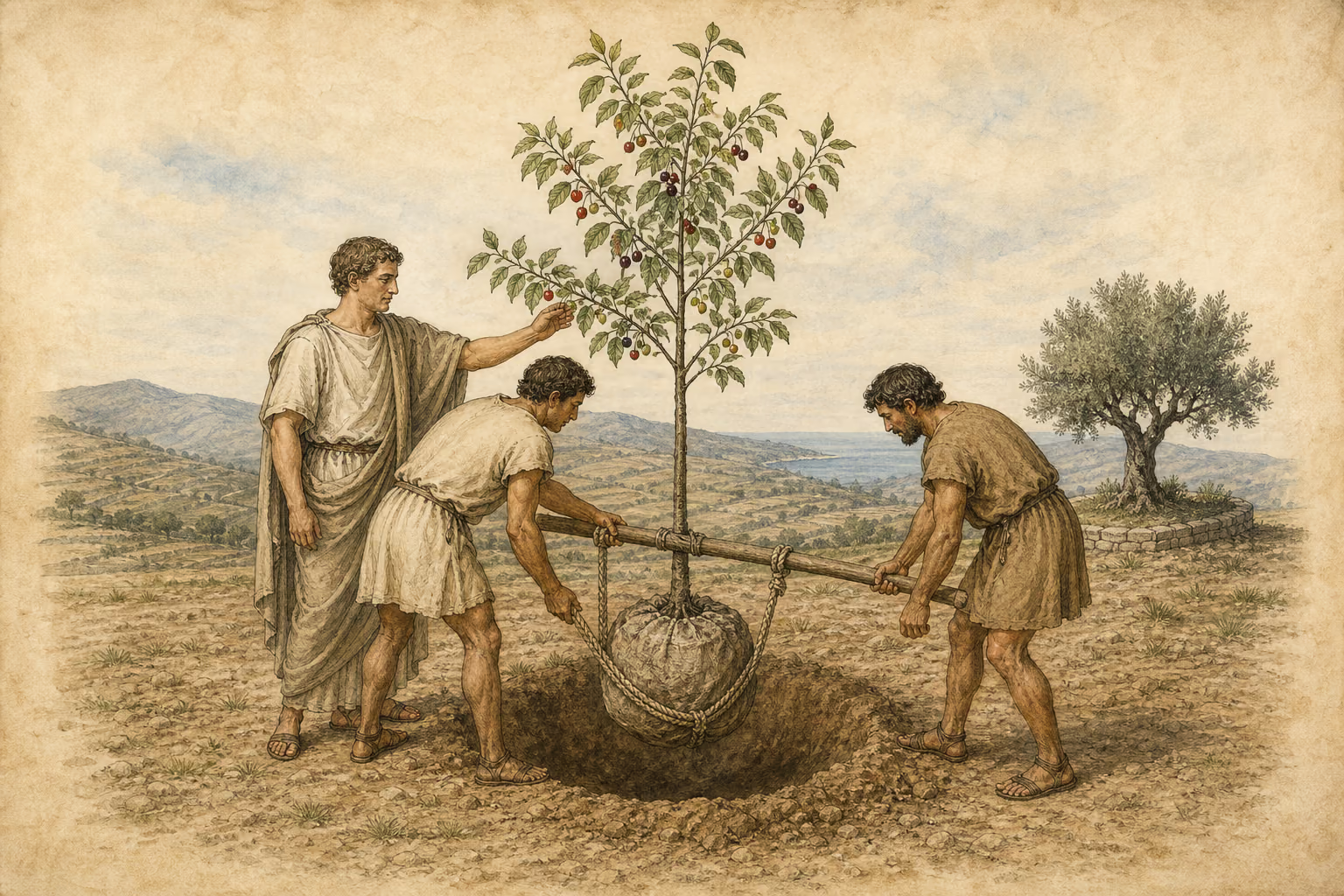
Cerasi ante victoriam Mithridaticam L. Luculli non fuere in Italia, ad urbis annum DCLXXX. is primum invexit e Ponto, annisque CXX trans oceanum in Britanniam usque pervenere; eadem [ut diximus] in Aegypto nulla cura potuere gigni. cerasorum Aproniana maxime rubent, nigerrima sunt Lutatia, Caeciliana vero et rotunda. lunianis gratus sapor, sed paene tantum sub arbore sua, adeo teneris, ut gestatum non tolerent. principatus duracinis quae Pliniana Campania appellat, in Belgica vero Lusitanis, in ripis etiam Rheni. tertius iis colos e nigro ac rubenti viridique, similis maturescentibus semper. minus quinquennium est quod prodiere quae vocant laurea, non ingratae amaritudinis, insitae in lauru. sunt et Macedonica, parvae arboris raroque tria cubita excedentis, et minore etiamnum frutice chamaecerasi. inter prima hoc e pomis colono gratiam annuam refert. septentrione frigidisque gaudet, siccatur etiam sole conditurque ut oliva cadis.
English · Bostock & Riley 1855–57
The cherry did not exist in Italy before the period of the victory gained over Mithridates by L. Lucullus, in the year of the City 680. He was the first to introduce this tree from Pontus, and now, in the course of one hundred and twenty years, it has travelled beyond the Ocean, and arrived in Britannia even. The cherry, as we have already stated, in spite of every care, it has been found impossible to rear in Egypt. Of this fruit, that known as the “Apronian” is the reddest variety, the Lutatian being the blackest, and the Cæcilian perfectly round. The Junian cherry has an agreeable flavour, but only, so to say, when eaten beneath the tree, as they are so remarkably delicate that they will not bear carrying. The highest rank, however, has been awarded to the duracinus variety, known in Campania as the “Plinian” cherry, and in Belgica to the Lusitanian cherry, as also to one that grows on the banks of the Rhenus. This last kind has a third colour, being a mixture of black, red, and green, and has always the appearance of being just on the turn to ripening. It is less than five years since the kind known as the “laurel-cherry” was introduced, of a bitter but not unpleasant flavour, the produce of a graft upon the laurel. The Macedonian cherry grows on a tree that is very small, and rarely exceeds three cubits in height; while the chamæcerasus is still smaller, being but a mere shrub. The cherry is one of the first trees to recompense the cultivator with its yearly growth; it loves cold localities and a site exposed to the north. The fruit are sometimes dried in the sun, and preserved, like olives, in casks.