LIBER XV · CAPUT 6
THE CULTURE OF THE OLIVE: ITS MODE OF PRESERVATION. THE METHOD OF MAKING OLIVE OIL
Latine · Mayhoff 1906
condi olivas optime orchites et posias, vel virides in muria vel fractas in lentisco. oleum quam acerbissima oliva optimum fieri. cetero quam primum e terra colligendam, si inquinata sit, lavandam; siccari triduo satis esse. si gelent frigora, quarto die premendam; 5 hanc et sale aspergi. oleum in tabulato minui deteriusque fieri, item in amurca et fracibus — hae sunt carnes et inde faeces —; quare saepius die capulandum, praeterea concha et in plumbeas cortinas; aere vitiari. ferventibus omnia ea fieri clausisque torcularibus et quam minime ventilatis, ideo nec ligna ibi caedi oportere — qua de causa e nucleis ipsarum ignis aptissimus —; ex cortinis in labra fundendum, ut fraces et amurca linquantur. ob id crebrius vasa mutanda, fiscinas spongia tergendas, ut quam maxime pura sinceritas constet. postea inventum ut lavarentur utique ferventi aqua, protinus prelo subicerentur solidae — ita enim amurca exprimitur —, mox trapetis fractae premerentur iterum. premi plus quam centenos modios non probant: factus vocatur; quod vero post molam primum expressum est, flos. factus tres gemino foro a quaternis hominibus nocte et die premi iustum est.
English · Bostock & Riley 1855–57
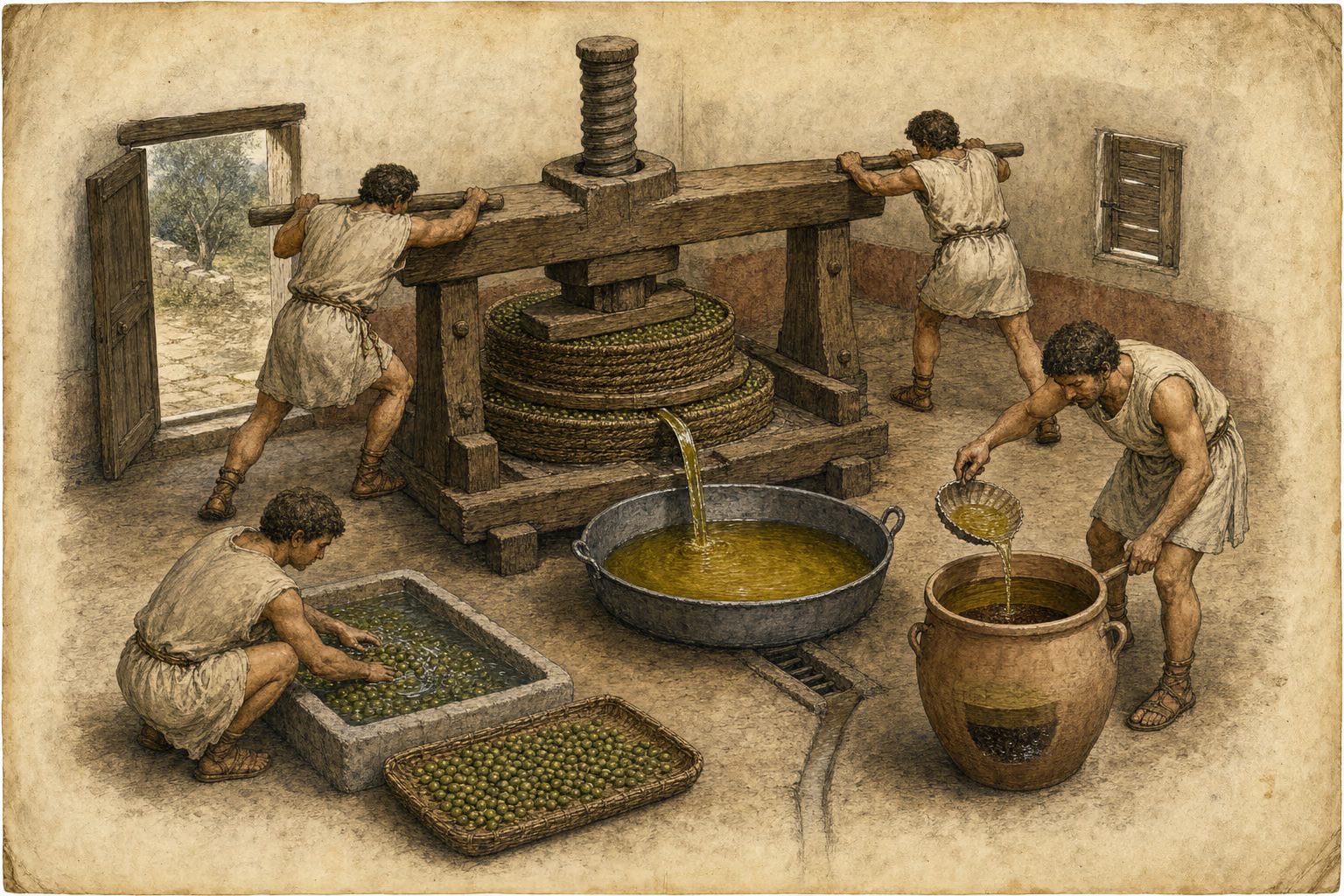
According to him, the best method of preserving olives is to put the orchites and the posia, while green, in a strong brine, or else to bruise them first, and preserve them in mastich oil. The more bitter the olive, he says, the better the oil; but they should be gathered from the ground the very moment they fall, and washed if they are dirty. He says that three days will be quite sufficient for drying them, and that if it is frosty weather, they should be pressed on the fourth, care being taken to sprinkle them with salt. Olives, he informs us, lose oil by being kept in a boarded store-room, and deteriorate in quality; the same being the case, too, if the oil is left with the amurca and the pulp, or, in other words, the flesh of the olive that forms the residue and becomes the dregs. For this reason, he recommends that the oil should be poured off several times in the day, and then put into vessels or cauldrons of lead, for copper vessels will spoil it, he says. All these operations, however, should be carried on with presses heated and tightly closed, and exposed to the air as little as possible—for which reason he recommends that wood should never be cut there, the most convenient fuel for the fires being the stones of the berries. From the cauldron the oil should be poured into vats, in order that the pulp and the amurca may be disengaged in a solidified form: to effect which object the vessels should be changed as often as convenient, while at the same time the osier baskets should be carefully cleaned with a sponge, that the oil may run out in as clean and pure a state as possible.
In later times, the plan has been adopted of invariably crushing the olives in boiling water, and at once putting them whole in the press—a method of effectually extracting the amurca—and then, after crushing them in the oil-press, subjecting them to pressure once more. It is recommended, that not more than one hundred modii should be pressed at one time: the name given to this quantity is “factus,” while the oil that flows out at the first pressure is called the “flos.” Four men, working at two presses day and night, ought to be able to press out three factuses of olives.