LIBER XV · CAPUT 7
FORTY-EIGHT VARIETIES OF ARTIFICIAL OILS. THE CICUS-TREE OR CROTON, OR SILI, OR SESAMUM
Latine · Mayhoff 1906
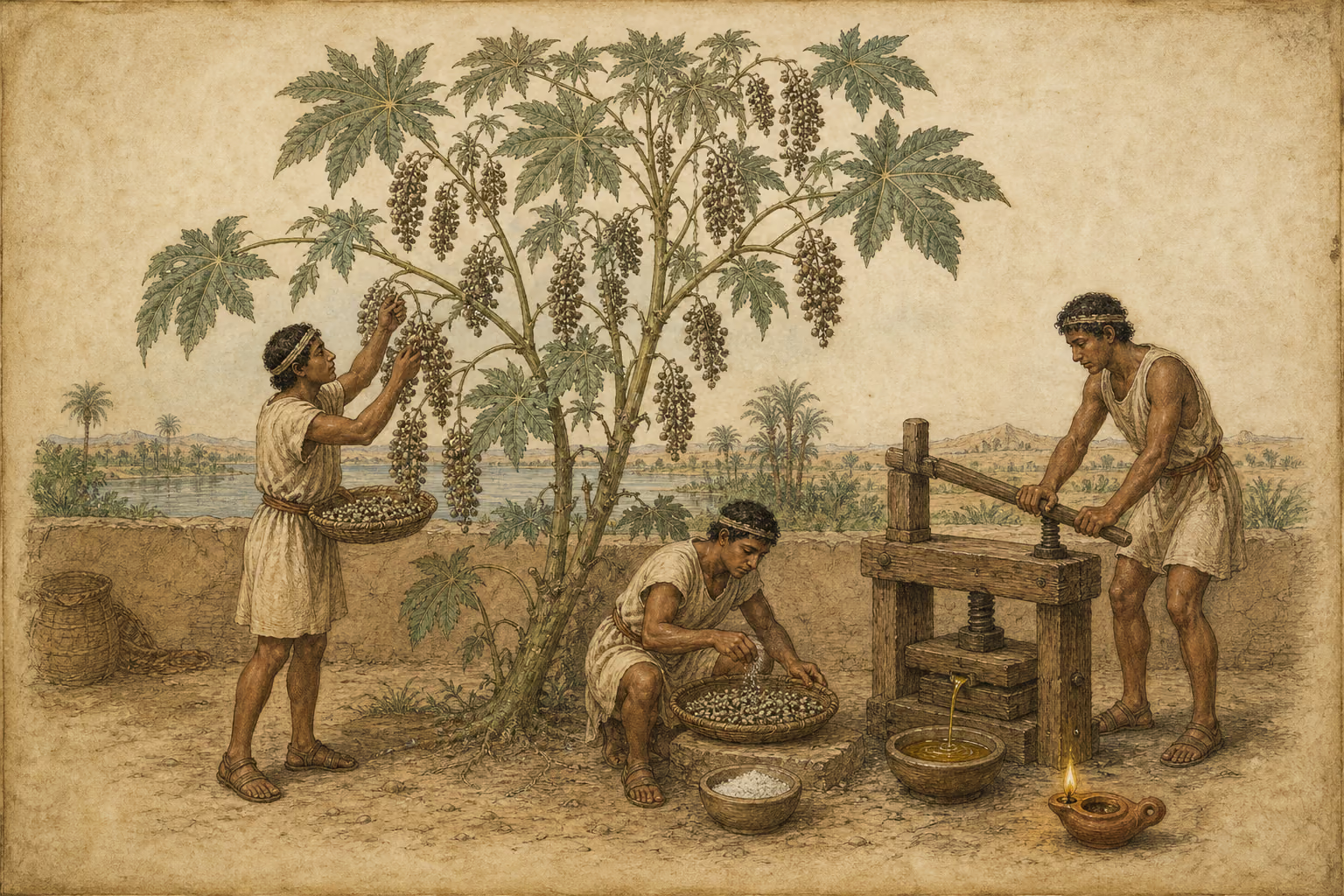
Non erat tum ficticium oleum, ideoque arbitror de eo nihil a Catone dictum. nunc eius genera plura, primumque persequemur ea quae ex arboribus fiunt, et inter illas ante omnes ex oleastro. tenue id multoque amarius quam oleae et tantum ad medicamenta utile. simillimum huic est ex chamelaea, frutice saxoso, non altiore palmo, foliis oleastri bacisque. proximum fit e cici, arbore in Aegypto copiosa (alii crotonem, alii sibi, alii sesamon silvestre eam appellant), ibique, non pridem et in Hispania, repente provenit altitudine oleae, caule ferulaceo, folio vitium, semine uvarum gracilium pallidarumque. nostri earn ricinum vocant a similitudine seminis. coquitur id in aqua, innatansque oleum tollitur. at in Aegypto, ubi abundat, sine igni et aqua sale adspersum exprimitur, cibis foedum, lucernis exile. amygdalinum, quod aliqui neopum vocant, ex amaris nucibus arefactis et in offam contusis adspersam aqua iterumque tusis exprimitur. fit et lauru admixto drupparum oleo, quidamque e bacis exprimunt tantum, alii foliis modo, aliqui folio et cortice bacarum, nec non styracem addunt aliosque odores; optima laurus ad id latifolia, silvestris, nigris bacis. simile est et e myrto nigra, et haec latifolia melior. tunduntur bacae adspersae calida aqua, mox decoquuntur. alii foliorum mollissima decoquunt in oleo et exprimunt, alii deiecta ea in oleum prius sole maturant. eadem ratio et in sativa myrto, sed praefertur silvestris minore semine, quam quidam oxymyrsinen, alii chamaemyrsinen vocant, aliqui acoron a similitudine; est enim brevis, fruticosa. fit et e citro, cupresso, nucibus iuglandibus quod caryinum vocant, malis, cedro quod pisselaeon, e grano quoque Cnidio purgato semine et tunso, item lentisco. nam cyprinum et e glande Aegyptia ut fieret odorum causa dictum est. Indi e castanets ac sesima atque oryza facere dicuntur, Ichthyophagi e piscibus. inopia cogit aliquando luminum causa et e platani bacis fieri aqua et sale maceratis. et oenanthinum fit; de ipsa oenanthe dictum est in unguentis. gleucino mustum incoquitur vapore lento, ab aliis sine igni circumdatis vinaceis diebus XXI bis singulis permixtum, consumiturque mustum oleo. aliqui non samp- suchum tantum admiscent, sed etiam pretiosiora odoramenta,ut in gymnasiis quoque conditur odoribus, sed vilissimis. fit ex aspalatho, calamo, balsamo, iri, cardamomo, meliloto, nardo Gallico, panace, sampsucho, helenio, cinnamomi radice, omnium sucis in oleo maceratis expressisque. sic et rhodinum e rosis, iuncinum e iunco, quod et rosaceo simillimum, item hyoscyamo et lupinis, narcisso. plurimum autem in Aegypto e raphani semine aut gramine herba quod chortinon vocant, item e sesima et urtica quod cnidinum appellant. e lilio et alibi fit sub diu sole, luna, pruina maceratum. suis herbis componunt inter Cappadociam et Galatiam quod Selgiticum vocant, nervis admodum utile, sicut in Italia Iguvini. e pice fit quod pissinum appellant, cum coquitur, velleribus supra halitum eius expansis atque ita expressis. probatum maxime e Bruttia; est enim pinguissima et resinosissima. color oleo fulvus. sponte nascitur in Syriae maritimis quod elaeomeli vocant; manat ex arboribus pingue, crassius melle, resina tenuius, sapore dulci, et hoc medicis. veteri quoque oleo usus est ad quaedam genera morborum; existimaturque et ebori vindicando a carie utile esse: certe simulacrum Saturni Romae intus oleo repletum est.
English · Bostock & Riley 1855–57
In those times artificial oils had not been introduced, and hence it is, I suppose, that we find no mention made of them by Cato; at the present day the varieties are very numerous. We will first speak of those which are produced from trees, and among them more particularly the wild olive. This olive is small, and much more bitter than the cultivated one, and hence its oil is only used in medicinal preparations: the oil that bears the closest resemblance to it is that extracted from the chamelæa, a shrub which grows among the rocks, and not more than a palm in height; the leaves and berries being similar to those of the wild olive. A third oil is that made of the fruit of the cicus, a tree which grows in Egypt in great abundance; by some it is known as croton, by others as sili, and by others, again, as wild sesamum: it is not so very long since this tree was first introduced here. In Spain, too, it shoots up with great rapidity to the size of the olive-tree, having a stem like that of the ferula, the leaf of the vine, and a seed that bears a resemblance to a small pale grape. Our people are in the habit of calling it “ricinus,” from the resemblance of the seed to that insect. It is boiled in water, and the oil that swims on the surface is then skimmed off: but in Egypt, where it grows in a greater abundance, the oil is extracted without employing either fire or water for the purpose, the seed being first sprinkled with salt, and then subjected to pressure: eaten with food this oil is repulsive, but it is very useful for burning in lamps.
Amygdalinum, by some persons known as “metopium,” is made of bitter almonds dried and beaten into a cake, after which they are steeped in water, and then beaten again. An oil is extracted from the laurel also, with the aid of olive oil. Some persons use the berries only for this purpose, while others, again, employ the leaves and the outer skin of the berries: some add storax also, and other odoriferous substances. The best kind for this purpose is the broad-leaved or wild laurel, with a black berry. The oil, too, of the black myrtle is of a similar nature; that with the broad leaf is reckoned also the best. The berries are first sprinkled with warm water, and then beaten, after which they are boiled: some persons take the more tender leaves, and boil them in olive oil, and then subject them to pressure, while others, again, steep them in oil, and leave the mixture to ripen in the sun. The same method is also adopted with the cultivated myrtle, but the wild variety with small berries is generally preferred; by some it is known as the oxymyrsine, by others as the chamæmyrsine, and by others, again, as the acoron, from its strong resemblance to that plant, it being short and branching.
An oil is made, too, from the citrus, and from the cypress; also, from the walnut, and known by the name of “caryinon,” and from the fruit of the cedar, being generally known as “pisselæon.” Oil is extracted from the grain of Cnidos, the seed being first thoroughly cleaned, and then pounded; and from mastich also. As to the oil called “cyprinum,” and that extracted from the Egyptian berry, we have already mentioned the mode in which they are prepared as perfumes. The Indians, too, are said to extract oils from the chesnut, sesamum, and rice, and the Ichthyophagi from fish. Scarcity of oil for the supply of lamps sometimes compels us to make it from the berries of the plane-tree, which are first steeped in salt and water.
Œnanthinum, again, is made from the œnanthe, as we have already stated when speaking of perfumes. In making gleucinum, must is boiled with olive-oil at a slow heat; some persons, however, do not employ fire in making it, but leave a vessel, filled with oil and must, surrounded with grape husks, for two and twenty days, taking care to stir it twice a day: by the end of that period the whole of the must is imbibed by the oil. Some persons mix with this not only sampsuchum, but perfumes of still greater price: that, too, which is used in the gymnasia is scented with perfumes as well, but those of the very lowest quality. Oils are made, too, from aspalathus, from calamus, balsamum, cardamum, melilot, Gallic nard, panax, sampsuchum, helenium, and root of cinnamomum, the plants being first left to steep in oil, and then pressed. In a similar manner, too, rhodinum is made from roses, and juncinum from the sweet rush, bearing a remarkable resemblance to rose-oil: other oils, again, are extracted from henbane, lupines, and narcissus. Great quantities of oil are made in Egypt, too, of radish seed, or else of a common grass known there as chortinon. Sesamum also yields an oil, and so does the nettle, its oil being known as “cnidinum.” In other countries, too, an oil is extracted from lilies left to steep in the open air, and subjected to the influence of the sun, moon, and frosts. On the borders of Cappadocia and Galatia, they make an oil from the herbs of the country, known as “Selgicum,” remarkably useful for strengthening the tendons, similar, in fact, to that of Iguvium in Italy. From pitch an oil is extracted, that is known as “pissinum” it is made by boiling the pitch, and spreading fleeces over the vessels to catch the steam, and then wringing them out: the most approved kind is that which comes from Bruttium, the pitch of that country being remarkably rich and resinous: the colour of this oil is yellow.
There is an oil that grows spontaneously in the maritime parts of Syria, known to us as “elæomeli;” it is an unctuous substance which distils from certain trees, of a thicker consistency than honey, but somewhat thinner than resin; it has a sweet flavour, and is employed for medicinal purposes. Old olive oil is of use for some kinds of maladies; it is thought to be particularly useful, too, in the preservation of ivory from decay: at all events, the statue of Saturn, at Rome, is filled with oil in the interior.