LIBER XVI · CAPUT 14
TWO VARIETIES OF THE LINDEN-TREE
Latine · Mayhoff 1906
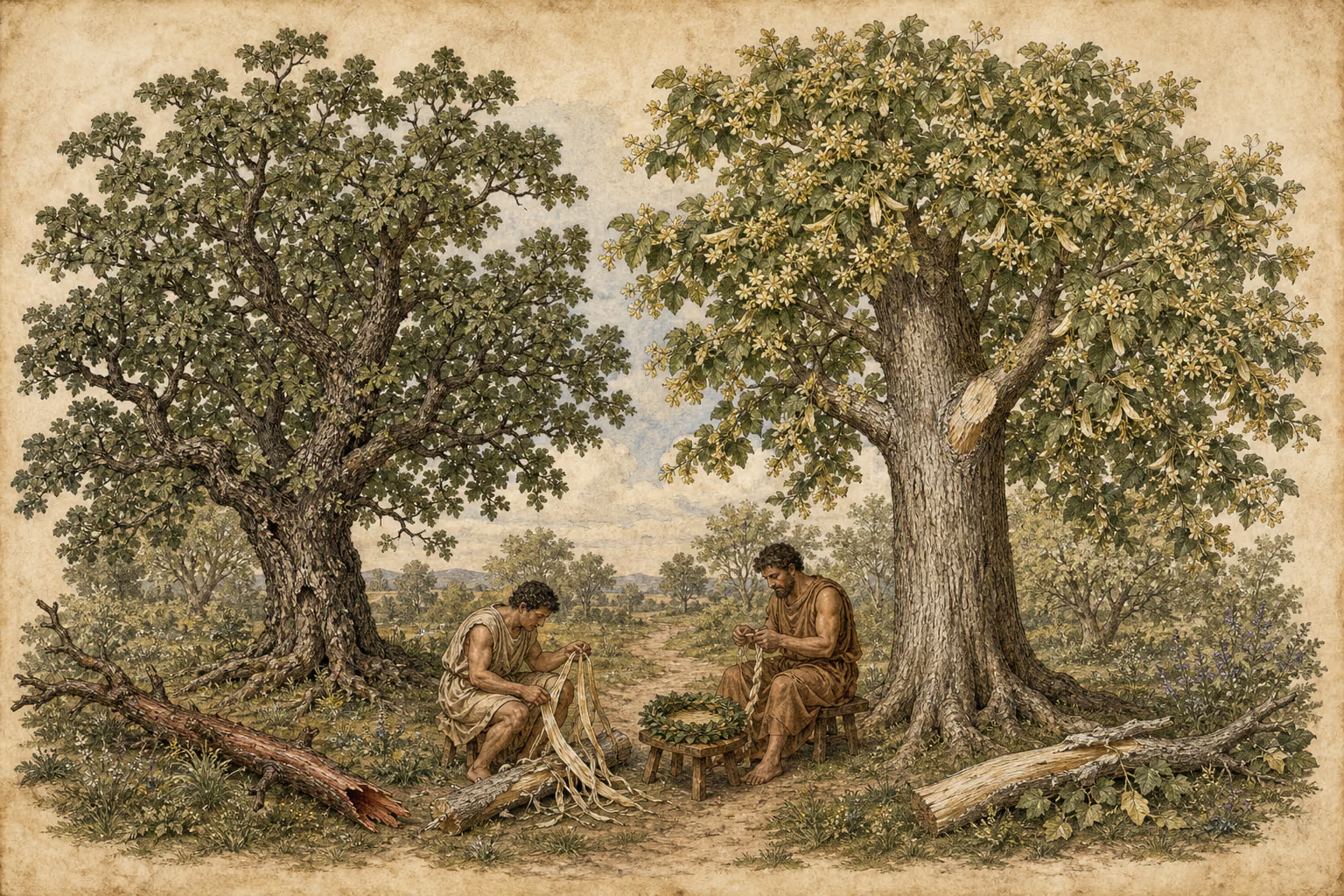
In tilia mas et femina differunt omni modo. namque et materies maris dura rufiorque ac nodosa et odoratior, cortex quoque crassior ac detractus inflexibilis. nec semen fert aut florem ut femina, quae crassior arbore, materie candida praecellensque est. mirum in hac arbore fructum a nullo animalium adtingi, foliorum corticisque sucum esse dulcem. inter corticem ac lignum tenues tunicae multiplici membrana, e quibus vincula tiliae vocantur tenuissimumque eorum philyrae, coronarum lemniscis celebres antiquorum honore. materies teredinem non sentit, proceritate perquam modica, verum utilis.
English · Bostock & Riley 1855–57
In the linden-tree the male and the female are totally different. In the male the wood is hard and knotty, of a redder hue, and with a stronger smell; the bark, too, is thicker, and, when taken off, has no flexibility. The male bears neither seed nor blossom as the female does, the trunk of which is thicker, and the wood white and of excellent quality. It is a singular thing, but no animal will touch the fruit of this tree, although the juice of the leaves and the bark is sweet. Between the bark and the wood there are a number of thin coats, formed by the union of numerous fine membranes; of these they make those bands which are known to us as “tiliæ.” The finer membranes are called “philyræ,” and are rendered famous by the honourable mention that the ancients have made of them as ribbons for wreaths and garlands. The wood of this tree is proof against the attacks of worms: it is of moderate height only, but of very considerable utility.