LIBER XVI · CAPUT 13
TREES THE WOOD OF WHICH IS HIGHLY VALUED. FOUR VARIETIES OF THE ASH
Latine · Mayhoff 1906
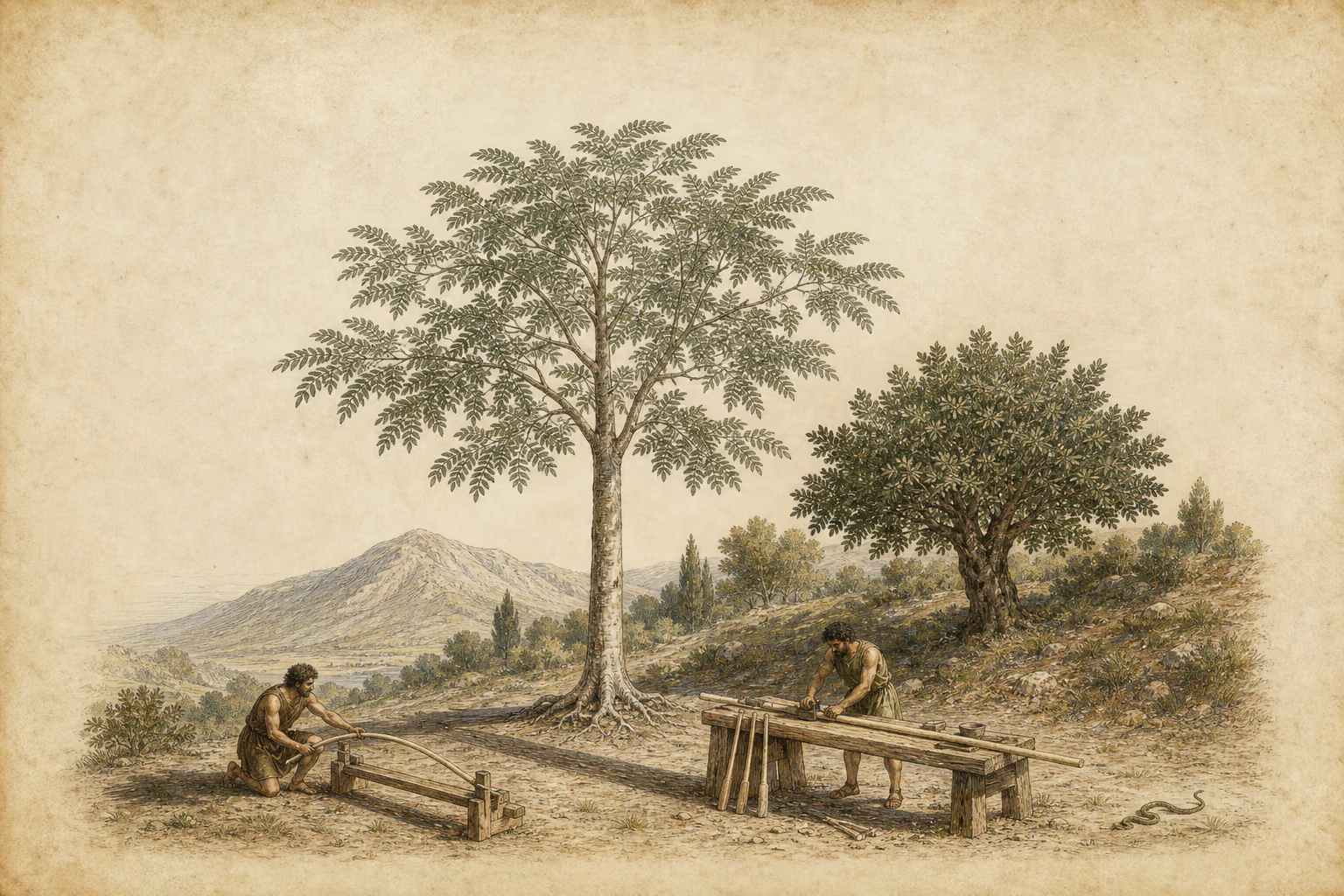
Materiae enim causa reliquas arbores natura genuit copiosissimamque fraxinum. procera haec ac teres, pinnata et ipsa folio, multumque Homeri praeconio et Achillis hasta nobilitata. materies est ad plurima utilis; ea quidem, quae fit in Ida Troadis, in tantum cedro similis, ut ementes fallat cortice ablato. Graeci duo genera eius fecere: longam enodem, alteram brevem duriorem fuscioremque, laureis foliis. bumeliam vocant in Macedonia amplissimam lentissimamque. alii situ divisere, campestrem enim esse crispam, montanam spissam. folia earum iumentis mortifera, ceteris ruminantium innocua Graeci prodidere; in Italia nec iumentis nocent. contra serpentes vero suco expresso ad potum et inposita ulceri opifera, ut nihil aeque, reperiuntur, tantaque est vis, ut ne matutinas quidem occidentesve umbras, cum sunt longissimae, serpens arboris eius adtingat, adeo ipsam procul fugiat. experti prodimus, si fronde ea circumcludantur ignis et serpens, in ignes potius quam in fraxinum fugere serpentem. mira naturae benignitas, prius quam hae prodeant, florere fraxinum nec ante conditas folia demittere.
English · Bostock & Riley 1855–57
It is for the sake of their timber that Nature has created the other trees, and more particularly the ash, which yields it in greater abundance. This is a tall, tapering tree, with a feather-like leaf: it has been greatly ennobled by the encomiums of Homer, and the fact that it formed the spear of Achilles: the wood of it is employed for numerous purposes. The ash which grows upon Mount Ida, in Troas, is so extremely like the cedar, that, when the bark is removed, it will deceive a purchaser.
The Greeks have distinguished two varieties of this tree, the one long and without knots, the other short, with a harder wood, of a darker colour, and a leaf like that of the laurel. In Macedonia they give the name of “bumelia” to an ash of remarkably large size, with a wood of extreme flexibility. Some authors have divided this tree into several varieties, according to the localities which it inhabits, and say that the ash of the plains has a spotted wood, while that of the mountain ash is more compact. Some Greek writers have stated that the leaf of the ash is poisonous to beasts of burden, but harmless to all the animals that ruminate. The leaves of this tree in Italy, however, are not injurious to beasts of burden even; so far from it, in fact, that nothing has been found to act as so good a specific for the bites of serpents as to drink the juice extracted from the leaves, and to apply them to the wounds. So great, too, are the virtues of this tree, that no serpent will ever lie in the shadow thrown by it, either in the morning or the evening, be it ever so long; indeed, they will always keep at the greatest possible distance from it. We state the fact from ocular demonstration, that if a serpent and a lighted fire are placed within a circle formed of the leaves of the ash, the reptile will rather throw itself into the fire than encounter the leaves of the tree. By a wonderful provision of Nature, the ash has been made to blossom before the serpents leave their holes, and the fall of its leaf does not take place till after they have retired for the winter.