LIBER XVI · CAPUT 12
HOW THE RESIN CALLED ZOPISSA IS PREPARED
Latine · Mayhoff 1906
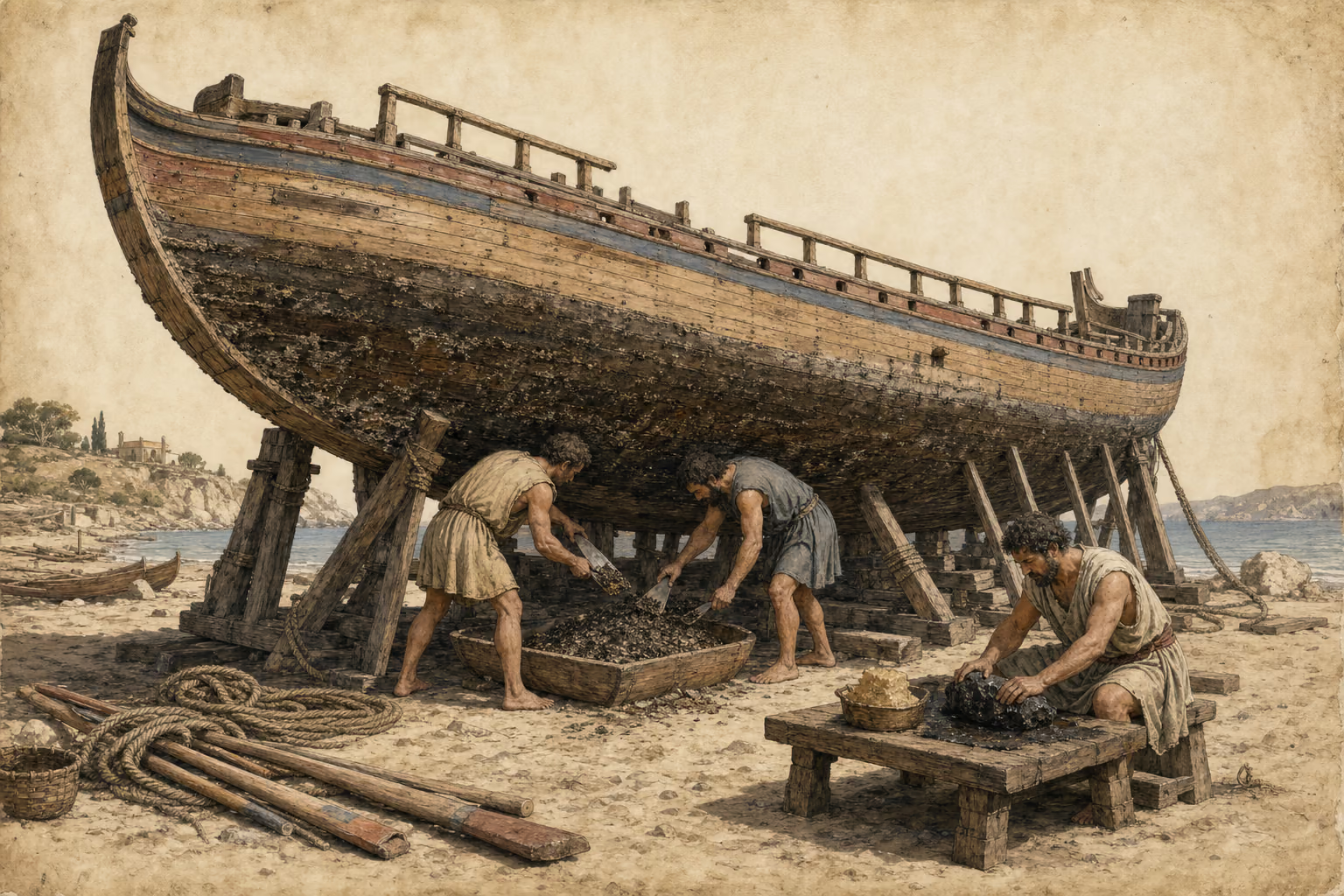
non omittendum apud eosdem zopissam vocari derasam navibus maritimis picem cum cera, nihil non experiente vita, multoque efficaciorem ad omnia, quibus pices resinaeque prosunt, videlicet adiecto salis callo.
Aperitur picea e parte solari, non plaga, sed vulnere ablati corticis, cum plurimuin bipedali hiatu, ut a terra cubito cum minimum absit. nec corpori ipsi parcitur, ut in ceteris, quoniam astula in fructu est. verum haec proxima laudatur, altior amaritudinem adfert. postea umor omnis e tota confluit in ulcus. item in taeda. cum id manare desiit, simili modo ex alia parte aperitur ac deinde alia. postea tota arbor succiditur et medulla eius uritur. sic et in Syria terelhintho detrahunt cortices, ibi quidem et e ramis ac radicibus, cum resina damnetur ex his partibus. in Macedonia laricem masculam urunt, feminae radices tantum. Theopompus scripsit in Apolloniatarum agro picem fossilem, non deteriorem Macedonica, inveniri. pix optima ubique ex apricis aquilonis situ, ex opacis horridior virusque praeferens, frigida hieme deterior ac minus copiosa et decolor. quidam arbitrantur in montuosis copia praestantiorem ac colore et dulciorem fieri, odore quoque gratiorem, dum resina sit, decoctam autem minus picis reddere, quoniam in serum abeat, tenuioresque esse ipsas arbores quam in planis, sed has et illas serenitate steriliores. fructum quaedam proximo anno ab incisu largiuntur, aliae secundo, quaedam tertio. expletur autem plaga resina, non cortice nec cicatrice, quae in hac arbore non coit.
Inter haec genera propriam quidam fecere sappinum, quoniam ex cognatione harum seritur, qualis dicta est in nucleis, eiusdemque arboris imas partes taedas vocant, cum sit illa arbor nil aliud quam picea feritatis paulum mitigatae satu, sappinus autem materies caesurae genere fiat, sicuti docebimus.
English · Bostock & Riley 1855–57
We must not omit, too, that the Greeks call by the name of zopissa the pitch mixed with wax which has been scraped from off the bottoms of sea-going ships; for there is nothing, in fact, that has been left untried by mankind. This composition is found much more efficient for all those purposes in which pitch and resin are employed, in consequence of the superior hardness which has been imparted to it by the sea-salt.
The pitch-tree is opened on the side that faces the sun, not by means of an incision, but of a wound made by the removal of the bark: this opening being generally two feet in width and one cubit from the ground, at the very least. The body of the tree, too, is not spared in this instance, as in others, for even the very chips from off it are considered as having their use; those, however, from the lower part of the tree are looked upon as the best, the wood of the higher parts giving the resin a bitter taste. In a short time all the resinous juices of the entire tree come to a point of confluence in the wound so inflicted: the same process is adopted also with the torch-tree. When the liquid ceases to flow, the tree is opened in a similar manner in some other part, and then, again, elsewhere: after which the whole tree is cut down, and the pith of it is used for burning.
So, too, in Syria they take the bark from off the terebinth; and, indeed, in those parts they do not spare even the root or branches, although in general the resin obtained from those parts is held in disesteem. In Macedonia they subject the whole of the male larch to the action of fire, but of the female only the roots. Theopompus has stated in his writings that in the territory of the Apolloniates there is found a kind of mineral pitch, not inferior to that of Macedonia. The best pitch everywhere is that obtained from trees planted on sunny spots with a north-east aspect; while that which is produced from more shaded localities has a disagreeable look and a repulsive odour. Pitch, too, that is produced amid the cold of winter is of inferior quality, being in smaller quantity, too, and comparatively colourless. Some persons are of opinion that in mountainous localities this liquid is produced in the greatest abundance, and that it is of superior colour and of a sweeter taste and has a finer smell so long as it remains in a state of resin; but that when, on the other hand, it is subjected to boiling, it yields a smaller quantity of pitch, because so much of it goes off in a serous shape. They say that the resinous trees, too, that grow on mountains are thinner than those that are found on plains, but that they are apt, both of them, to be unproductive in clear, dry weather.
Some trees, too, afford a flow of resinous juice the year after the incision is made, some, again, in the second year, and others in the third. The wound so made is filled with resin, but not with bark, or by the cicatrization of the outer coat; for the bark in this tree never unites. Among these varieties some authors have made the sappium to constitute a peculiar kind, because it is produced from the seed of a kindred variety, as we have already stated when speaking of the nuts of trees; and they have given the name of tæda to the lower parts of the tree; although in reality this tree is nothing else but a pitch-tree, which by careful cultivation has lost some small portion of its wild character. The name “sappinus” is also given to the timber of these trees when cut, as we shall have occasion to mention hereafter.