LIBER XVI · CAPUT 18
THE NATURES OF THE VARIOUS TREES ACCORDING TO THEIR LOCALITIES: THE MOUNTAIN TREES, AND THE TREES OF THE PLAIN
Latine · Mayhoff 1906
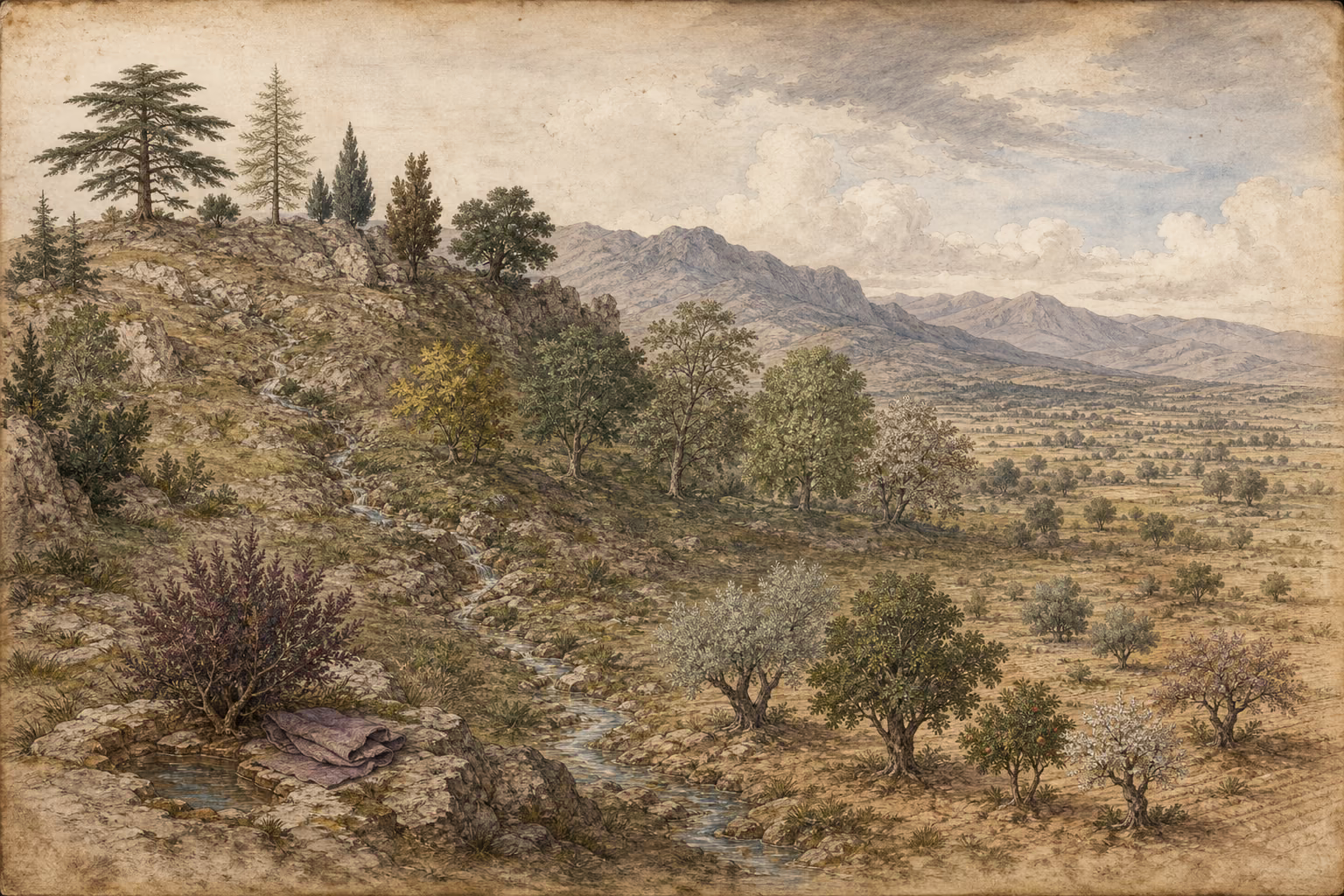
Nunc celeberrimis arborum dictis quaedam in universum de cunctis indicanda sunt. montes amant cedrus, larix, taeda et ceterae, e quibus resina gignitur, item aquifolia, buxus, ilex, iuniperus, terebinthus, populus, ornus, carpinus. est in Appennino et frutex, qui vocatur cotinus, ad linamenta modo conchylii colore insignis. montes et valles diligit abies, robur, castaneae, tilia, ilex, cornus. aquosis montibus gaudent acer, fraxinus, sorbus, tilia, cerasus. non temere in montibus visae sunt prunus, punicae, oleastri, iuglans, mori, sabuci. descendunt et in plana cornus, corylus, quercus, ornus, acer, fraxinus, fagus, carpinus. subeunt et in montuosa ulmus, mains, pirus, laurus, myrtus, sanguinei frutices, ilex tinguendisque vestibus nascentes genistae. gaudet frigidis sorbus, sed magis etiam betulla. Gallica haec arbor mirabili candore atque tenuitate, terribilis magistratuum virgis, eadem circulis flexilis, item corbium costis. bitumen ex ea Galliae excoquunt. in eosdem situs comitantur et spina, nuptiarum facibus auspicatissima, quoniam inde fecerint pastores qui rapuerunt Sabinas, ut auctor est Masurius. nunc facibus carpinus, corylus familiarissimae.
Aquas odere cupressi, iuglandes, castaneae, laburnum. Alpina et haec arbor, nec vulgo nota, dura ac candida materie, cuius florem cubitalem longitudine apes non adtingunt. odit et quae appellatur Iovis barba, in opere topiario tonsilis et in rotunditatem spissa, argenteo folio. non nisi in aquosis proveniunt salices, alni, populi, siler, ligustra tesseris utilissima, item vaccinia Italiae in aucupiis sata, Galliae vero etiam purpurae tinguendae causa ad servitiorum vestes. quaecumque communia sunt montibus planisque, maiora fiuntet aspectu pulchriora quae in campestribus, meliora autem fructu, materie crispiora quae in montibus, exceptis malis pirisque.
English · Bostock & Riley 1855–57
Having now made mention of the more remarkable trees, it remains for me to state some general facts connected with them all. The cedar, the larch, the torch-tree, and the other resinous trees prefer mountainous localities: the same is the case also with the aquifolia, the box, the holm-oak, the juniper, the terebinth, the poplar, the wild mountain-ash, and the yoke-elm. On the Apennines there is also found a shrub known as the “cotinus,” famous for imparting to cloth a purple colour like that of the murex. The fir, the robur, the chesnut, the lime, the holm-oak, and the cornel will grow equally well on mountain or in valley; while the maple, the ash, the service, the linden, and the cherry, more particularly prefer a watery spot on the slope of a hilly declivity. It is not often that we see the plum, the pomegranate, the olive, the walnut, the mulberry, or the elder, growing on an elevated site: the cornel, too, the hazel, the quercus, the wild ash, the maple, the ash, the beech, and the yoke-elm, descend to the plains; while the elm, the apple, the pear, the laurel, the myrtle, the blood-red shrub, the holm-oak, and the brooms that are employed in dyeing cloths, all of them aspire to a more elevated locality.
The sorb, and even still more the birch, are fond of a cold site; this last is a native of Gaul, of singular whiteness and slender shape, and rendered terrible as forming the fasces of the magistracy. From its flexibility it is employed also in making circlets and the ribs of panniers. In Gaul, too, they extract a bitumen from it by boiling. To a cold site, also, belongs the thorn, which affords the most auspicious torches of all for the nuptial ceremony; from the circumstance, as Massurius assures us, that the shepherds, on the occasion of the rape of the Sabine women, made their torches of the wood of this tree: at the present day, however, the woods of the yoke-elm and the hazel are more generally employed for this purpose.
The cypress, the walnut, the chesnut, and the laburnum, are averse to water. This last tree is also a native of the Alps, and far from generally known: the wood is hard and white, and the flowers, which are a cubit in length, no bee will ever touch. The shrub, too, known as Jupiter’s beard, manifests an equal dislike to water: it is often clipped, and is employed in ornamental gardening, being of a round, bushy form, with a silvery leaf. The willow, the alder, the poplar, the siler, and the privet, so extensively employed for making tallies, will only grow in damp, watery places; which is the case also with the vaccinium, grown in Italy for drugging our slaves, and in Gaul for the purpose of dyeing the garments of slaves a purple colour. All those trees which are common to the mountains and the plains, grow to a larger size, and are of more comely appearance when grown on the plains, while those found on the mountains have a better wood and more finely veined, with the exception of the apple and the pear.