LIBER XVI · CAPUT 17
FOUR VARIETIES OF THE ELM
Latine · Mayhoff 1906
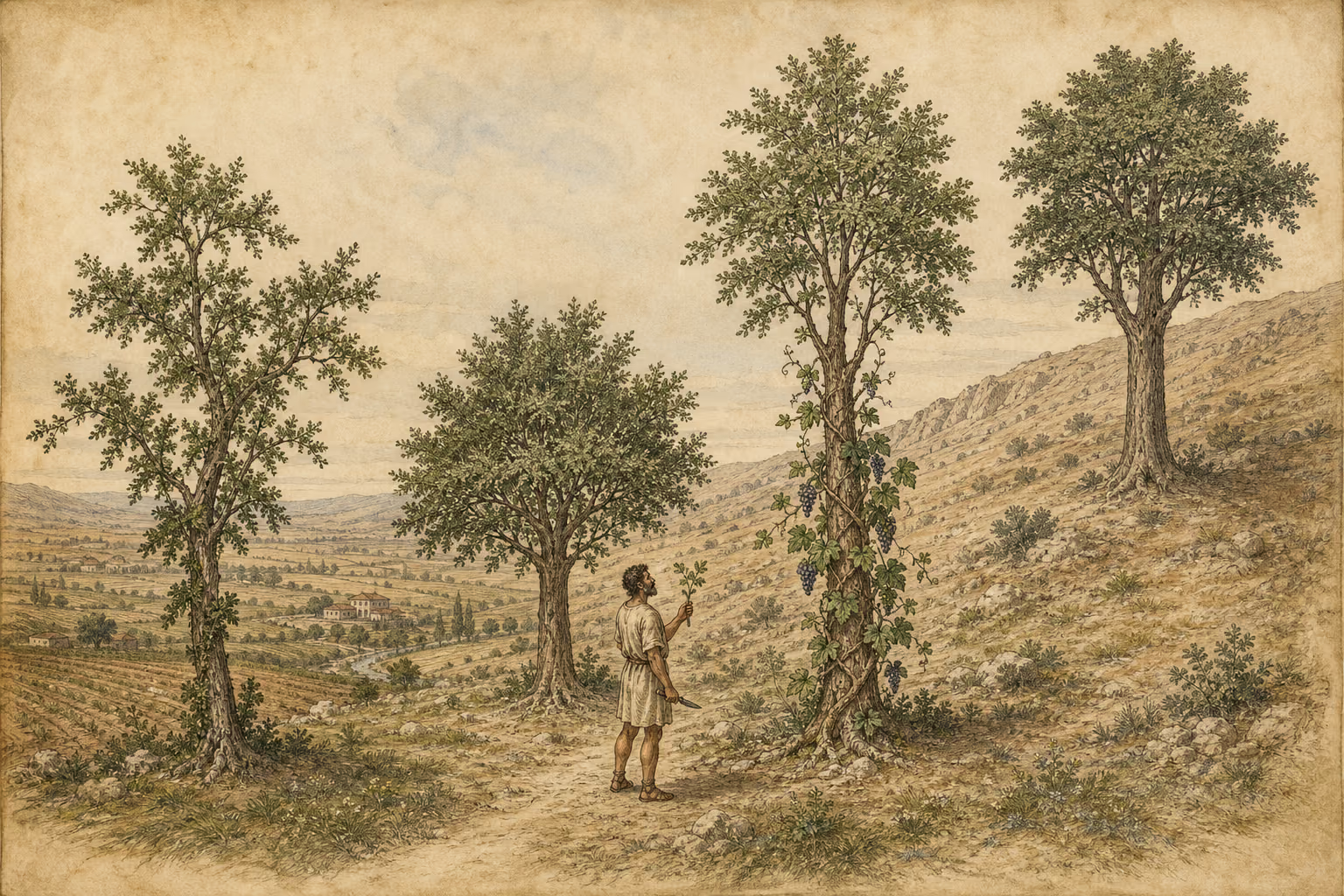
Inter has atque frugiferas materie vitiumque amicitia accipitur ulmus. Graeci duo genera eius novere: montanam quae sit amplior, campestrem quae fruticosa. Italia Atinias vocat excelsissimas et ex iis siccan eas praefert, quae non sint riguae, alterum genus Gallicas, tertium nostrates, densiore folio et ab eodem pediculo numerosiore, quartum silvestre. Atiniae non ferunt samaram —ita vocatur ulmi semen—, omnesque radicum plantis proveniunt, reliquae semine.
English · Bostock & Riley 1855–57
Midway between the preceding ones and the fruit-trees stands the elm, partaking of the nature of the former in its wood, and being akin to the latter in the friendship which it manifests for the vine. The Greeks distinguish two varieties of this tree: the mountain elm, which is the larger of the two, and that of the plains, which is more shrubby. Italy gives the name of “Atinia” to the more lofty kinds, and gives the preference to those which are of a dry nature and will not grow in damp localities. Another variety is the Gallic elm, and a third, the Italian, with leaves lying closer together, and springing in greater numbers from a single stalk. A fourth kind is the wild elm. The Atinia does not produce any samara, that being the name given to the seed of the elm. All the elms will grow from slips or cuttings, and all of them, with the exception of the Atinia, may be propagated from seed.