LIBER XVI · CAPUT 22
THE NATURE OF THE LEAVES WHICH WITHER AND FALL
Latine · Mayhoff 1906
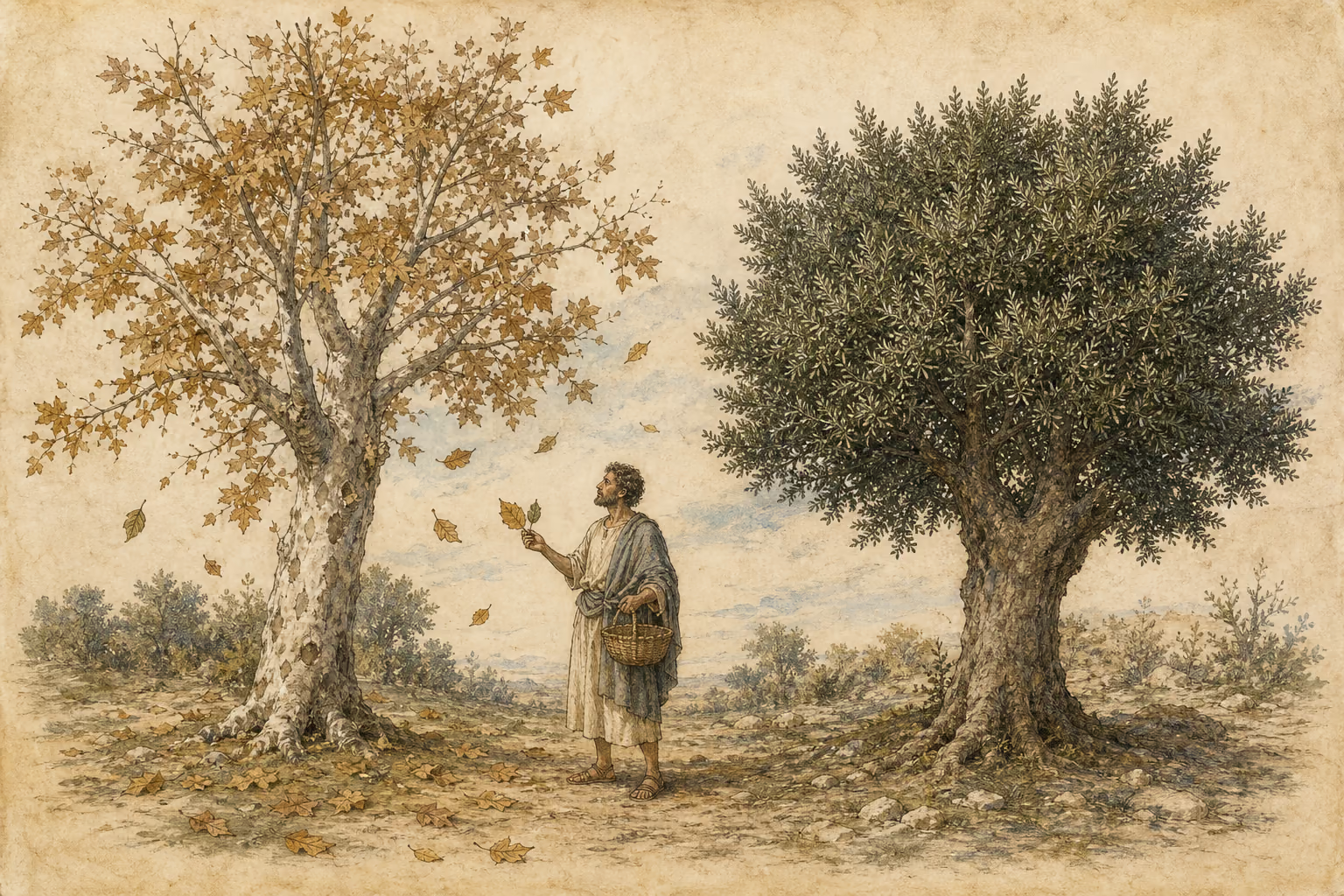
Ceterae omnes extra praedictas—etenim enumerare longum est—folia deperdunt, observatumque non arescere nisi tenuia et lata et mollia, quae vero non decidant, callo crassa et angusta esse. falsa definitio est non decidere iis, quarum pinguior sucus sit. quis enim potest in ilice intellegere? decidere Timaeus mathematicus sole scorpionem transeunte sideris vi et quodam veneno aëris putat. cur ergo non eadem causa adversum omnes polleat, iure miremur. cadunt plurimis autumno, quaedam amittunt tardius atque in hiemes prorogant moras, neque interest maturius germinasse, utpote cum quaedam primae germinent et inter novissimas nudentur, ut amygdalae, fraxini, sabuci, morus autem novissima germinet, cum primis folia demittat. magna et in hoc vis soli. prius decidunt in siccis macrisque, et vetustae prius arbori, multis etiam antequam maturescat fructus, ut serotinae fico et hibernae piro et malo, granatumque est pomum tali tantum aspici in matre. neque iis autem, quae semper retinent comas, eadem folia durant subnascentibus alis; tum arescunt vetera, quod evenit circa solstitia maxime.
Foliorum unitas in suo cuique genere permanet, praeterquam populo, hederae, crotoni, quam et cici diximus vocari.
English · Bostock & Riley 1855–57
All the trees, with the exception of those already mentioned—a list which it would be tedious to enumerate—lose their leaves, and it has been observed that the leaf does not dry up and wither unless it is thin, broad, and soft; while, on the other hand, the leaves that do not fall are those which are fleshy, thick, and narrow. It is an erroneous theory that the leaf does not fall in those trees the juices of which are more unctuous than the rest; for who could make out that such is the case with the holm-oak, for instance? Timæus, the mathematician, is of opinion that the leaves fall while the sun is passing through the sign of Scorpio, being acted upon by the influences of that luminary, and a certain venom which exists in the atmosphere: but then we have a right to wonder how it is that, the same reasons existing, the same influence is not exercised equally on all.
The leaves of most trees fall in autumn, but in some at a later period, remaining on the tree till the approach of winter, it making no difference whether they have germinated at an earlier period or a later, seeing that some that are the very first to bud are among the last to lose their leaves—the almond, the ash, and the elder, for instance: the mulberry, on the other hand, buds the last of all, and loses its leaves among the very first. The soil, too, exercises a very considerable influence in this respect: the leaves falling sooner where it is dry and thin, and more particularly when the tree is old: indeed, there are many trees that lose them before the fruit is ripe, as in the case of the late fig, for instance, and the winter pear: on the pomegranate, too, the fruit, when ripe, beholds nothing but the trunk of the parent tree. And not even upon those trees which always retain their foliage do the same leaves always remain, for as others shoot up beneath them, the old leaves gradually wither away: this takes place about the solstices more particularly.
The leaves continue the same upon every species of tree, with the exception of the poplar, the ivy, and the croton, which we have already mentioned as being called the “cicus.”