LIBER XVI · CAPUT 23
LEAVES WHICH TURN ROUND EVERY YEAR
Latine · Mayhoff 1906
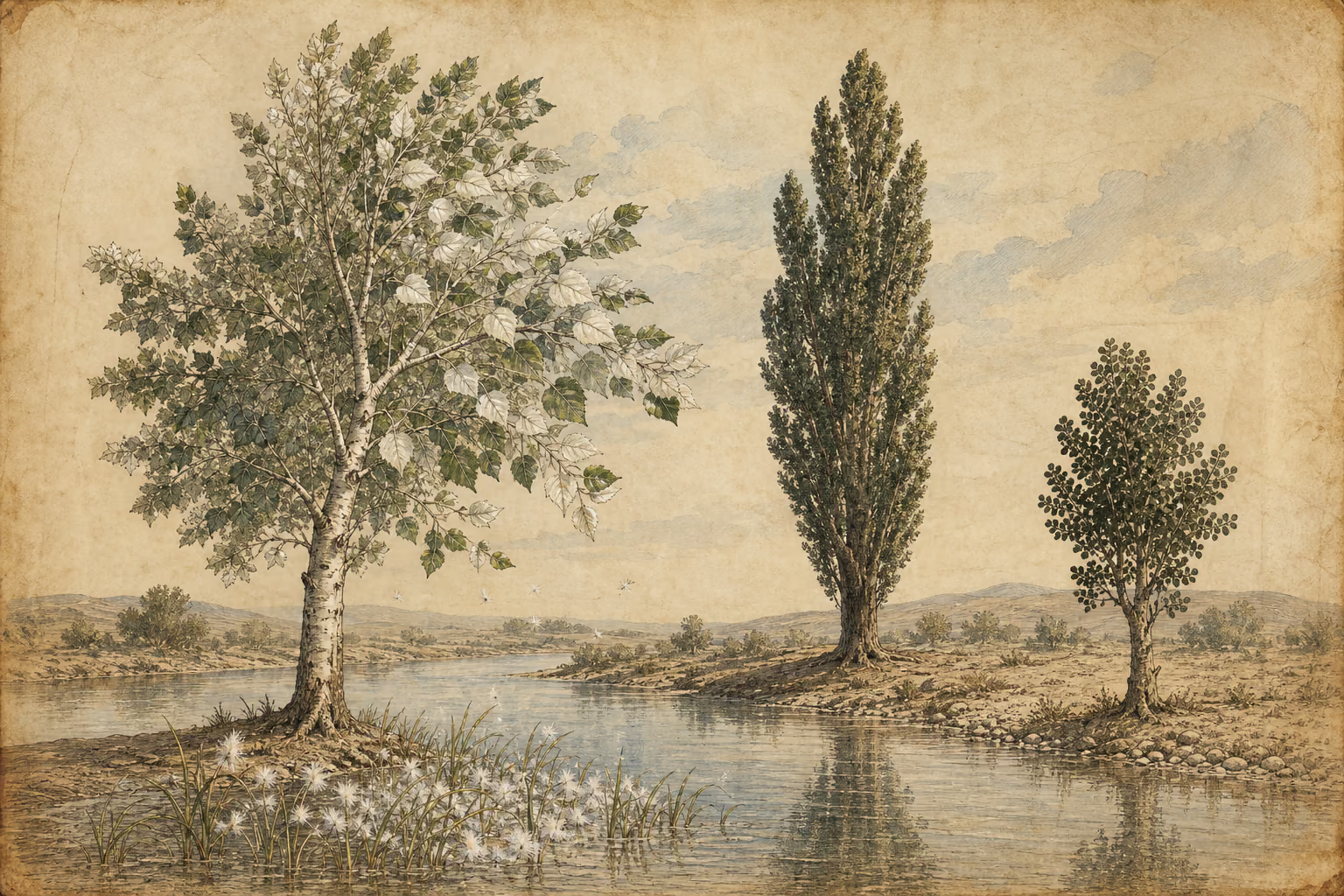
populi tria genera: alba ac nigra et quae Libyca appellatur, minima folio ac nigerrima fungisque enascentibus laudatissima. alba folio bicolor, superne candicans, inferiore parte viridi. huic nigraeque et crotoni in iuventa circinatae rotunditatis sunt, vetustiora in angulos exeunt. e contrario hederae angulosa rotundantur. populorum foliis grandissima lanugo evolat candida et radiata, folio numerosiore candicant ut villi. folia granatis et amygdalis rubentia.
Mirum in primis id quod ulmo tiliaeque et oleae et populo albae et salici evenit. circumaguntur enim folia earum post solstitium, nec alio argumento certius intellegitur sidus confectum.
English · Bostock & Riley 1855–57
There are three kinds of poplar; the white, the black, and the one known as the Libyan poplar, with a very diminutive leaf, and extremely black; much esteemed also for the fungi which grow from it. The white poplar has a parti-coloured leaf, white on the upper side and green beneath. This poplar, as also the black variety, and the croton, have a rounded leaf when young, as though it had been described with a pair of compasses, but when it becomes older the leaf throws out angular projections. On the other hand, the leaf of the ivy, which is angular at first, becomes rounder, the older the tree. From the leaves of the poplar there falls a very thick down; upon the white poplar, which, it is said, has a greater quantity of leaves than the others, this down is quite white, resembling locks of wool. The leaves of the pomegranate and the almond are red.
We find a most remarkable and, indeed, a marvellous peculiarity existing in the elm, the lime, the olive, the white poplar, and the willow; for immediately after the summer solstice the leaves of these trees turn completely round; indeed, we have no sign which indicates with greater certainty that that period has past.