LIBER XVI · CAPUT 27
TREES THAT BEAR TWO CROPS IN A YEAR. TREES THAT BEAR THREE CROPS
Latine · Mayhoff 1906
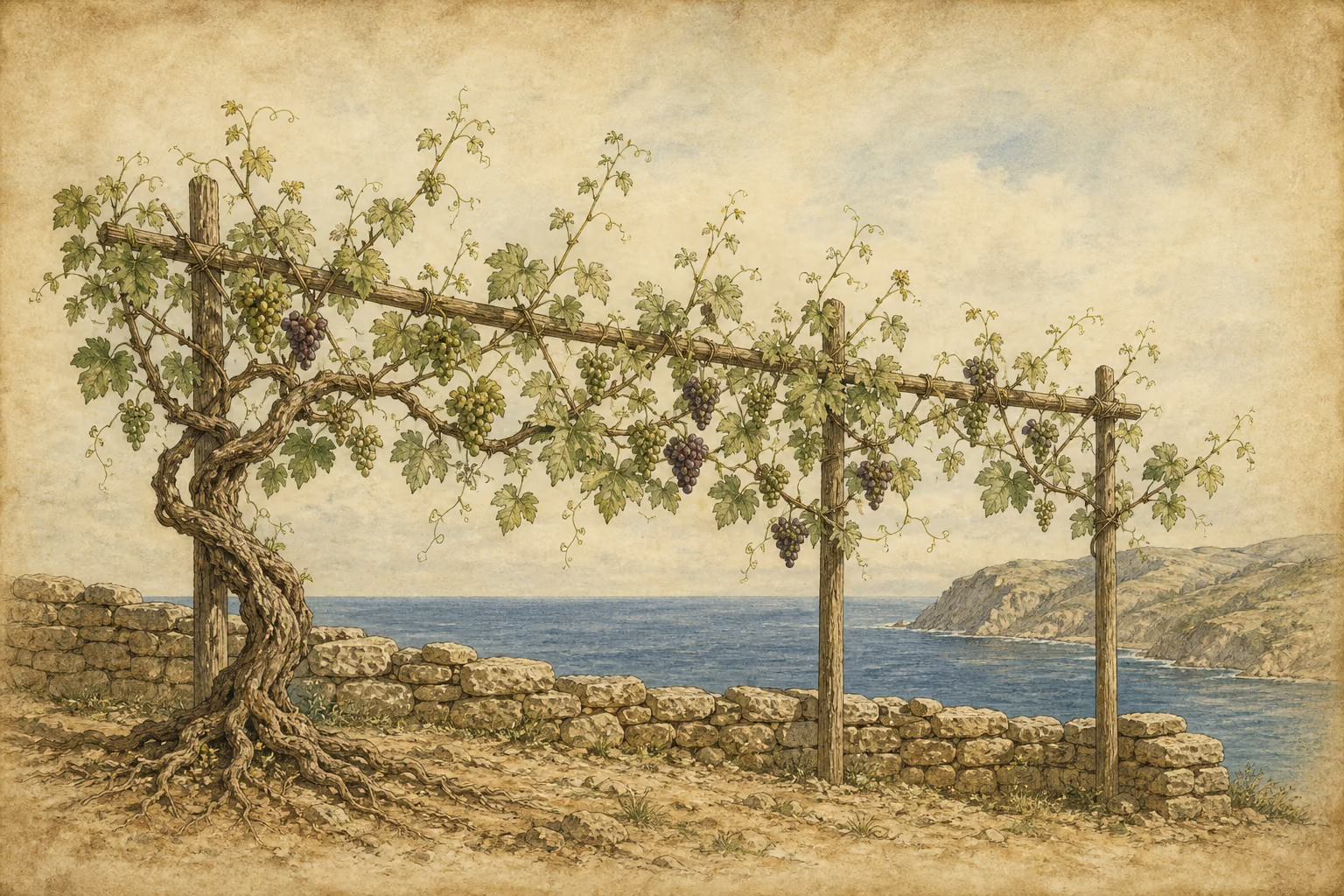
Sunt et biferae in isdem; in Ceo insula caprifici triferae sunt; primo fetu sequens evocatur, sequenti tertius. hoc fici caprificantur. et caprifici autem ah adversis foliis nascuntur. biferae et in malis ac piris quaedam, sicut et praecoces. mains silvestris bifera. sequens eius fructus post arcturum, in apricis maxime. vites quidem et triferae sunt, quas ob id insanas vocant, quoniam in his alia maturescunt, alia turgescunt, alia florent. M. Varro auctor est vitem fuisse Zmyrnae apud Matroon triferam et malum in agro Consentino. hoc autem evenit perpetuo in Venesi Africae agro, de quo plura alias. ea est soli fertilitas. trifera est et cupressus. namque bacae eius colliguntur mense Ianuario et Maio et Septembri, ternasque earum gerit magnitudines.
Est vero et in ipsis arboribus etiam onustis peculiaris differentia. summa sui parte fertiliores arbutus, quercus, inferiore iuglandes, fici mariscae. omnes quo magis senescunt, hoc maturius ferunt, et in apricis locis nec pingui 20 terra. silvestria omnia tardiora. quaedam ex his omnino nec maturescunt. item quae subarantur aut quae ablaqueantur celeriora neglectis. haec et fertiliora.
Est etiamnum aetatis differentia. amygdala enim et pirus in senecta fertilissimae, ut et glandiferae et quoddam genus ficorum, ceterae in iuventa tardiusque maturantes, quod maxime notatur in vitibus. vetustioribus enim vinum melius, novellis copiosius. celerrime vero senescit et in senecta deteriorem fructum gignit malus. namque et minora poma proveniunt et vermiculis obnoxia; quin et in ipsa arbore nascuntur. ficus sola ex omnium arborum fetu maturitatis causa medicatur, iam quidem et portentis, quoniam maiora sunt pretia praeposteris. omnia autem celerius senescunt praefecunda. quin et protinus moriuntur aliqua caelo fecunditatem omnem eblandito, quod maxime vitibus evenit.
English · Bostock & Riley 1855–57
In the island of Cea there are wild figs that bear three times in one year. By the first crop the one that succeeds is summoned forth, and by that the third. It is by the agency of this last crop that caprification is performed. In the wild fig, too, the fruit grows on the opposite side of the leaves. There are some pears and apples, too, that bear two crops in the year, while there are some early varieties also. The wild apple bears twice in the year, its second crop coming on after the rising of Arcturus, in sunny localities more particularly. There are vines, too, that will even bear three times in the year, a circumstance that has procured for them the name of “frantic” vines. On these we see grapes just ripening, others beginning to swell, and others, again, in blossom, all at the same moment.
M. Varro informs us, that there was formerly at Smyrna, near the Temple of the Mother of the Gods, a vine that bore two crops in the year, as also an apple-tree of a similar nature in the territory of Consentia. This, however, is constantly to be witnessed in the territory of Tacapa, in Africa, of which we shall have to speak more fully on another occasion, so remarkable is the fertility of the soil. The cypress also bears three times in the year, for its berries are gathered in the months of January, May, and September, being all three of different size.
There are also certain peculiarities observed in the different modes in which the trees bear their fruit, the arbutus and the quercus being most fruitful in the upper part, the walnut and the marisca fig in the lower. All trees, the older they grow, the more early they bear, and this more particularly in sunny spots and where the soil is not over-rich. All the forest-trees are slower in bringing their fruit to maturity; and indeed, in some of them the fruit never becomes fully ripe. Those trees, too, about the roots of which the earth is ploughed or broken and loosened, bring their fruit to maturity more speedily than those in which this has been neglected; by this process they are also rendered more fruitful.
There are great differences also in trees in respect to age. The almond and the pear are the most fruitful when old, which is the case also with the glandiferous trees and a certain species of fig. Others, again, are most prolific when young, though the fruit is later in coming to maturity, a thing particularly to be observed in the vine; for in those that are old the wine is of better quality, while the produce of the younger trees is given in greater abundance. The apple-tree becomes old very early, and the fruit which it produces when old is of inferior quality, being of smaller size and very liable to be attacked by maggots: indeed, these insects will breed in the tree itself. The fig is the only one of all the fruit-trees that is submitted to any process with the view of expediting the ripening of the fruit, a marvellous thing, indeed, that a greater value should be set upon produce that comes out of its proper season! All trees which bear their fruit before the proper time become prematurely old; indeed, some of them wither and die all of a sudden, being utterly exhausted by the too favourable influence of the weather, a thing that happens to the vine more particularly.