LIBER XVI · CAPUT 29
TREES WHICH BEAR VARIOUS PRODUCTS. CRATÆGUM
Latine · Mayhoff 1906
et subarata ocius senescunt, silvestria autem tardissime. atque in totum omnis cura fertilitatem adicit, fertilitas senectam. ideo et praeflorent talia et praegerminant, in totum praecocia fiunt, quoniam omnis infirmitas caelo magis oboedit.
Multae plura gignunt, ut diximus in glandiferis, inter quas laurus uvas suas maximeque sterilis, quae non gignit aliud; ob id a quibusdam mas existimatur. ferunt et abellanae iulos compactili callo, ad nihil utiles,
English · Bostock & Riley 1855–57
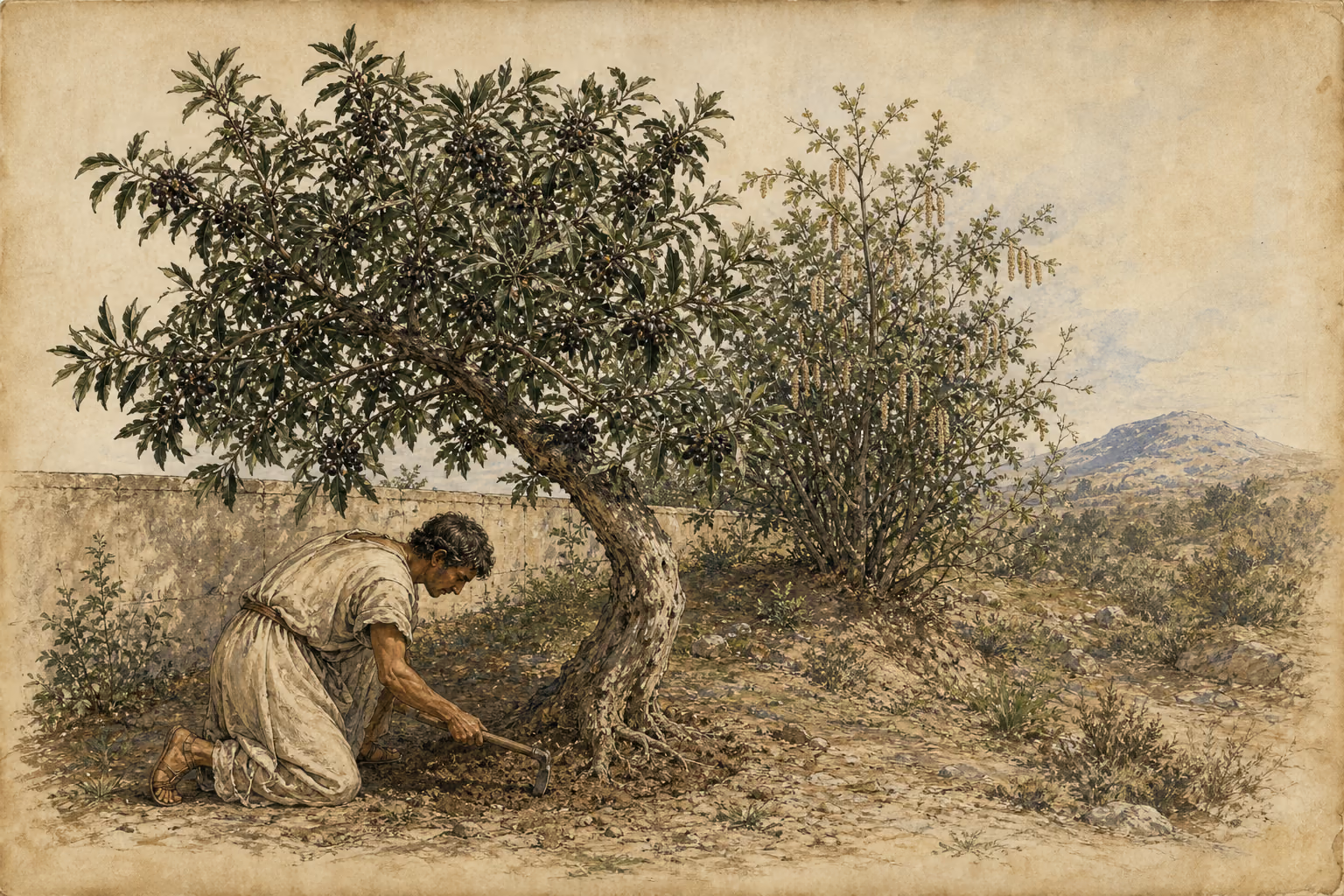
Trees grow old more rapidly when the earth is ploughed and loosened about the roots; forest trees at a later period. Speaking in general terms, we may say that care employed in the culture of trees seems to promote their fertility, while increased fertility accelerates old age. Hence it is that the carefully tended trees are the first to blossom, and the first to bud; in a word, are the most precocious in every respect: but all natural productions which are in any way weakened are more susceptible of atmospheric influences.
Many trees bear more than one production, a fact which we have already mentioned when speaking of the glandiferous trees. In the number of these there is the laurel, which bears its own peculiar kind of grape, and more particularly the barren laurel, which bears nothing else; for which reason it is looked upon by some persons as the male tree. The filbert, too, bears catkins, which are hard and compact, but of no use whatever.