LIBER XVI · CAPUT 4
THE ACORN OAK. THE CIVIC CROWN
Latine · Mayhoff 1906
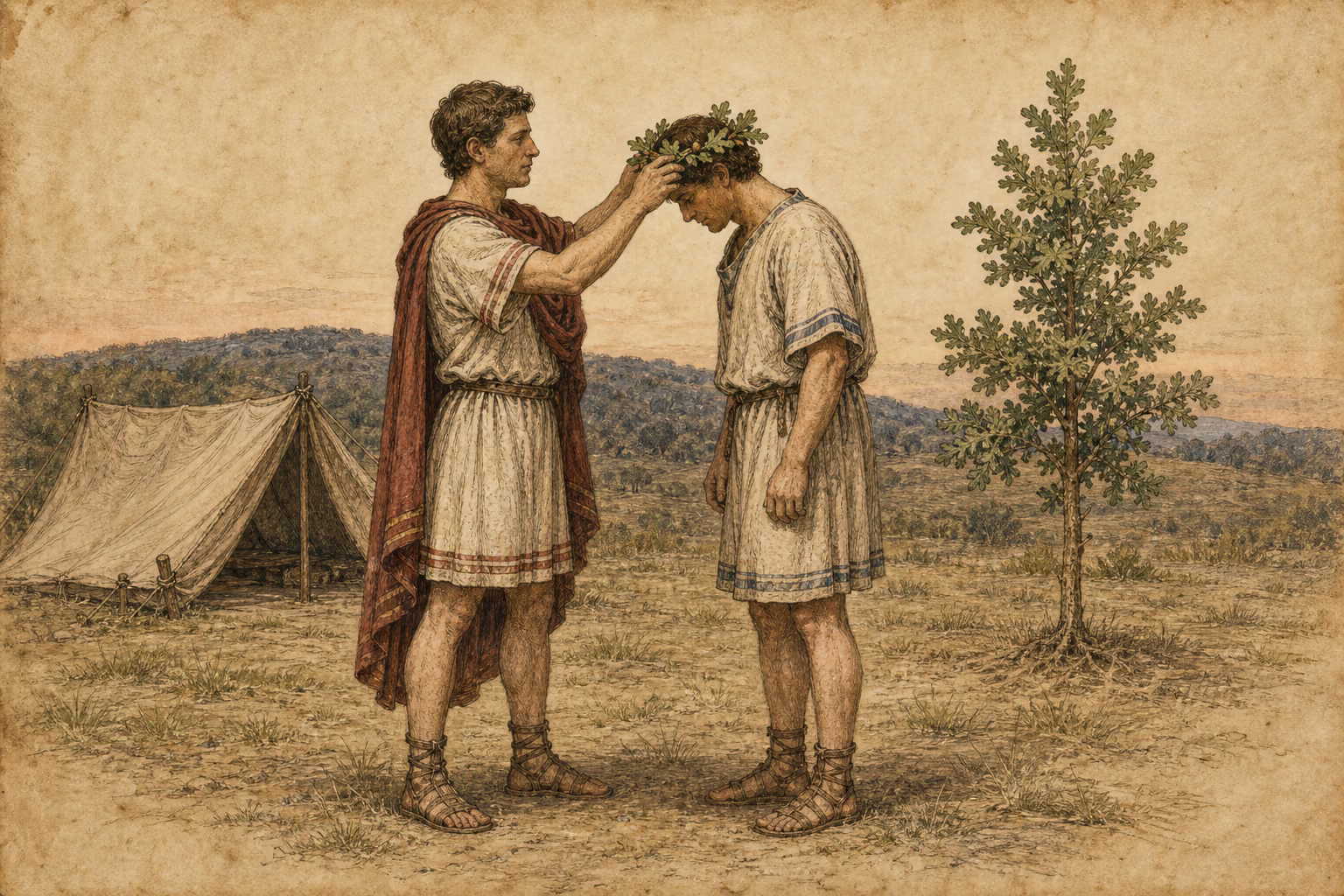
hine civicae coronae, militum virtutis insigne clarissimum, iam pridem vero et clementiae imperatorum, postquam civilium bellorum profano meritum coepit videri civem non occidere. cedunt his murales vallaresque et aureae, quamquam pretio antecedentes, cedunt et rostratae, quamvis in duobus maxime ad hoc aevi celebres, M. Varrone e piraticis bellis dante Magno Pompeio, itemque M. Agrippa tribuente Caesare e Siculis, quae et ipsa piratica fuere. antea rostra navium tribunali praefixa fori decus erant, veluti p. R. ipsi corona inposita. postquam vero tribuniciis seditionibus calcari ac pollui coepere, postquam vires ex publico in privatum agi singulisque civium quaeri et sacrosancti omnia profana facere, tum a pedibus eorum subiere in capita civium rostra. dedit hanc Augustus coronam Agrippae, sed civicam a genere humano accepit ipse.
Antiquitus quidem nulla nisi deo dabatur—ob id Homerus caelo tantum eam et proelio universo tribuit, viritim vero ne in certamine quidem ulli—feruntque primum omnium Liberum patrem inposuisse capiti suo ex hedera. postea deorum honori sacrificantes sumpsere, victimis simul coronatis. novissime et in sacris certaminibus usurpatae, in quibus hodieque non victori dantur, sed patriam ab eo coronari pronuntiatur; inde natum ut et triumphaturis conferrentur in templis dicandae, mox ut et ludis darentur. longum est nec instituti operis disserere, quis quamque Romanorum primus acceperit; neque enim alias noverant quam bellicas. quod certum est, uni gentium huic plura sunt genera quam cunctis.
Romulus frondea coronavit Hostum Hostilium, quod Fidenam primus inrupisset. avus hic Tulli Hostilii regis fuit. P. Decium patrem tribunum militum frondea donavit exercitus ab eo servatus imperatore Cornelio Cosso cos. Samnitium bello. civica iligna primo fuit, postea magis placuit ex aesculo Iovi sacra, variatumque et cum quercu est ac data ubique quae fuerat, custodito tantum honore glandis. additae leges artae et ideo superbae quasque conferre libeat cum illa Graecorum summa, quae sub ipso love datur cuique muros patria gaudens rumpit: civem servare, hostem occidere, utque eum locum, in quo sit actum, hostis optineat eo die, ut servatus fateatur— alias testes nihil prosunt—, ut civis fuerit. auxilia quamvis rege servato decus non dant, nec crescit honos idem imperatore conservato, quoniam conditores in quocumque cive summum esse voluere. accepta licet uti perpetuo. ludis ineunti semper adsurgi etiam ab senatu in more est, sedendi ius in proximo senatui, vacatio munerum omnium ipsi patrique et avo paterno. XIII eas accepit Siccius Dentatus, ut retulimus suo loco, VI Capitolinus, is quidem et de duce Servilio. Africanus de patre accipere noluit apud Trebiam. o mores aeternos, qui tanta opera honore solo donaverint et, cum reliquas coronas auro commendarent, salutem civis in pretio esse noluerint, clare professi ne servari quidem hominem fas esse lucri causa!
English · Bostock & Riley 1855–57
It is with the leaves of this class of trees that our civic crown is made, the most glorious reward that can be bestowed on military valour, and, for this long time past, the emblem of the imperial clemency; since the time, in fact, when, after the impiety of civil war, it was first deemed a meritorious action not to shed the blood of a fellow-citizen. Far inferior to this in rank are the mural crown, the vallar, and the golden one, superior though they may be in the value of the material: inferior, too, in merit, is the rostrate crown, though ennobled, in recent times more particularly, by two great names, those of M. Varro, who was presented with it by Pompeius Magnus, for his great achievements in the Piratic War, and of M. Agrippa, on whom it was bestowed by Cæsar, at the end of the Sicilian War, which was also a war against pirates.
In former days the beaks of vessels, fastened in front of the tribunal, graced the Forum, and seemed, as it were, a crown placed upon the head of the Roman people itself. In later times, however, they began to be polluted and trodden under foot amid the seditious movements of the tribunes, the public interest was sacrificed to private advantage, each citizen sought solely his own advancement, and everything looked upon as holy was abandoned to profanation—still, from amid all this, the Rostra emerged once again, and passed from beneath the feet of the citizens to their heads. Augustus presented to Agrippa the rostrate crown, while he himself received the civic crown at the hands of all mankind.
In ancient times crowns were presented to none but a divinity, hence it is that Homer awards them only to the gods of heaven and to the entire army; but never to an individual, however great his achievements in battle may have been. It is said, too, that Father Liber was the first of all who placed a crown on his head, and that it was made of ivy. In succeeding times, those engaged in sacrifices in honour of the gods began to wear them, the victims being decked with wreaths as well. More recently, again, they were employed in the sacred games; and at the present day they are bestowed on such occasions, not upon the victor, indeed, but upon his country, which receives, it is proclaimed, this crown at his hands. Hence arose the usage of conferring wreaths upon warriors when about to enjoy a triumph, for them to consecrate in the temples: after which it became the custom to present them at our games. It would be a lengthy matter, and, indeed, foreign to the purpose of this work, to enter upon a discussion who was the first Roman that received each kind of crown; in fact, they were acquainted with none but such as were given as the reward of military prowess. It is a well-known fact, however, that this people has more varieties of crowns than those of all other nations put together.
Romulus presented Hostus Hostilius with a crown of leaves, for being the first to enter Fidenæ. This Hostus was the grandfather of King Tullus Hostilius. P. Decius the elder, the military tribune, was presented with a crown of leaves by the army which had been saved by his valour, under the command of Cornelius Cossus, the consul, in the war with the Samnites. This crown was made at first of the leaves of the holm oak, but afterwards those of the æsculus were preferred, as being a tree sacred to Jupiter: this, however, was soon employed indifferently with the quercus, according as each might happen to present itself, the honourable distinction given to the acorn being the only thing observed. Rigorous laws were, however, enacted, to maintain the lofty glories of this wreath, by which it was placed upon an equality even with the supreme honours of the wreath that is given by Greece in presence of Jove himself, and to receive which the exulting city of the victor is wont to break a passage through its very walls. These laws are to the effect that the life of a fellow-citizen must be preserved, and an enemy slain; that the spot where this takes place must have been held by the enemy that same day; that the person saved shall admit the fact, other witnesses being of no use at all; and that the person saved shall have been a Roman citizen.
To preserve an ally merely, even though it should be the life of a king that is so saved, confers no right to this high reward, nor is the honour at all increased, even if it is the Roman general that has been thus preserved, it being the intention of the framers of the law that it should be the status of the citizen that is everything. When a man has received this wreath, it is his privilege to wear it for the rest of his life. When he makes his appearance at the celebration of the games, it is customary for the Senate even to rise from their seats, and he has the right of taking his seat next to the senators. Exemption, too, from all civic duties is conferred upon him as well as his father and his father’s father. Siccius Dentatus, as we have already mentioned on an appropriate occasion, received fourteen civic crowns, and Manlius Capitolinus six, one, among the rest, for having saved the life of his general, Servilius. Scipio Africanus declined to accept the civic crown for having saved the life of his father at the battle of Trebia. Times these, right worthy of our everlasting admiration, which accorded honour alone as the reward of exploits so mighty, and which, while other crowns were recommended by being made of gold, disdained to set a price upon the safety of a citizen, and loudly proclaimed thereby that it is unrighteous to save the life of a man for motives of lucre.