LIBER XVI · CAPUT 5
THIRTEEN VARIETIES OF THE ACORN
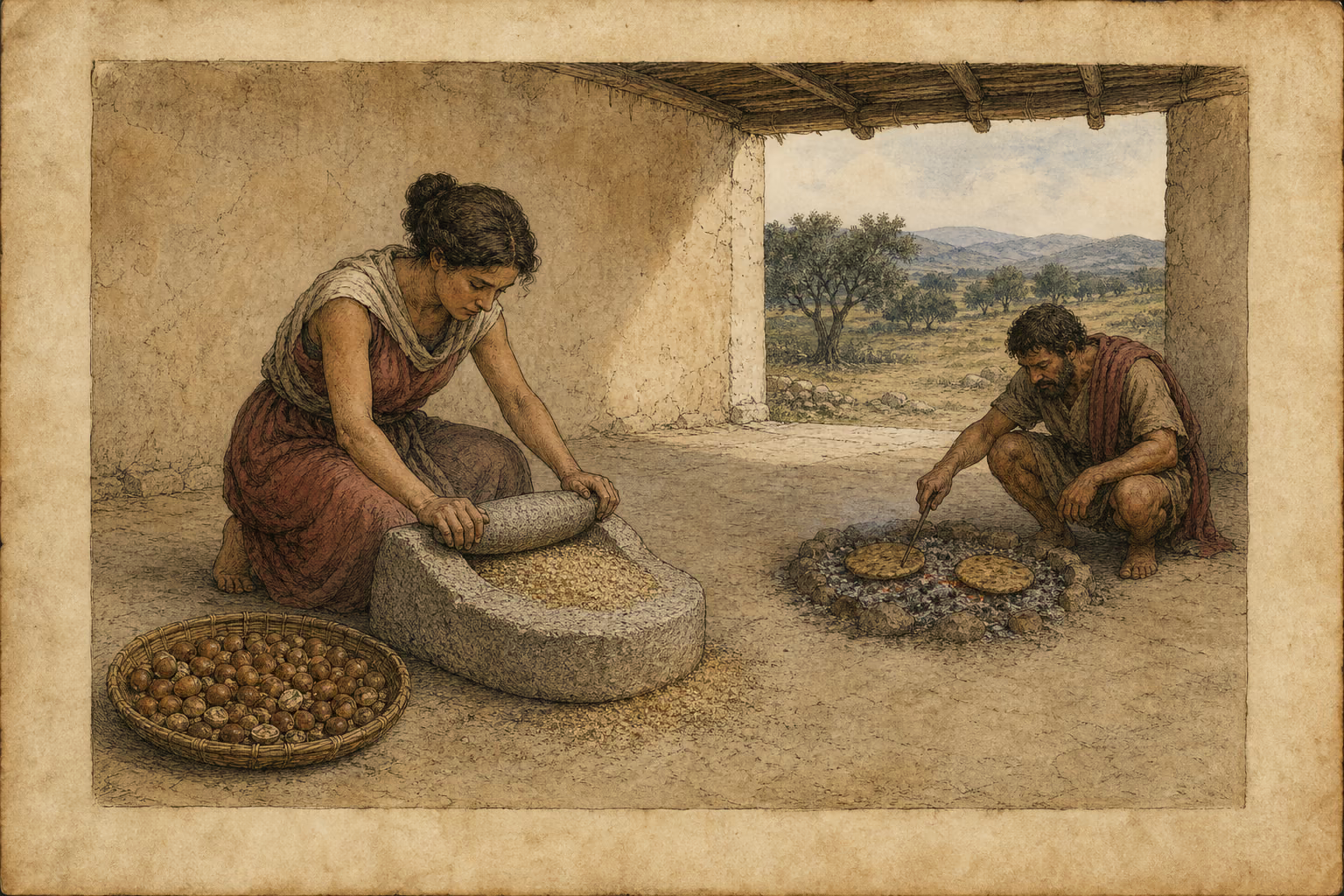
Latine · Mayhoff 1906
Glande opes nunc quoque multarum gentium etiam pace gaudentium constant. nec non et inopia frugum arefactis emolitur farina spissaturque in panis usum; quin et hodieque per Hispanias secundis mensis glans inseritur. dulcior eadem in cinere tosta. cautum est praeterea lege XII tabularum, ut glandem in alienum fundum procidentem liceret colligere.
Genera earum multa. distant fructu, situ, sexu, sapore. namque alia fageae glandi figura, quernae alia et ilignae, atque inter se quoque generum singulorum differentiae. praeterea sunt aliquae silvestres, aliae placidiores, quae culta optinent. iam montuosis planisque distant, sicut et sexu, mares ac feminae, item sapore: dulcissima omnium fagi, ut qua obsessos etiam homines durasse in oppido Chio tradat Cornelius Alexander. genera distinguere non datur nominibus, quae sunt alia alibi, quippe cum robur quercumque vulgo nasci videamus, aesculum non ubique, quartam vero generis eiusdem, quae cerrus vocatur, ne Italiae quidem maiore ex parte notam esse. distinguemus ergo proprietate naturaque et, ubi res coget, etiam Graecis nominibus.
English · Bostock & Riley 1855–57
It is a well-known fact that acorns at this very day constitute the wealth of many nations, and that, too, even amid these times of peace. Sometimes, also, when there is a scarcity of corn they are dried and ground, the meal being employed for making a kind of bread. Even to this very day, in the provinces of Spain, we find the acorn introduced at table in the second course: it is thought to be sweeter when roasted in the ashes. By the law of the Twelve Tables, there is a provision made that it shall be lawful for a man to gather his acorns when they have fallen upon the land of another.
The varieties of the glandiferous trees are numerous, and they are found to differ in fruit, locality, sex, and taste; the acorn of the beech having one shape, that of the quercus another, and that, again, of the holm-oak another. The various species also, among themselves, offer a considerable number of varieties. In addition to this, some of these trees are of a wild nature, while the fruits of others are of a less acrid flavour, owing to a more careful cultivation. Then, too, there is a difference between the varieties which grow on the mountains and those of the plains; the males differ from the females, and there are considerable modifications in the flavour of their fruit. That of the beech is the sweetest of all; so much so, that, according to Cornelius Alexander, the people of the city of Chios, when besieged, supported themselves wholly on mast. The different varieties cannot possibly be distinguished by their respective names, which vary according to their several localities. The quercus and the robur we see growing everywhere, but not so with the æsculus; while a fourth kind, known as the cerrus, is not so much as known throughout the greater part of Italy. We shall distinguish them, therefore, by their characteristic features, and when circumstances render it necessary, shall give their Greek names as well.