LIBER XVII · CAPUT 15
GRAFTING THE VINE
Latine · Mayhoff 1906
vitium vero in scrobibus siccis stramento opertos ac deinde terra obrutos, ut cacumine exstent.
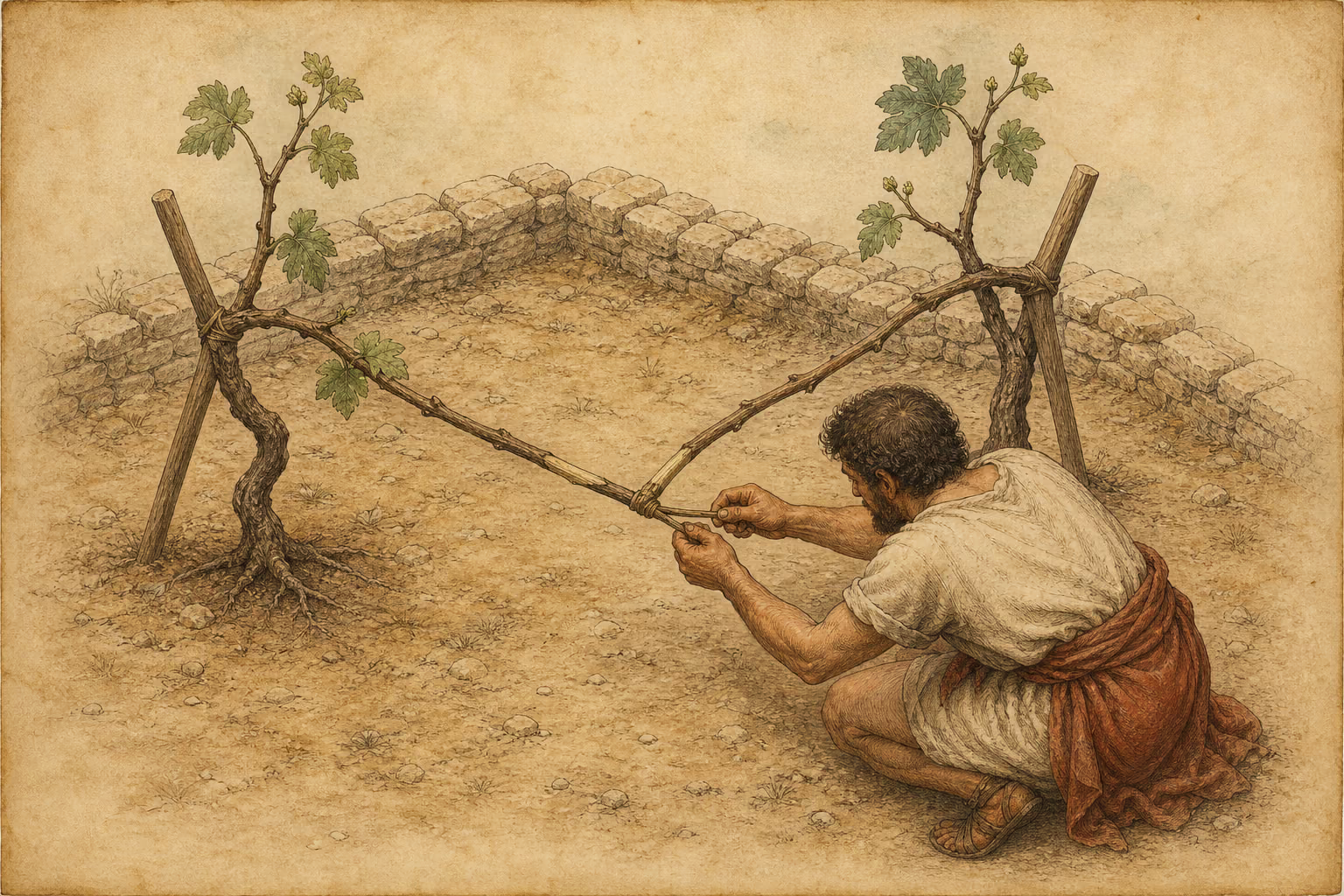
Cato vitem tribus modis inserit: praesectam findi iubet per medullam, in eam surculos exacutos, ut dictum est, addi, medullas iungi. altero, si inter se vites contingant, utriusque in obliquum latere contrario adraso iunctis medullis colligari. tertium genus est terebrare vitem in obliquum ad medullam calamosque addere longos pedes binos atque ita ligatum insitum intritaque inlitum operire terra calamis subrectis. nostra aetas correxit, ut Gallica uteretur terebra, quae excavat nec urit—quoniam adustio omnis hebetat—, atque ut gemmascere incipiens eligeretur calamus, nec plus quam binis ab insito emineret oculis, ulmi... vimine alligato.... bina circumdarentur.... acie a duabus partibus, ut inde potius destillaret mucor, qui maxime vites infestat; dein cum evaluissent flagella pedes binos, vinculum insiti incideretur, ubertati crassitudine permissa. vitibus inserendis tempus dedere ab aequinoctio autumno ad germinationis initia. sativae plantae silvestrium radicibus inseruntur natura siccioribus; si sativae silvestribus inserantur, degenerant in feritatem. reliqua caelo constant. aptissima insitis siccitas; huius enim remedium: adpositis fictilibus vasis modicus umor per cinerem destillat. inoculatio rores amat lenes.
English · Bostock & Riley 1855–57
The grafts of vines, however, are kept in dry holes, in which they are covered over with straw, and then with earth, care being taken to let the tops protrude.
Cato speaks of three methods of grafting the vine. The first consists in piercing the stock to the pith, and then inserting the grafts, sharpened at the end, in manner already mentioned, care being taken to bring the pith of the two in contact. The second is adopted in case the two vines are near one another, the sides of them both being cut in a slanting direction where they face each other; after which the pith of the two trees is united by tying them together. In employing the third method, the vine is pierced obliquely to the pith, and grafts are inserted a couple of feet in length; they are then tied down and covered over with prepared earth, care being taken to keep them in an upright position. In our time, however, this method has been greatly improved by making use of the Gallic auger, which pierces the tree without scorching it; it being the fact, that everything that burns the tree weakens its powers. Care, too, is taken to select a graft that is just beginning to germinate, and not to leave more than a couple of the buds protruding from the stock. The vine, too, should be carefully bound with withes of elm, incisions being made in it on either side, in order that the slimy juices may exude through them in preference, which are so particularly injurious to the vine. After this, when the graft has grown a couple of feet, the withe by which it is fastened should be cut, and the graft left to increase of its own natural vigour.
The proper time for grafting the vine has been fixed as from the autumnal equinox to the beginning of the budding season. The cultivated plants are generally grafted on the roots of wild ones, where these last are of a drier nature. But if a cultivated tree should be grafted on a wild one, it will very soon degenerate and become wild. The rest depends entirely on the weather. Dry weather is the best suited for grafting; an excellent remedy for any evil effects that may possibly be caused by the drought, being a few pots of earth placed near the stock and filled with ashes; through which a little water is slowly filtered. Light dews are extremely favourable to grafting by inoculation.