LIBER XVII · CAPUT 24
THE DISEASES OF TREES
Latine · Mayhoff 1906
vitium generosarum pergulas quinquatribus putandas et, quarum servare uvas libeat, decrescente luna tradunt; quae vero interlunio sint putatae, nullis animalium obnoxias esse. alia ratione plena luna noctu tondendas, cum sit ea in leone, scorpione, sagittario, tauro, atque in totum serendas plena aut crescente utique censent. sufficiunt in Italia cultores deni in centena iugera vinearum.
<1> Et abunde satu cultuque arborum tractato, quoniam de palmis et cytiso in peregrinis arboribus adfatim diximus, ne quid desit, indicanda reliqua naturaest magno opere pertinens ad omnia ea. infestantur namque et arbores morbis. quid enim genitum caret his malis? et silvestrium quidem perniciosos negant esse vexarique tantum grandine in germinatione aut flore, aduri quoque fervore aut flatu frigidiore, praepostero die, nam suo frigora etiam prosunt, ut diximus. quid ergo? non et vites algore intereunt? hoc quidem est, quo deprehendatur soli vitium, quoniam non evenit nisi in frigido. itaque per hiemes caeli rigorem probamus, non soli. nec infirmissimae arbores gelu periclitantur, sed maximae, vexatisque ita cacumina prima inarescunt, quoniam praestrictus non potuit eo pervenire umor.
<2> Arborum quidam communes morbi, quidam privati generum. communis vermiculatio et sideratio ac dolor membrorum, unde partium debilitas, societate nominum quoque cum hominis miseriis. trunca dicimus certe corpora et oculos germinum exustos ac multa simili sorte. itaque laborant et fame et cruditate, quae fiunt umoris quantitate, aliqua vero et obesitate, ut omnia, quae resinam ferunt, nimia pinguitudine in taedam mutantur et, cum radices quoque pinguescere coepere, intereunt, ut animalia nimio adipe, aliquando et pestilentia per genera, sicut inter homines nunc servitia, nunc plebes urbana vel rustica.
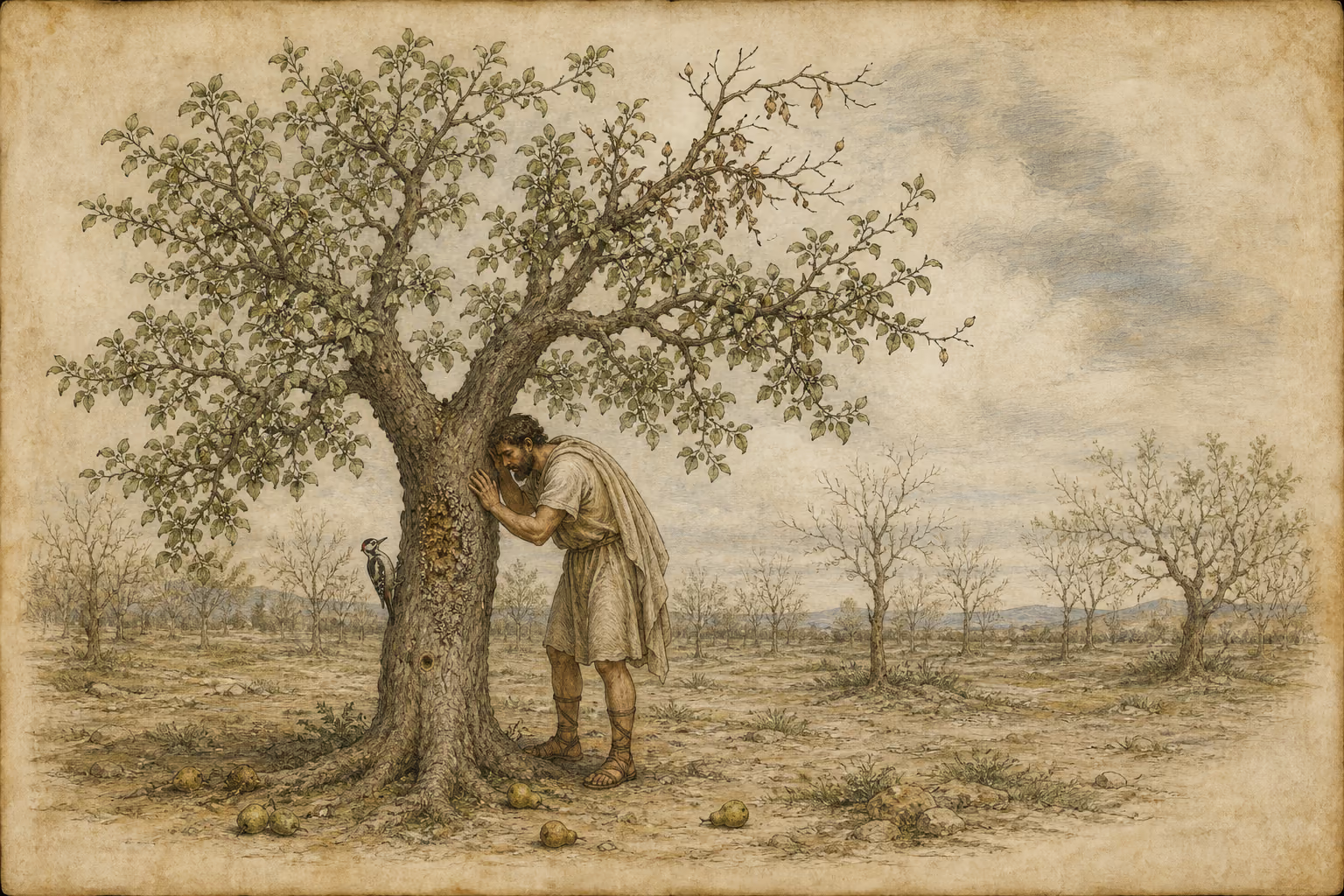
<3> Vermiculantur magis minusve quaedam, omnes tamen fere, idque aves cavi corticis sono experiuntur. iam quidem et hoc in luxuria esse coepit, praegrandesque roborum delicatiore sunt in cibo—cosses vocant—atque etiam farina saginati hi quoque altiles fiunt. maxime autem arborum hoc sentient piri, mali, fici, minus quae amarae sunt et odoratae. eorum, qui in ficis existunt, alii nascuntur ex ipsis, alios parit qui vocatur cerastes, omnes tamen in cerasten figurantur sonumque edunt parvoli stridoris. et sorbus arbor infestatur vermiculis rufis ac pilosis atque ita emoritur; mespila quoque in senecta obnoxia ei morbo est.
<4> Sideratio tota e caelo constat. quapropter et grando in his causis intellegi debet et carbunculatio et quod pruinarum iniuria evenit. haec enim verno tepore invitatis et erumpere audentibus satis mollibus insidens adurit lactescentes germinum oculos, quod in flore carbunculum vocant. pruinae perniciosior natura, quoniam lapsa persidit gelatque ac ne aura quidem ulla depellitur, quia non fit nisi inmoto aëre et sereno. proprium tamen siderationis est sub ortu canis siccitatum vapor, cum insita ac novellae arbores moriuntur, praecipue ficus et vitis.
Olea praeter vermiculationem, quam aeque ac ficus sentit, clavum etiam patitur, sive fungum placet dici vel patellam. haec est solis exustio. nocere tradit Cato et museum rubrum. nocet plerumque vitibus atque oleis et nimia fertilitas. scabies communis omnium est. inpetigo et, quae adgnasci solent, cocleae peculiaria ficorum vitia, nec ubique. sunt enim quaedam aegritudines et locorum.
<5> Verum ut homini nervorum cruciatus, sic et arbori, ac duobus aeque modis. aut enim in pedes, hoc est radices, inrumpit vis morbi, aut in articulos, hoc est cacuminum digitos, qui longissime a toto corpore exeunt. nigrescunt ergo, et sunt apud Graecos sua nomina utrique vitio. undique primo dolor, mox et macies earum partium fragilis, postremo tabes morsque, non intrante suco aut non perveniente, maximeque id fici sentiunt. caprificus omnibus immunis est, quae adhuc diximus. scabies gignitur roribus lentis post vergilias; nam si largiores fuere, perfundunt arborem, non scalpunt scabie, et grossi cadunt; sive imbres nimii fuere, alio modo ficus laborat, radicibus madidis.
<6> Vitibus praeter vermiculationem et siderationem morbus peculiaris articulatio tribus de causis: una vi tempestatium germinibus ablatis, altera, ut notavit Theophrastus, in supinum excisis, tertia culturae imperitia laesis. omnes enim earum iniuriae in articulis sentiuntur. siderationis genus est et his deflorescentibus roratio, aut cum acini, priusquam crescant, decocuntur in callum. aegrotant et cum alsere, laesis uredine attonsarum oculis. et calore hoc evenit intempestivo, quoniam omnia modo constant certoque temperamento. fiunt et culpa colentium vitia, cum praestringuntur, ut dictum est, aut circumfos- sor iniurioso ictu verberavit vel etiam subarator inprudens luxavit radices corpusve desquamavit. est et quaedam contusio falcis hebetioris. quibus omnibus causis difficilius tolerant frigora aut aestus, quoniam in ulcus penetrat iniuria omnis a foris. infirmissima vero malus, maximeque quae dulcis est. quibusdam debilitas sterilitatem, non necem, adfert, ut si quis pino cacumen auferat vel palmae. sterilescunt enim nec moriuntur. aegrotant aliquando et poma ipsa per se sine arbore, si necessariis temporibus imbres aut tepores vel adflatus defuere aut contra abundavere. decidunt enim aut deteriora fiunt. pessimum est inter omnia, cum deflorescentem vitem et oleam percussit imber, quoniam simul defluit fructus.
<7> Sunt ex eadem causa nascentes et urucae, dirum animal, eroduntque frondem, aliae florem quoque, olivarum, ut in Mileto, ac depastam arborem turpi facie relinquunt. nascitur hoc malum tepore umido et lento. fit aliud ex eodem, si sol acrior insecutus inussit ipsum vitium ideoque mutavit. est etiamnum peculiare olivis et vitibus—araneum vocant—, cum veluti telae involvunt fructum et absumunt. adurunt et flatus quidam eas maxime, sed et alios fructus. nam vermiculationem et poma ipsa per se quibusdam [annis] sentiunt, mala, pira, mespila, punica. in oliva ancipiti eventu, quando sub cute innati fructum adimunt, augent, si in ipso nucleo fuere erodentes eum. gigni illos prohibent pluviae, quae fiunt post arcturum. eaedem si austrinae fuere, generant druppis quoque, quae maturescentes tum sunt praecipue caducae. id riguis magis evenit, etiam si non cecidere, fastidiendis. sunt et culicum genera aliquis molesta, ut glandibus, fico; qui videntur ex umore nasci, tum dulci subdito corticibus. et aegrotatio quidem fere. in his est.
<8> Quaedam temporum causae aut locorum non proprie dicantur morbi, quoniam protinus necant, sicut tabes cum invasit arborem aut uredo vel flatus alicuius regionis proprius, ut est in Apulia atabulus, in Euboea Olympias. hic enim si flavit circa brumam, frigore exurit arefaciens, ut nullis postea solibus recreari possint. hoc genere convalles et adposita fluminibus laborant, praecipueque vitis, olea, ficus. quod cumevenit, detegitur statim in germinatione, in oliva tardius. sed in omnibus signum est revivescendi, si folia amisere. alioqui quas putes praevaluisse moriuntur. nonnumquam inarescunt folia eademque revivescunt. alia in terris septentrionalibus, ut Ponto, Thracia, frigore aut gelu laborant, si post brumam continuavere XL diebus. et ibi autem et in reliquis partibus, si protinus editis fructibus gelatio magna consecuta est, etiam paucis diebus necat.
<9> Quae iniuria hominum constant, secundum.. habent causas. pix, oleum, adeps inimica praecipue novellis. cortice in orbem detracto necantur, excepto subere, quod sic etiam iuvatur; crassescens enim praestringit et strangulat. nec andrachle offenditur, si non simul incidatur et corpus. alioqui et cerasus et tilia et vitis corticem mittunt, sed non vitalem nec proximum corpori, verum eum, qui subnascente alio expellitur. quarundam natura rimosus cortex, ut platanis. tiliae renascitur paulo minus quam totus. ergo his, quarum cicatricem trahit, medentur luto fimoque, et aliquando prosunt, si non vehementior frigorum aut calorum vis secuta est. quaedam tardius ita moriuntur, ut robora et quercus. refert et tempus anni. abieti enim et pino si quis detraxerit sole taurum vel geminos transeunte, cum germinant, statim moriuntur; eandem iniuriam hieme passae diutius tolerant. similiter ilex et robur quercusque. si angusta decorticatio fuit, nihil nocetur supra dictis; infirmioribus quidem et in solo gracili vel ab una tantum parte detractus interemit. similem et decacuminatio rationem habet piceae, cedri, cupressihaec enim detracto cacumine aut ignibus adusto intereunt —, similem et depastio animalium. oleam quidem etiam, si lambat capra, sterilescere auctor est Varro, ut diximus. quaedam hac iniuria moriuntur, aliqua deteriora tantum fiunt, ut amygdalae—ex dulcibus enim transfigurantur in amaras—, aliqua vero etiam utiliora, ut apud Chios pirus, quam phocida appellant. nam detruncatio diximus quibus prodesset. intereunt pleraque et fissa stirpe, exceptis vite, malo, fico, punicis, quaedam vel ab ulcere tantum. pinus hanc iniuriam spernit et omnia, quae resinam gignunt. radicibus amputatis mori minime mirum est; pleraeque etiam non omnibus, sed maximis aut, quae sunt inter illas vitales, abscisis moriuntur.
<10> Necant invicem inter sese umbra vel densitate atque alimenti rapina. necat et hedera vinciens—nec viscum prodest—et cytisus, necatur eo, quod halimon vocant Graeci. quorundam natura non necat quidem, sed laedit Odorum aut suci mixtura, ut raphanus et laurus vitem. olfactatrix enim intellegitur et tingui odore mirum in modum, ideo, cum iuxta sit, averti et recedere saporemque inimicum fugere. hinc sumpsit Androcydes medicinam contra ebrietates, raphanum manducari praecipiens. odit et caulem et olus omne, odit et corylum, ni procul absint, tristis atque aegra. nitrum quidem et alumen, marina aqua calida et fabae putamina vel ervi ultima venena sunt.
English · Bostock & Riley 1855–57
Espaliers for vines of a high quality should be cut, it is said, at the Quinquatria, and when it is intended to keep the grapes, while the moon is on the wane. We are assured, moreover, that those which are cut at the change of the moon, are exempt from the attacks of all insects. According to another system, it is said that vines should be pruned by night at full moon, and while it is in Leo, Scorpio, Sagittarius, or Taurus: and that, in general, they ought to be planted either when the moon is at full or on the increase. In Italy, ten workmen will suffice for one hundred jugera of vineyard.
Having now treated sufficiently at length of the planting and cultivation of trees—(for we have already said enough of the palm and the cytisus, when speaking of the exotic trees)—we shall proceed, in order that nothing may be omitted, to describe other details relative to their nature, which are of considerable importance, when taken in connection with all that precedes. Trees, we find, are attacked by maladies; and, indeed, what created thing is there that is exempt from these evils? Still however, the affections of the forest trees, it is said, are not attended with danger to them, and the only damage they receive is from hail-storms while they are budding and blossoming; with the exception, indeed, of being nipped either by heat or cold blasts in unseasonable weather; for frost, when it comes at the proper times, as we have already stated, is serviceable to them. “Well but,” it will be said, “is not the vine sometimes killed with cold?” No doubt it is, and this it is through which we detect inherent faults in the soils, for it is only in a cold soil that the vine will die. Just in the same way, too, in winter we approve of cold, so long as it is the cold of the weather, and not of the ground. It is not the weakest trees, too, that are endangered in winter by frost, but the larger ones. When they are thus attacked, it is the summit that dries away the first, from the circumstance that the sap becomes frozen before it is able to arrive there.
Some diseases of trees are common to them all, while others, again, are peculiar to individual kinds. Worms are common to them all, and so, too, is sideration, with pains in the limbs, which are productive of debility in the various parts. Thus do we apply the names of the maladies that prevail among mankind to those with which the plants are afflicted. In the same way, too, we speak of their bodies being mutilated, the eyes of the buds being burnt up, with many other expressions of a similar nature. It is in accordance with the same phraseology that we say that trees are afflicted with hunger or indigestion, both of which result from the comparative amount of sap that they contain; while some, again, are troubled with obesity, as in the case of all the resinous trees, which, when suffering from excessive fatness, are changed into a torch-tree. When the roots, too, begin to wax fat, trees, like animals, are apt to perish from excess of fatness. Sometimes, too, a pestilence will prevail in certain classes of trees, just as among men, we see maladies attack, at one time the slave class, and at another the common people, in cities or in the country, as the case may be.
Trees are more or less attacked by worms; but still, nearly all are subject to them in some degree, and this the birds are able to detect by the hollow sound produced on tapping at the bark. These worms even have now begun to be looked upon as delicacies by epicures, and the large ones found in the robur are held in high esteem; they are known to us by the name of “cossis;” and are even fed with meal, in order to fatten them! But it is the pear, the apple, and the fig that are most subject to their attacks, the trees that are bitter and odoriferous enjoying a comparative exemption from them. Of those which infest the fig, some breed in the tree itself, while others, again, are produced by the worm known as the cerastes; they all, however, equally assume the form of the cerastes, and emit a small shrill noise. The service-tree is infested, too, with a red hairy worm, which kills it; and the medlar, when old, is subject to a similar malady.
The disease known as sideration entirely depends upon the heavens; and hence we may class under this head, the ill effects produced by hail-storms, carbunculation, and the damage caused by hoar-frosts. When the approach of spring tempts the still tender shoots to make their appearance, and they venture to burst forth, the malady attacks them, and scorches up the eyes of the buds, filled as they are with their milky juices: this is what upon flowers they call “charcoal” blight. The consequences of hoar-frost to plants are even more dangerous still, for when it has once settled, it remains there in a frozen form, and there is never any wind to remove it, seeing that it never prevails except in weather that is perfectly calm and serene. Sideration, however, properly so called, is a certain heat and dryness that prevails at the rising of the Dog-star, and owing to which grafts and young trees pine away and die, the fig and the vine more particularly. The olive, also, besides the worm, to which it is equally subject with the fig, is attacked by the measles, or as some think fit to call it, the fungus or platter; it is a sort of blast produced by the heat of the sun. Cato says that the red moss is also deleterious to the olive. An excessive fertility, too, is very often injurious to the vine and the olive. Scab is a malady common to all trees. Eruptions, too, and the attacks of a kind of snail that grows on the bark, are diseases peculiar to the fig, but not in all countries; for there are some maladies that are prevalent in certain localities only.
In the same way that man is subject to diseases of the sinews, so are the trees as well, and, like him, in two different ways. Either the virulence of the disease manifests itself in the feet, or, what is the same thing, the roots of the tree, or else in the joints of the fingers, or, in other words, the extremities of the branches that are most distant from the trunk. The parts that are thus affected become dry and shrivel up: the Greeks have appropriate names by which to distinguish each of these affections. In either case the first symptoms are that the tree is suffering from pain, and the parts affected become emaciated and brittle; then follows rapid consumption and ultimately death; the juices being no longer able to enter the diseased parts, or, at all events, not circulating in them. The fig is more particularly liable to this disease: but the wild fig is exempt from all that we have hitherto mentioned. Scab is produced by viscous dews which fall after the rising of the Vergiliæ; but if they happen to fall copiously, they drench the tree, without making the bark rough. When the fig is thus attacked, the fruit falls off while green; and so, too, if there is too much rain. The fig suffers also from a superfluity of moisture in the roots.
In addition to worms and sideration, the vine is subject to a peculiar disease of its own, which attacks it in the joints, and is produced from one of the three following causes:—either the destruction of the buds by stormy weather, or else the fact, as remarked by Theophrastus, that the tree, when pruned, has been cut with the incisions upwards, or has been injured from want of skill in the cultivator. All the injury that is inflicted in these various ways is felt by the tree in the joints more particularly. It must be considered also as a species of sideration, when the cold dews make the blossoms fall off, and when the grapes harden before they have attained their proper size. Vines also become sickly when they are perished with cold, and the eyes are frost-bitten just after they have been pruned. Heat, too, out of season, is productive of similar results: for everything is regulated according to a fixed order and certain determinate movements. Some maladies, too, originate in errors committed by the vine-dresser; when they are tied too tight, for instance, as already mentioned, or when in trenching round them the digger has struck them an unlucky blow, or when in ploughing about them the roots have been strained through carelessness, or the bark has been stripped from off the trunk: sometimes, too, contusions are produced by the use of too blunt a pruning-knife. Through all the causes thus enumerated the tree is rendered more sensitive to either cold or heat, as every injurious influence from without is apt to concentrate in the wounds thus made. The apple, however, is the most delicate of them all, and more particularly the one that bears the sweetest fruit. In some trees weakness induced by disease is productive of barrenness, and does not kill the tree; as in the pine for instance, or the palm, when the top of the tree has been removed; for in such case the tree becomes barren, but does not die. Sometimes, too, the fruit itself is sickly, independently of the tree; for example, when there is a deficiency of rain, or of warmth, or of wind, at the periods at which they usually prevail, or when, on the other hand, they have prevailed in excess; for in such cases the fruit will either drop off or else deteriorate. But the worst thing of all that can befall the vine or the olive, is to be pelted with heavy showers just when the tree is shedding its blossom, for then the fruit is sure to fall off as well.
Rain, too, is productive of the caterpillar, a noxious insect that eats away the leaves, and, some of them, the blossoms as well; and this in the olive even, as we find the case at Miletus; giving to the half-eaten tree a most loathsome appearance. This pest is produced by the prevalence of a damp, languid heat; and if the sun should happen to shine after this with a more intense heat and burn them up, this pest only gives place to another just as bad, the aspect only of the evil being changed.
There is still one other affection that is peculiar to the olive and the vine, known as the “cobweb,” the fruit being enveloped in a web, as it were, and so stifled. There are certain winds, too, that are particularly blighting to the olive and the vine, as also to other fruits as well: and then besides, the fruits themselves, independently of the tree, are very much worm-eaten in some years, the apple, pear, medlar, and pomegranate for instance. In the olive the presence of the worm may be productive of a twofold result: if it grows beneath the skin, it will destroy the fruit, but if it is in the stone, it will only gnaw it away, making the fruit all the larger. The prevalence of showers after the rising of Arcturus prevents them from breeding; but if the rains are accompanied with wind from the south, they will make their appearance in the ripe fruit even, which are then very apt to fall. This happens more particularly in moist, watery localities; and even if they do not fall, the olives that are so affected are good for nothing. There is a kind of fly also that is very troublesome to some fruit, acorns and figs for instance: it would appear that they breed from the juices secreted beneath the bark, which at this period are sweet. These trees, too, are generally in a diseased state when this happens.
There are certain temporary and local influences which cause instantaneous death to trees, but which cannot properly be termed diseases; such, for example, as consumption, blast, or the noxious effects of some winds that are peculiar to certain localities; of this last nature are the Atabulus that prevails in Apulia, and the Olympias of Eubœa. This wind, if it happens to blow about the winter solstice, nips the tree with cold, and shrivels it up to such a degree that no warmth of the sun can ever revive it. Trees that are planted in valleys, and are situate near the banks of rivers, are especially liable to these accidents, the vine more particularly, the olive, and the fig. When this has been the case, it may instantly be detected the moment the period for germination arrives, though, in the olive, somewhat later. With all of these trees, if the leaves fall off, it is a sign that they will recover; but if such is not the case, just when you would suppose that they have escaped uninjured, they die. Sometimes, however, the leaves will become green again, after being dry and shrivelled. Other trees, again, in the northern regions, Pontus and Phrygia, for example, suffer greatly from cold or frost, in case they should continue for forty days after the winter solstice. In these countries, too, as well as in other parts, if a sharp frost or copious rains should happen to come on immediately after fructification, the fruit is killed in a very few days even.
Injuries inflicted by the hand of man are productive also of bad effects. Thus, for instance, pitch, oil, and grease, if applied to trees, and young ones more particularly, are highly detrimental. They may be killed, also, by removing a circular piece of the bark from around them, with the exception, indeed, of the cork-tree, which is rather benefitted than otherwise by the operation; for the bark as it gradually thickens tends to stifle and suffocate the tree: the andrachle, too, receives no injury from it, if care is taken not to cut the body of the tree. In addition to this, the cherry, the lime, and the vine shed their bark; not that portion of it, indeed, which is essential to life, and grows next the trunk, but the part that is thrown off, in proportion as the other grows beneath. In some trees the bark is naturally full of fissures, the plane for instance: in the linden it will all but grow again when removed. Hence, in those trees the bark of which admits of cicatrization, a mixture of clay and dung is employed by way of remedy; and sometimes with success, in case excessive cold or heat does not immediately supervene. In some trees, again, by the adoption of these methods death is only retarded, the robur and the quercus, for example. The season of the year has also its peculiar influences; thus, if the bark is removed from the fir and the pine, while the sun is passing through Taurus or Gemini, the period of their germination, they will instantly die, while in winter they are able to withstand the injurious effects of it much longer: the same is the case, too, with the holm-oak, the robur, and the quercus. In the trees above mentioned, if it is only a narrow circular strip of bark that is removed, no injurious effects will be perceptible; but in the case of the weaker trees, as well as those which grow in a thin soil, the same operation, if performed even on one side only, will be sure to kill them. The removal of the top, in the pitch-tree, the cedar, and the cypress is productive of a similar result; for if it is either cut off or destroyed by fire, the tree will not survive: the same is the case, too, if they are bitten by the teeth of animals.
Varro informs us, too, as we have already stated, that the olive, if only licked by a she-goat, will be barren. When thus injured, some trees will die, while in others the fruit becomes deteriorated, the almond, for instance, the fruit of which changes from sweet to bitter. In other cases, again, the tree is improved even—such, for instance, as the pear known in Chios as the Phocian pear. We have already mentioned certain trees, also, that are all the better for having the tops removed. Most trees perish when the trunk is split; but we must except the vine, the apple, the fig, and the pomegranate. Others, again, will die if only a wound is inflicted: the fig, however, as well as all the resinous trees, is proof against such injury. It is far from surprising that, when the roots of a tree are cut, death should be the result; most of them perish, however, when, not all the roots, but only the larger ones, and those which are more essential to life, have been severed.
Trees, too, will kill one another by their shade, or the density of their foliage, as also by the withdrawal of nourishment. Ivy, by clinging to a tree, will strangle it. The mistletoe, too, is far from beneficial, and the cytisus is killed by the plant to which the Greeks have given the name of halimon. It is the nature of some plants not to kill, but to injure, by the odour they emit, or by the admixture of their juices; such is the influence exercised by the radish and the laurel upon the vine. For the vine may reasonably be looked upon as possessed of the sense of smell, and affected by odours in a singular degree; hence, when it is near a noxious exhalation, it will turn away and withdraw from it. It was from his observation of this fact that Androcydes borrowed the radish as his antidote for drunkenness, recommending it to be eaten on such occasions. The vine, too, abhors all coleworts and garden herbs, and the hazel as well; indeed it will become weak and ailing if they are not removed to a distance from it. Nitre, alum, warm sea-water, and the shells of beans and fitches act as poisons on the vine.