LIBER XVII · CAPUT 26
TREATMENT OF THE DISEASES OF TREES
Latine · Mayhoff 1906
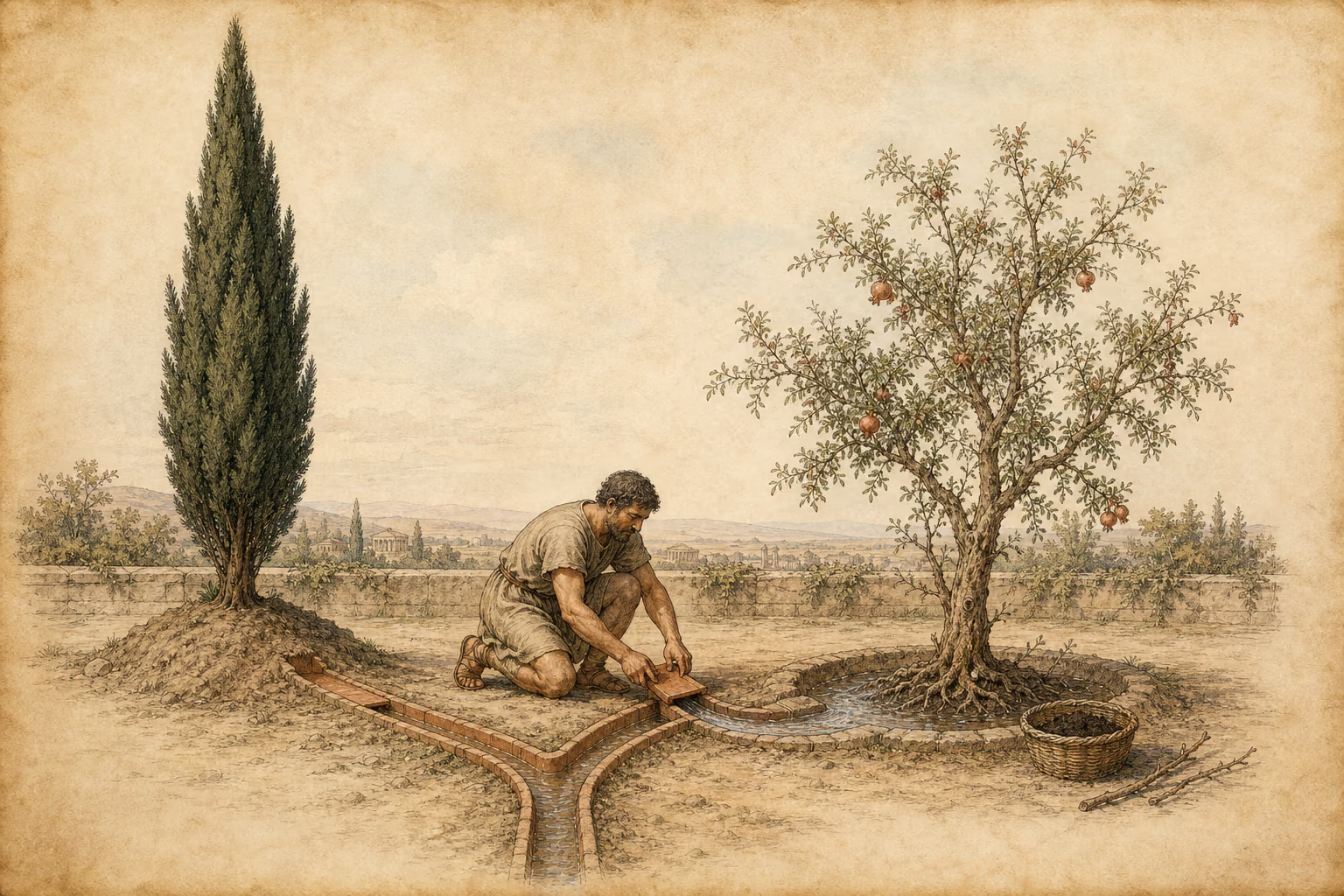
Nunc expositis arborum morbis consentaneum est dicere et remedia. ex his quaedam sunt communia omnium, quaedam propria quarundam. communia ablaqueatio, adcumulatio, adflari radices aut cooperiri, rigu us dato potu vel ablato, fimum suco defectis, putatio levandis onere, item suco emisso quaedam veluti detractio sanguinis, circumrasio corticis, vitium extenuatio et domitura palmitum, gemmarum, si frigus retorridas hirtasque fecerit, repumicatio et quaedam politura. arborum his aliae magis, aliae minus gaudent, veluti cupressus et aquas aspernatur et fimum et circumfossuram amputationemque et omnia remedia odit, quin etiam necatur riguis, vitis et punicae praecipue aluntur. ficus arbor ipsa riguis alitur, pomum vero eius marcescit. amygdalae, si colantur fossione, florem amittunt. nec insitas circumfodere oportet, priusquam validae ferre coeperint poma. plurimae autem amputari sibi volunt onerosa ac supervacua, sicut nos ungues et capillum. reciduntur veteres totae ac rursus a stolone aliquo resurgunt, sed non omnes nec nisi quarum naturam pati diximus.
Rigua aestivis vaporibus utilia, hieme inimica, autumno varie et e natura soli, quippe cum vindemiator Hispaniarum stagnante solo uvas demetat. cetero maiore in parte orbis etiam pluvias autumni aquas derivare convenit. circa canis ortum rigua maxime prosunt ac ne tum quidem nimia, quoniam inebriatis radicibus nocent. et aetas modum temperat, novellae enim minus sitiunt. desiderant autem maxime rigari quae adsuevere, contra siccis locis genita non expetunt umorem nisi necessarium.
Asperiora vina rigari utique cupiunt in Sulmonense Italiae agro, pago Fabiano, ubi et arva rigant. mirumque, herbae aqua ilia necantur, fruges aluntur, et riguus pro sarculo est. in eodem agro bruma—tanto magis, si nives iaceant geletve—, ne frigus vites adurat, circumfundunt riguis, quod ibi tepidare vocant, memorabili natura in amne solis, eodem aestate vix tolerandi rigoris.
English · Bostock & Riley 1855–57
Having set forth the various maladies by which trees are attacked, it seems only proper to mention the most appropriate remedies as well. Some of these remedies may be applied to all kinds of trees in common, while others, again, are peculiar to some only. The methods that are common to them all, are, baring the roots, or moulding them up, thus admitting the air or keeping it away, as the case may be; giving them water, or depriving them of it, refreshing them with the nutritious juices of manure, and lightening them of their burdens by pruning. The operation, too, of bleeding, as it were, is performed upon them by withdrawing their juices, and the bark is scraped all round to improve them. In the vine, the stock branches are sometimes lengthened out, and at other times repressed; the buds too are smoothed, and in a measure polished up, in case the cold weather has made them rough and scaly. These remedies are better suited to some kinds of trees and less so to others: thus the cypress, for instance, has a dislike to water, and manifests an aversion to manure, spading round it, pruning, and, indeed, remedial operations of every kind; nay, what is more, it is killed by irrigation, while, on the other hand, the vine and the pomegranate receive their principal nutriment from it. In the fig, again, the tree is nourished by watering, while the very same thing will make the fruit pine and die: the almond, too, if the ground is spaded about it, will lose its blossom. In the same way, too, there must be no digging about the roots of trees when newly grafted, or indeed until such time as they are sufficiently strong to bear. Many trees require that all superfluous burdens should be pruned away from them, just as we ourselves cut the nails and hair. Old trees are often cut down to the ground, and then shoot up again from one of the suckers; this, however, is not the case with all of them, but only those, the nature of which, as we have already stated, will admit of it.
Watering is good for trees during the heats of summer, but injurious in winter; the effects of it are of a varied nature in autumn, and depend upon the peculiar nature of the soil. Thus, in Spain for instance, the vintager gathers the grapes while the ground beneath is under water; on the other hand, in most parts of the world, it is absolutely necessary to carry off the autumn rains by draining. It is about the rising of the Dog-star that irrigation is so particularly beneficial; but even then it ought not to be in excess, as the roots are apt to become inebriated, and to receive injury therefrom. Care should be taken, too, to proportion it to the age of the tree, young trees being not so thirsty as older ones; those too which require the most water, are the ones that have been the most used to it. On the other hand, plants which grow in a dry soil, require no more moisture than is absolutely necessary to their existence.
In the Fabian district, which belongs to the territory of Sulmo in Italy, where they are in the habit, also, of irrigating the fields, the natural harshness of the wines makes it necessary to water the vineyards; it is a very singular thing, too, that the water there kills all the weeds, while at the same time it nourishes the corn, thus acting in place of the weeding-hook. In the same district, too, at the winter solstice, and more particularly when the snow is on the ground or frosts prevail, they irrigate the land, a process which they call “warming” the soil. This peculiarity, however, exists in the water of one river only, the cold of which in summer is almost insupportable.