LIBER XVII · CAPUT 7
THE EIGHT KINDS OF EARTH BOASTED OF BY THE GAULS AND GREEKS
Latine · Mayhoff 1906
non omisere et hoc Graeci—quid enim intemptatum illis?—leucargillon vocant candidam argillam, qua in Megarico agro utuntur, sed tantum in umida frigidaque terra. illam Gallias Britanniasque locupletantem cum cura dici convenit.
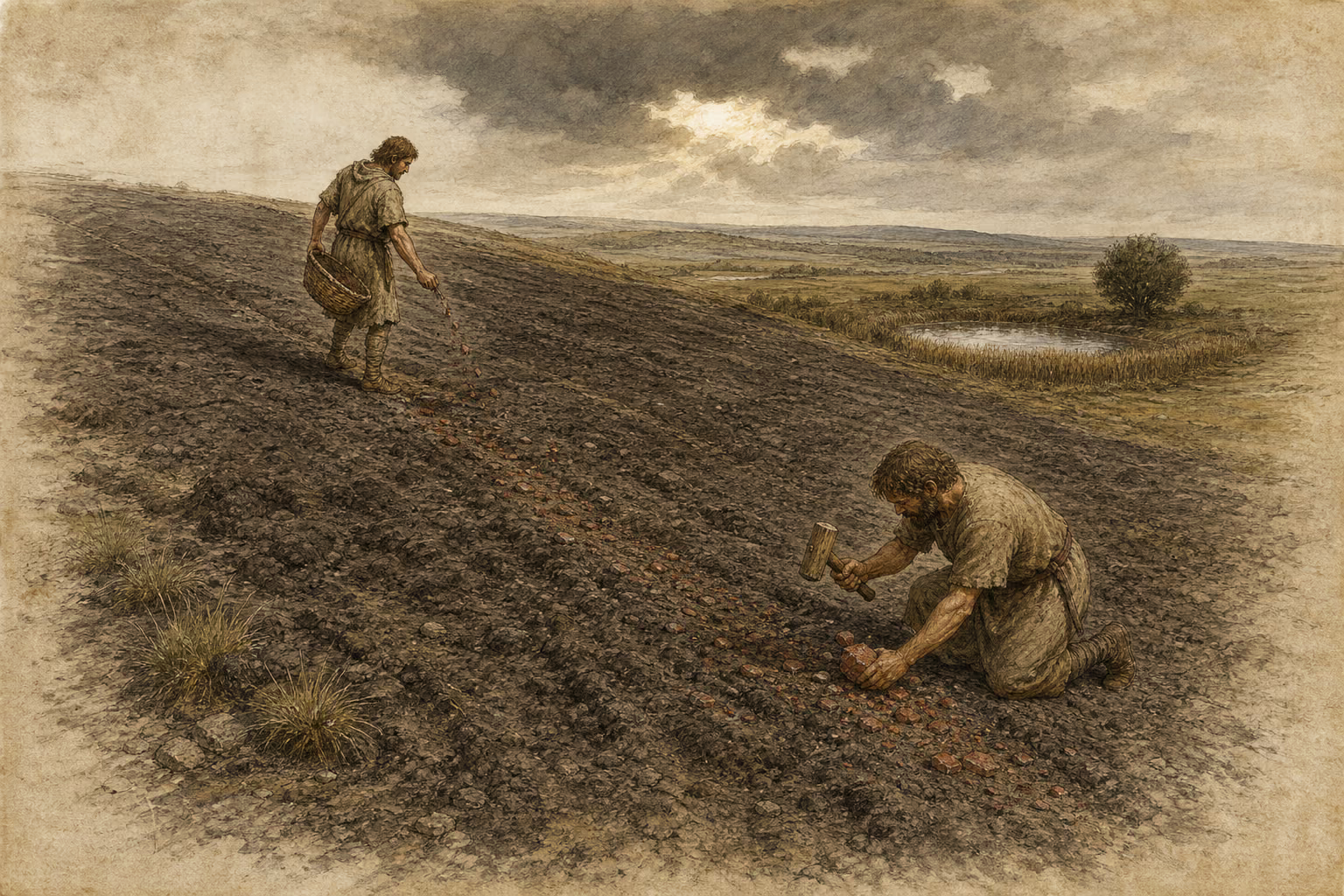
Duo genera fuerant, plura nuper exerceri coepta proficientibus ingeniis. est enim alba, rufa, columbina, argillacea, tofacea, harenacea. natura duplex, aspera aut pinguis; experimenta utriusque in manu. usus aeque geminus, ut fruges tantum alant aut eaedem et pabulum. fruges alit tofacea albaque, si inter fontes reperta est, ad infinitum fertilis, verum aspera tractatu; si nimia iniecta est, exurit solum. proxima est rufa, quae vocatur acaunumarga, intermixto lapide terrae minutae, harenosae. lapis contunditur in ipso campo, primisque annis stipula difficulter caeditur propter lapides; inpendio tamen minima levitate dimidio minoris, quam ceterae, invehitur. inspergitur rara; sale eam misceri putant. utrumque hoc genus semel iniectum in L annos valet et frugum et pabuli ubertate.
English · Bostock & Riley 1855–57
This mode of proceeding, too, has not been overlooked by the Greeks; indeed, what subject is there that they have not touched upon? They call by the name of leucargillon a white argillaceous earth which is used in the territory of Megara, but only where the soil is of a moist, cold nature.
It is only right that I should employ some degree of care and exactness in treating of this marl, which tends so greatly to enrich the soil of the Gallic provinces and the British islands. There were formerly but two varieties known, but more recently, with the progress of agricultural knowledge, several others have begun to be employed; there being, in fact, the white, the red, the columbine, the argillaceous, the tufaceous, and the sandy marls. It has also one of these two peculiarities, it is either rough or greasy to the touch; the proper mode of testing it being by the hand. Its uses, too, are of a twofold nature—it is employed for the production of the cereals only, or else for the enrichment of pasture land as well. The tufaceous kind is nutrimental to grain, and so is the white; if found in the vicinity of springs, it is fertile to an immeasurable extent; but if it is rough to the touch, when laid upon the land in too large a quantity, it is apt to burn up the soil. The next kind is the red marl, known as acaunumarga, consisting of stones mingled with a thin sandy earth. These stones are broken upon the land itself, and it is with considerable difficulty during the earlier years that the stalk of the corn is cut, in consequence of the presence of these stones; however, as it is remarkably light, it only costs for carriage one-half of the outlay required in using the other varieties. It is laid but very thinly on the surface, and it is generally thought that it is mixed with salt. Both of these varieties, when once laid on the land, will fertilize it for fifty years, whether for grain or for hay.