LIBER XVII · CAPUT 8
THE EIGHT KINDS OF EARTH BOASTED OF BY THE GAULS AND GREEKS
Latine · Mayhoff 1906
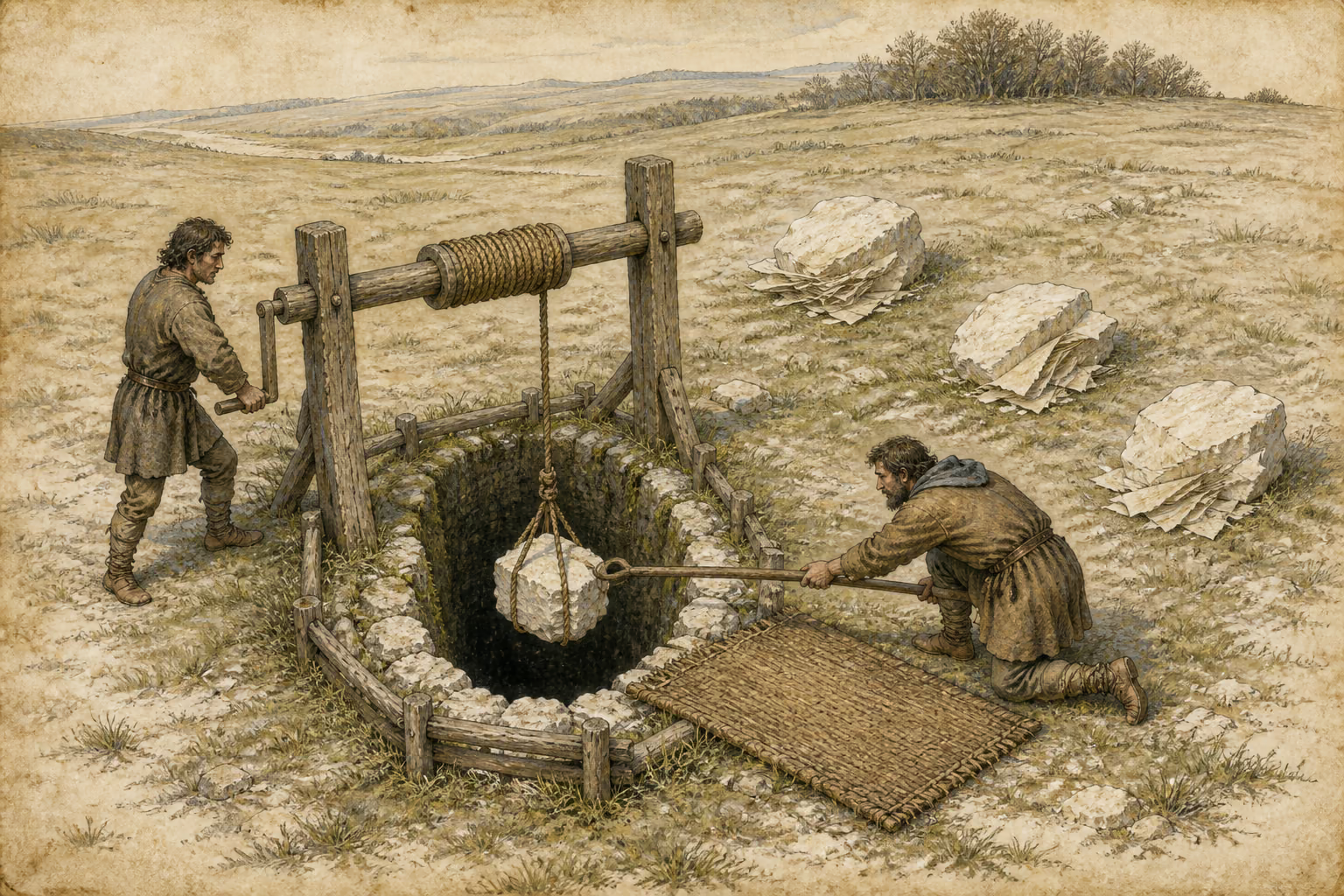
Quae pingues esse sentiuntur, ex his praecipua alba. plura eius genera: mordacissimum quod supra diximus. alterum genus albae creta argentaria est. petitur ex alto, in centenos pedes actis plerumque puteis, ore angusto, intus, ut in metallis, spatiante vena. hac maxime Britannia utitur. durat annis LXXX, neque est exemplum ullius, qui bis in vita hanc eidem iniecerit. tertium genus candidae glisomargam vocant. est autem creta fullonia mixta pingui terra, pabuli quam frugum fertilior, ita ut messe sublata ante sementem alteram laetissimum secetur. dum fruges, nullum aliud gramen emittit. durat XXX annis. densior iusto Signini modo strangulat solum. columbinam Galliae suo nomine eglecopalam appellant. glaebis excitatur lapidum modo, sole et gelatione ita solvitur, ut tenuissimas bratteas faciat. haec ex aequo fertilis. harenacea utuntur, si alia non sit; in uliginosis vero, et si alia sit. Ubios gentium solos novimus, qui fertilissimum agrum colentes quacumque terra infra pedes tres effossa et pedali crassitudine iniecta laetificent. sed ea non diutius annis x prodest. Aedui et Pictones calce uberrimos fecere agros, quae sane et oleis vitibusque utilissima reperitur. omnis autem marga arato inicienda est. ut medicamentum rapiatur, et fimi desiderat quantulumcumque, primo plus aspera et quae in herbas non effunditur; alioquin novitate quaecumque fuerit solum laedet, ne sic quidem primo anno fertilis. interest et quali solo quaeratur. sicca enim umido melior, arido pinguis. temperato alterutra, creta vel columbina, convenit.
English · Bostock & Riley 1855–57
Of the marls that are found to be of an unctuous nature, the best is the white. There are several varieties of it: the most pungent and biting being the one already mentioned. Another kind, is the white chalk that is used for cleaning silver; it is taken from a considerable depth in the ground, the pits being sunk, in most instances, as much as one hundred feet. These pits are narrow at the mouth, but the shafts enlarge very considerably in the interior, as is the case in mines; it is in Britain more particularly that this chalk is employed. The good effects of it are found to last full eighty years; and there is no instance known of an agriculturist laying it twice on the same land during his life. A third variety of white marl is known as glisomarga; it consists of fullers’ chalk mixed with an unctuous earth, and is better for promoting the growth of hay than grain; so much so, in fact, that between harvest and the ensuing seed-time there is cut a most abundant crop of grass. While the corn is growing, however, it will allow no other plant to grow there. Its effects will last so long as thirty years; but if laid too thickly on the ground, it is apt to choke up the soil, just as if it had been covered with Signine cement. The Gauls give to the columbine marl in their language the name of eglecopala; it is taken up in solid blocks like stone, after which it is so loosened by the action of the sun and frost, as to split into laminæ of extreme thinness; this kind is equally beneficial for grass and grain. The sandy marl is employed if there is no other at hand, and on moist slimy soils, even when other kinds can be procured.
The Ubii are the only people that we know of, who, having an extremely fertile soil to cultivate, employ methods of enriching it; wherever the land may happen to be, they dig to a depth of three feet, and, taking up the earth, cover the soil with it in other places a foot in thickness; this method, however, to be beneficial, requires to be renewed at the end of every ten years. The Ædui and the Pictones have rendered their lands remarkably fertile by the aid of limestone, which is also found to be particularly beneficial to the olive and the vine. Every marl, however, requires to be laid on the land immediately after ploughing, in order that the soil may at once imbibe its properties; while at the same time, it requires a little manure as well, as it is apt, at first, to be of too acrid a nature, at least where it is not pasture land that it is laid upon; in addition to which, by its very freshness it may possibly injure the soil, whatever the nature of it may be; so much so, indeed, that the land is never fertile the first year after it has been employed. It is a matter of consideration also for what kind of soil the marl is required; if the soil is moist, a dry marl is best suited for it; and if dry, a rich unctuous marl. If, on the other hand, the land is of a medium quality, chalk or columbine marl is the best suited for it.