LIBER XVII · CAPUT 9
THE EMPLOYMENT OF ASHES
Latine · Mayhoff 1906
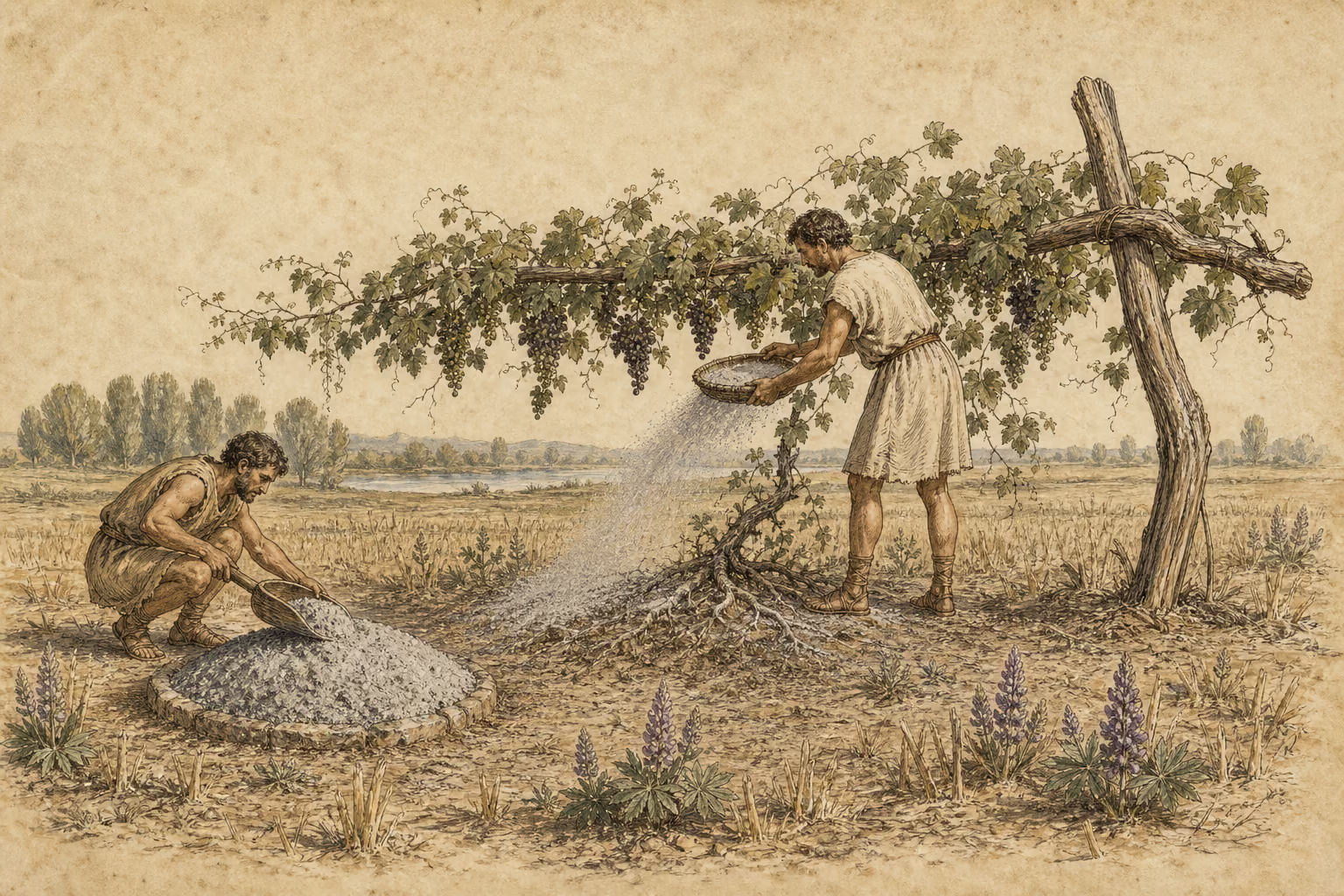
Transpadanis cineris usus adeo placet, ut anteponant fimo iumentorumque, quod levissimum est, ob id exurant. utroque tamen pariter non utuntur in eodem arvo, nec in arbustis cinere nec quasdam ad fruges, ut dicemus. sunt qui pulvere quoque uvas ali iudicent pubescentesque pulverent et vitium arborumque radicibus adspergant. quod certum est, Narbonensi provinciae et vindemias circius sic coquit, plusque pulvis ibi quam sol confert.
Fimi plures differentiae, ipsa res antiqua. iam apud Homerum regius senex agrum ita laetificans suis manibus reperitur. Augeas rex in Graecia excogitasse traditur, divulgasse vero Hercules in Italia, quae regi suo Stercuto Fauni filio ob hoc inventum inmortalitatem tribuit. M. Var r o principatum dat turdorum fimo ex aviariis, quod etiam pabulo boum suumque magnificat neque alio cibo celerius pinguescere adseverat. de nostris moribus bene sperare est, si tanta apud maiores fuere aviaria, ut ex his agri stercorarentur. primum Columella e columbariis, mox gallinariis facit, natantium alitum damnato. ceteri auctores consensu humanas dapes ad hoc in primis advocant. alii ex his praeferunt potus hominum in coriariorum officinis pilo madefacto, alii per sese aqua iterum largiusque etiam, quam cum bibitur, admixta. quippe plus ibi mali domandum est, cum ad virus illud vini homo accesserit. haec sunt certamina, invicemque ad tellurem quoque alendam aluntur homines. proxime spurcitias suum laudant, Columella solus damnat. alii cuiuscumque quadripedis ex cytiso, aliqui columbaria praeferunt. proximum deinde caprarum est, ab hoc ovium, dein boum, novissimum iumentorum.
Hae fuere apud priscos differentiae, simulque praecepta non invenio recenti utendi, quando et hic vetustas utilior; visumque iam est apud quosdam provincialium inveteratum, abundante geniali copia pecudum, farinae vice cribris superinici, faetore aspectuque temporis viribus in quandam etiam gratiam mutato.—(Nuper repertum oleas gaudere maxime cinere e calcariis fornacibus.)—Varro praeceptis adicit equino, quod sit levissimum, segetes alendi, prata vero graviore et quod ex hordeo fiat multasque gignat herbas. quidam etiam bubulo iumentorum praeferunt ovillumque caprino, omnibus vero asininum, quoniam lentissime mandant. e contrario usus adversus utrumque pronuntiat. inter omnes autem constat nihil esse utilius lupini segete, priusquam siliquetur, aratro vel bidentibus versa manipulisve desectae circa radices arborum ac vitium obrutis. et ubi non sit pecus, culmo ipso vel etiam felice stercorare arbitrantur.
Cato: Stercus unde facias, stramenta, lupinum, paleas, fabalia ac frondis iligneam quernea m. ex segete evellito ebulum, cicutam et circum salicta herbam altam ulvamque. eam substernito ovibus, bubusque frondem putidam. -Vinea si macra erit, sarmenta sua comburito et indidem inarato. idemque: Ubi saturus eris frumentum, oves ibi delectato.
Nec non et satis quibusdam ipsis pasci terram dicit: segetem stercorant fruges: lupinum, faba, vicia; sicut e contrario: cicer, quia vellitur et quia salsum est, hordeum, fenum Graecum, ervum, haec omnia segetem exurunt et omnia quae velluntur. nucleos in segetem ne indideris.—Vergilius et lino segetem exuri et avena et papavere arbitratur.
Fimeta sub diu concavo loco et qui umorem colligat, stramento intecta, ne in sole arescant, palo e robore depacto fieri iubent. ita fore ne innascantur iis serpentes. fimum inicere terrae plurimum refert favonio flante ac luna sitiente. id plerique prave intellegunt a favonii ortu faciendum ac Februario mense tantum, cum id pleraque sata aliis postulent mensibus. quocumque tempore facere libeat, curandum, ut ab occasu aequinoctiali flante vento fiat lunaque decrescente ac sicca. mirum in modum augetur ubertas effectusque eius observatione tali.
English · Bostock & Riley 1855–57
The agriculturists of the parts of Italy beyond the river Padus, are such admirers of ashes for this purpose, that they even prefer it as a manure to the dung of beasts of burden; indeed, they are in the habit of burning dung for this purpose, on account of its superior lightness. They do not, however, use them indiscriminately upon the same soil, nor do they employ ashes for promoting the growth of shrubs, nor, in fact, of some of the cereals, as we shall have occasion to mention hereafter. There are some persons who are of opinion also that dust imparts nutriment to grapes, and cover them with it while they are growing, taking care to throw it also upon the roots of the vines and other trees. It is well known that this is done in the province of Gallia Narbonensis, and it is a fact even better ascertained that the grape ripens all the sooner for it; indeed, the dust there contributes more to its ripeness than the heat of the sun.
There are various kinds of manure, the use of which is of very ancient date. In the times of Homer even, the aged king is represented as thus enriching the land by the labour of his own hands. Tradition reports that King Augeas was the first in Greece to make use of it, and that Hercules introduced the practice into Italy; which country has, however, immortalized the name of its king, Stercutus, the son of Faunus, as claiming the honour of this invention. M. Varro assigns the first rank for excellence to the dung of thrushes kept in aviaries, and lauds it as being not only good for land, but excellent food for oxen and swine as well; indeed, he goes so far as to assert that there is no food that they will grow fat upon more speedily. We really have some reason to augur well of the manners of the present day, if it is true that in the days of our ancestors there were aviaries of such vast extent as to be able to furnish manure for the fields.
Columella gives the second rank to pigeon manure, and the next to that of the poultry-yard; but he condemns that of the aquatic birds. Some authors, again, are agreed in regarding the residue of the human food as the very best of all manures; while others would only employ the superfluous portion of our drink, mixing with it the hair that is to be found in the curriers’ workshops. Some, however, are for employing this liquid by itself, though they would mix water with it once more, and in larger quantities even than when originally mixed with the wine at our repasts; there being a double share of noxious qualities to correct, not only those originally belonging to the wine, but those imparted to it by the human body as well. Such are the various methods by which we vie with each other in imparting nutriment to the earth even.
Next to the manures above mentioned, the dung of swine is highly esteemed, Columella being the only writer that condemns it. Some, again, speak highly of the dung of all quadrupeds that have been fed on cytisus, while there are others who prefer that of pigeons. Next to these is the dung of goats, and then of sheep; after which comes that of oxen, and, last of all, of the beasts of burden. Such were the distinctions that were established between the various manures among the ancients, such the precepts that they have left us, and these I have here set forth as being not the mere subtle inventions of genius, but because their utility has been proved in the course of a long series of years. In some of the provinces, too, which abound more particularly in cattle, by reason of their prolific soil, we have seen the manure passed through a sieve like so much flour, and perfectly devoid, through lapse of time, of all bad smell or repulsive look, being changed in its appearance to something rather agreeable than otherwise. In more recent times it has been found that the olive thrives more particularly in soil that has been manured with the ashes of the lime-kiln. To the ancient rules Varro has added, that corn land should be manured with horse-dung, that being the lightest manure of all, while meadow land, he says, thrives better with a manure of a more heavy nature, and supplied by beasts that have been fed upon barley; this last tending more particularly to the better growth of grass. Some persons, indeed, prefer the dung of the beasts of burden to that of oxen even, the manure of the sheep to that of the goat, and the manure of the ass to all others, the reason being that that animal masticates the most slowly of them all. Experience, however, has pronounced against these dicta of Varro and Columella; but it is universally agreed by all writers that there is nothing more beneficial than to turn up a crop of lupines, before they have podded, with either the plough or the fork, or else to cut them and bury them in heaps at the roots of trees and vines. It is thought, also, that in places where no cattle are kept, it is advantageous to manure the earth with stubble or even fern. “You can make manure,” Cato says, “of litter, or else of lupines, straw, beanstalks, or the leaves of the holm-oak and quercus. Pull up the wallwort from among the crops of corn, as also the hemlock that grows there, together with the thick grass and sedge that you find growing about the willow-plots; of all this, mixed with rotten leaves, you may make a litter for sheep and oxen. If a vine should happen to be but poor and meagre, prune the shoots of it, and plough them in round about it.” The same author says, also, “When you are going to sow corn in a field, fold your sheep there first.”
Cato says, also, that there are some crops which tend to nourish the earth: thus, for instance, corn land is manured by the lupine, the bean, and the vetch; while, on the other hand, the chick-pea exercises a contrary influence, both because it is pulled up by the roots and is of a salt nature; the same is the case, too, with barley, fenugreek, and fitches, all of which have a tendency to burn up corn land, as, in fact, do all those plants which are pulled up by the roots. Take care, too, not to plant stone-fruits on corn land. Virgil is of opinion, also, that corn land is scorched by flax, oats, and poppies.
It is recommended, also, that the dung-heap should be kept in the open air, in a spot deep sunk and well adapted to receive the moisture: it should be covered, too, with straw, that it may not dry up with the sun, care being taken to drive a stake of robur into the ground, to prevent serpents from breeding there. It is of the greatest consequence that the manure should be laid upon the land while the west winds prevail, and during a dry moon. Most persons, however, misunderstand this precept, and think this should be done when the west winds are just beginning to blow, and in the month of February only; it being really the fact that most crops require manuring in other months as well. At whatever period, however, it may be thought proper to manure the land, the greatest care should be taken that the wind is blowing due west at the time, and that the moon is on the wane, and quite dry. Such precautions as these will increase in a most surprising degree the fertilizing effects of manure.