LIBER XVIII · CAPUT 13
THE RAPE
Latine · Mayhoff 1906
quamquam prius de rapis dixisse conveniat— in transcursu ea attigere nostri, paulo diligentius Graeci, et ipsi tamen inter hortensia—si iustus ordo fiat, a frumento protinus aut certe faba dicendis, quando alius usus praestantior ab iis non est.
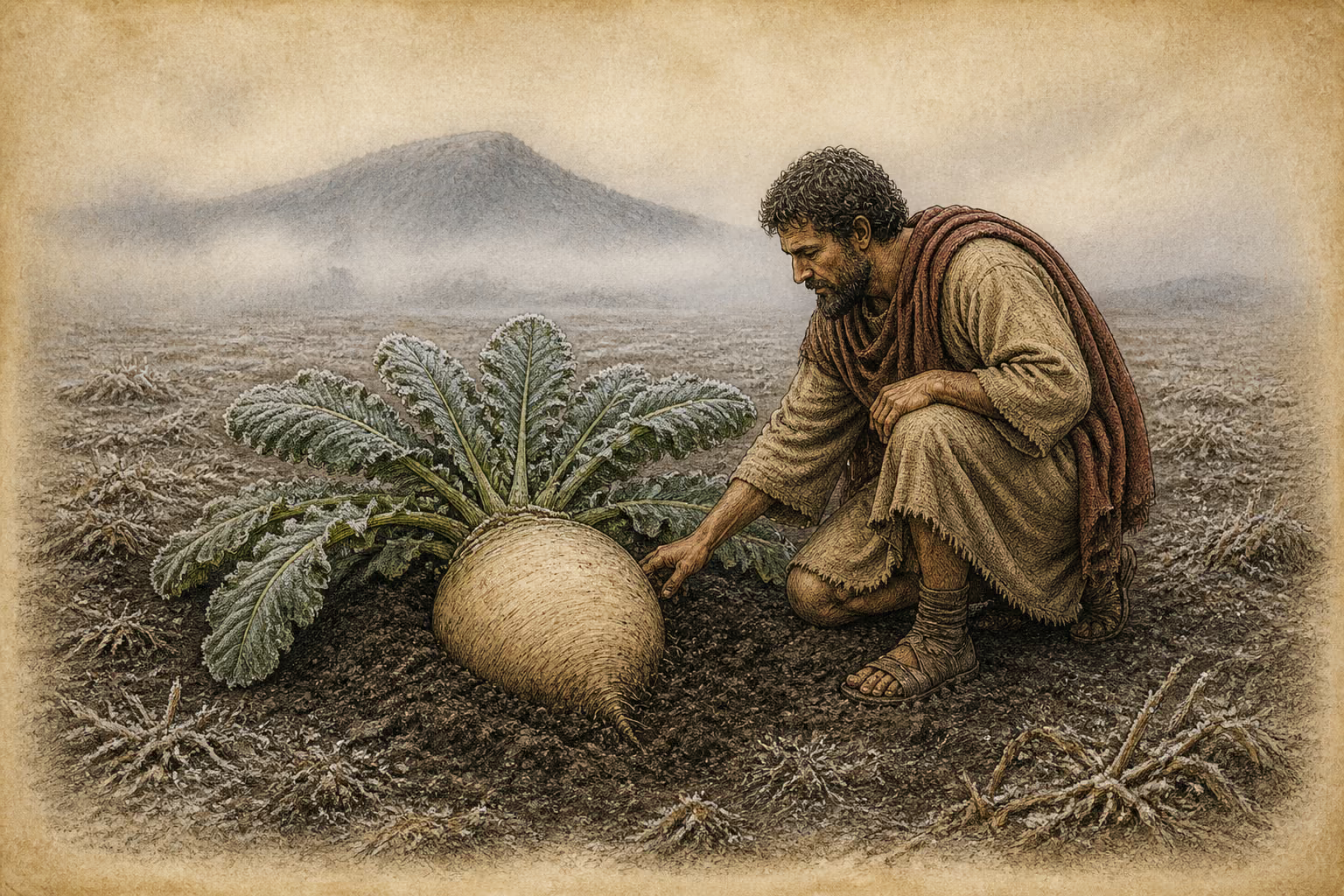
Ante omnia namque cunctis animalibus nascuntur, nec in novissimis satiant ruris alitum quoque genera, magisque si decoquantur aqua. quadripedes et fronde eorum gaudent, et homini non minore rapiciorum suis horis gratia quam cymarum, flavidorum quoque et in horreis enecatorum vel maiore quam virentium. ipsa vero durant et in sua terra servata et postea passa paene ad alium proventum, famemque sentiri prohibent. a vino atque messe tertius hic Transpadanis fructus. terram non morose eli- git, paene ubi nihil aliud seri possit. nebulis et pruinis ac frigore ultro aluntur, amplitudine mirabili; vidi XL libras excedentia. in cibis quidem nostris pluribus modis commendantur, durantque ad alia sinapis acrimonia domita, etiam coloribus picta praeter suum sex aliis, purpureo quoque. neque aliud in cibis tingui decet. genera eorum Graeci duo prima fecere, masculinum femininumque, et ea serendi modo ex eodem semine: densiore enim satu masculescere, item in terra difficili. semen praestantius quo subtilius. species vero omnium tres. aut enim in latitudinem fundi, aut in rotunditatem globari. tertiam speciem silvestrem appellavere, in longitudinem radice procurrente, raphani similitudine et folio anguloso scabroque, suco acri, qui circa messem exceptus oculos purget medeaturque caligini admixto lacte mulierum. frigore dulciora fieri existimantur et grandiora. tepore in folia exeunt. palma inNursino agro nascentibus—taxatio in libras sesterti singuli et in penuria bini —, proxima in Algido natis, napis vero Amiterni. quorum eadem fere natura: gaudent aeque frigidis. seruntur et ante kalendas Martias, in iugero sextarii IIII. diligentiores quinto sulco napum seri iubent, rapa quarto, utrumque stercorato, rapa laetiora fieri, si cum palea semen inaretur. serere nudum volunt precantem sibi et vicinis serere se. satus utrique generi iustus inter duorum numinum dies festos, Neptuni atque Volcani, feruntque subtili observatione, quota luna praecedente hieme nix prima ceciderit, si totidem aluminum die intra praedictum temporis spatium serantur, mire provenire. seruntur et vere in calidis atque umidis.
English · Bostock & Riley 1855–57
The Latin writers have only treated of this plant in a cursory manner, while those of Greece have considered it a little more attentively; though even they have ranked it among the garden plants. If, however, a methodical arrangement is to be strictly observed, it should be spoken of immediately after corn, or the bean, at all events; for next to these two productions, there is no plant that is of more extensive use. For, in the first place, all animals will feed upon it as it grows; and it is far from being the least nutritious plant in the fields for various kinds of birds, when boiled in water more particularly. Cattle, too, are remarkably fond of the leaves of rape; and the stalks and leaves, when in season, are no less esteemed as a food for man than the sprouts of the cabbage; these, too, when turned yellow and left to die in the barn, are even more highly esteemed than when green. As to the rape itself, it will keep all the better if left in its mould, after which it should be dried in the open air till the next crop is nearly ripe, as a resource in case of scarcity. Next to those of the grape and corn, this is the most profitable harvest of all for the countries that lie beyond the Padus. The rape is by no means difficult to please in soil, for it will grow almost anywhere, indeed where nothing else can be sown. It readily derives nutriment from fogs and hoar-frosts, and grows to a marvelous size; I have seen them weighing upwards of forty pounds. It is prepared for table among us in several ways, and is made to keep till the next crop, its fermentation being prevented by preserving it in mustard. It is also tinted with no less than six colours in addition to its own, and with purple even; indeed, that which is used by us as food ought to be of no other colour.
The Greeks have distinguished two principal species of rape, the male and the female, and have discovered a method of obtaining them both from the same seed; for when it is sown thick, or in a hard, cloggy soil, the produce will be male. The smaller the seed the better it is in quality. There are three kinds of rape in all; the first is broad and flat, the second of a spherical shape, and the third, to which the name of “wild” rape has been given, throws out a long root, similar in appearance to a radish, with an angular, rough leaf, and an acrid juice, which, if extracted about harvest, and mixed with a woman’s milk, is good for cleansing the eyes and improving defective sight. The colder the weather the sweeter they are, and the larger, it is generally thought; heat makes them run to leaf. The finest rape of all is that grown in the district of Nursia: it is valued at as much as one sesterce per pound, and, in times of scarcity, two even. That of the next best quality is produced on Mount Algidus.
The turnip of Amiternum, which is pretty nearly of the same nature as the rape, thrives equally well in a cold soil. It is sown just before the calends of March, four sextarii of seed to the jugerum. The more careful growers recommend that the ground should be turned up five times before putting in the turnip, and four for rape, care being taken, in both cases, to manure it well. Rape, they say, will thrive all the better, if it is sown together with some chaff. They will have it, too, that the sower ought to be stripped, and that he should offer up a prayer while sowing, and say: “I sow this for myself and for my neighbours.” The proper time for sowing both kinds is the period that intervenes between the festivals of the two divinities, Neptune and Vulcan. It is said, too—and it is the result of very careful observation—that these plants will thrive wonderfully well, if they are sown as many days after the festival of Neptune as the moon was old when the first snow fell the previous winter. They are sown in spring as well, in warm and humid localities.