LIBER XVIII · CAPUT 16
SILICIA
Latine · Mayhoff 1906
Et silicia, hoc est fenum Graecum, scariphatione seritur, non altiore quattuor digitorum sulco, quantoque peius tractatur, tanto provenit melius. rarum dictu esse aliquid, cui prosit neglegentia. id autem, quod secale ac farrago appellatur, occari tantum desiderat.
Secale Taurini sub Alpibus asiam vocant, deterrimum et tantum ad arcendam famem, fecunda, sed gracili stipula, nigritia triste, pondere praecipuum. admiscetur huic far, ut mitiget amaritudinem eius, et tamen sic quoque ingratissimum ventri est. nascitur qualicumque solo cum centesimo grano, ipsumque pro laetamine est.
Farrago ex recrementis farris praedensa seritur, admixta aliquando et vicia. eadem in Africa fit ex hordeo. omnia haec pabularia, degeneransque ex leguminibus quae vocatur cracca, in tantum columbis grata, ut pastas ea negent fugitivas illius loci fieri.
Apud antiquos erat pabuli genus, quod Cato ocinum vocat, quo sistebant alvom bubus. id erat e pabuli segete viride desectum, antequam generaret. Sura Mamilius aliter id interpretatur et tradit fabae modios x, viciae II, tantundem erviliae in iugero autumno misceri et seri solitos, melius et avena Graeca, cui non cadit semen, admixta. hoc vocitatum ocinum boumque causa seri solitum. Varro appellatum a celeritate proveniendi e Graeco, quod ὠκέως dicunt.
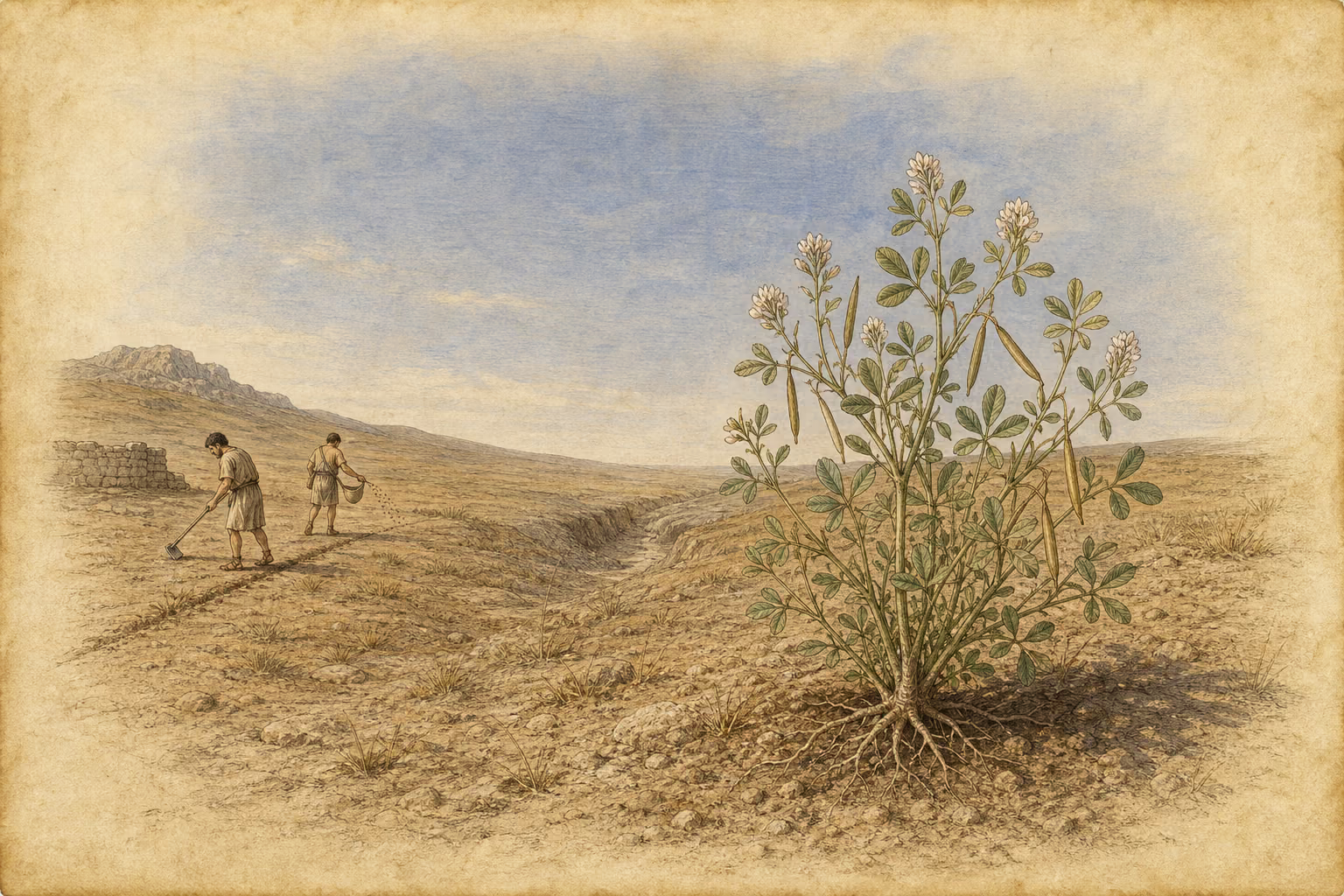
Medica externa etiam Graeciae est, ut a Medis advecta per bella Persarum, quae Darius intulit, sed vel in primis dicenda tanta dos est, cum ex uno satu amplius quam tricenis annis duret. similis est trifolio caule foliisque, geniculata. quidquid in caule adsurgit, folia contrahuntur. unum de ea et cytiso volumen Amphilochus conposuit. solum, in quo seratur, elapidatum purgatumque subigitur autumno, mox aratum et occatum integitur crate iterum ac tertium, quinis diebus interpositis et fimo addito. poscit autem siccum sucosumque vel riguum. ita praeparato seritur mense Maio, alias pruinis obnoxia. opus est densitate seminis omnia occupari internascentesque herbas excludi—id praestant in iugera modi III — et cavendum ne adurat sol, terraque protinus integi debet. si sit umidum solum herbosumve, vincitur et desciscit in pratum. ideo protinus altitudine unciali herbis omnibus liberanda est, manu potius quam sarculo. secatur incipiens florere et quotiens refloruit. id sexies evenit per annos, cum minimum, quater.
in semen maturescere prohibenda est, quia pabulum utilius est usque ad trimatum. verno sariri debet liberarique ceteris herbis, ad trimatum marris ad solum radi. ita reliquae herbae intereunt sine ipsius damno propter altitudinem radicum. si evicerint herbae, remedium unicum in aratro, saepius vertendo, donec omnes aliae radices intereant.
dari non ad satietatem debet, ne deplere sanguinem necesse sit. et viridis utilior est. arescit surculose ac postremo in pulverem inutilem extenuatur. de cytiso, cui et ipsi principatus datur in pabulis, adfatim diximus inter frutices. et nunc frugum omnium natura peragenda est, cuius in parte de morbis quoque dicatur.
English · Bostock & Riley 1855–57
Silicia, or, in other words, fenugreek, is sown after a light ploughing merely, the furrows being no more than some four fingers in depth; the less the pains that are bestowed upon it the better it will thrive—a singular fact that there should be anything that profits from neglect. The kinds, however, that are known as “secale” and “farrago” require harrowing only.
The people of Taurinum, at the foot of the Alps, give to secale the name of “asia;” it is a very inferior grain, and is only employed to avert positive famine. It is prolific, but has a straw of remarkable thinness; it is also black and sombre-looking, but weighs extremely heavy. Spelt is mixed with this grain to modify its bitterness, and even then it is very disagreeable to the stomach. It will grow upon any soil, and yields a hundred-fold; it is employed also as a manure for enriching the land.
Farrago, a mixture made of the refuse of “far,” or spelt, is sown very thick, the vetch being sometimes mingled with it; in Africa, this mixture is sometimes made with barley. All these mixtures, however, are only intended for cattle, and the same is the case with the cracca, a degenerate kind of leguminous plant. Pigeons, it is said, are so remarkably fond of this grain, that they will never leave the place where it has been given to them.
Among the ancients there was a sort of fodder, to which Cato gives the name of “ocinum;” it was employed by them to stop scouring in oxen. This was a mixture of various kinds of fodder, cut green before the frosts came on. Mamilius Sura, however, explains the term differently, and says that ten modii of beans, two of vetches, and the same quantity of ervilia, were mixed and sown in autumn on a jugerum of land. He states, also, that it is a still better plan to mix some Greek oats with it, the grain of which never falls to the ground; this mixture, according to him, was ocinum, and was usually sown as a food for oxen. Varro informs us that it received its name on account of the celerity with which it springs up, from the Greek ὠκέως, “quickly.”
Lucerne is by nature an exotic to Greece even, it having been first introduced into that country from Media, at the time of the Persian wars with King Darius; still it deserves to be mentioned among the very first of these productions. So superior are its qualities, that a single sowing will last more than thirty years. It resembles trefoil in appearance, but the stalk and leaves are articulated. The longer it grows in the stalk, the narrower is the leaf. Amphilochus has devoted a whole book to this subject and the cytisus. The ground in which it is sown, being first cleaned and cleared of stones, is turned up in the autumn, after which it is ploughed and harrowed. It is then harrowed a second and a third time, at intervals of five days; after which manure is laid upon it. This seed requires either a soil that is dry, but full of nutriment, or else a well-watered one. After the ground has been thus prepared, the seed is put in in the month of May; for if sown earlier, it is in danger from the frosts. It is necessary to sow the seed very thick, so that all the ground may be occupied, and no room left for weeds to shoot up in the intervals; a result which may be secured by sowing twenty modii to the jugerum. The seed must be stirred at once with the rake, to prevent the sun from scorching it, and it should be covered over with earth as speedily as possible. If the soil is naturally damp or weedy, the lucerne will be overpowered, and the spot degenerate into an ordinary pasture; it is necessary, therefore, directly the crop is an inch in height, to disengage it from all weeds, by hand, in preference to the weeding-hook.
It is cut when it is just beginning to flower, and this is repeated as often as it throws out new blossoms; which happens mostly six times in the year, and four at the very least. Care should be taken to prevent it from running to seed, as it is much more valuable as fodder, up to the third year. It should be hoed in the spring, and cleared of all other plants; and in the third year the surface should be well worked with the weeding-hook. By adopting this method, the weeds will be effectually destroyed, though without detriment to the lucerne, in consequence of the depth of its roots. If the weeds should happen to get ahead of it, the only remedy is to turn it up repeatedly with the plough, until the roots of the weeds are thoroughly destroyed. This fodder should never be given to cattle to satiety, otherwise it may be necessary to let blood; it is best, too, when used while green. When dry, it becomes tough and ligneous, and falls away at last into a thin, useless dust. As to the cytisus, which also occupies the very foremost rank among the fodders, we have already spoken of it at sufficient length when describing the shrubs. It remains for us now to complete our account of all the cereals, and we shall here devote a portion of it to the diseases to which they are subject.