LIBER XVIII · CAPUT 22
EXTREME FERTILITY OF SOIL
Latine · Mayhoff 1906
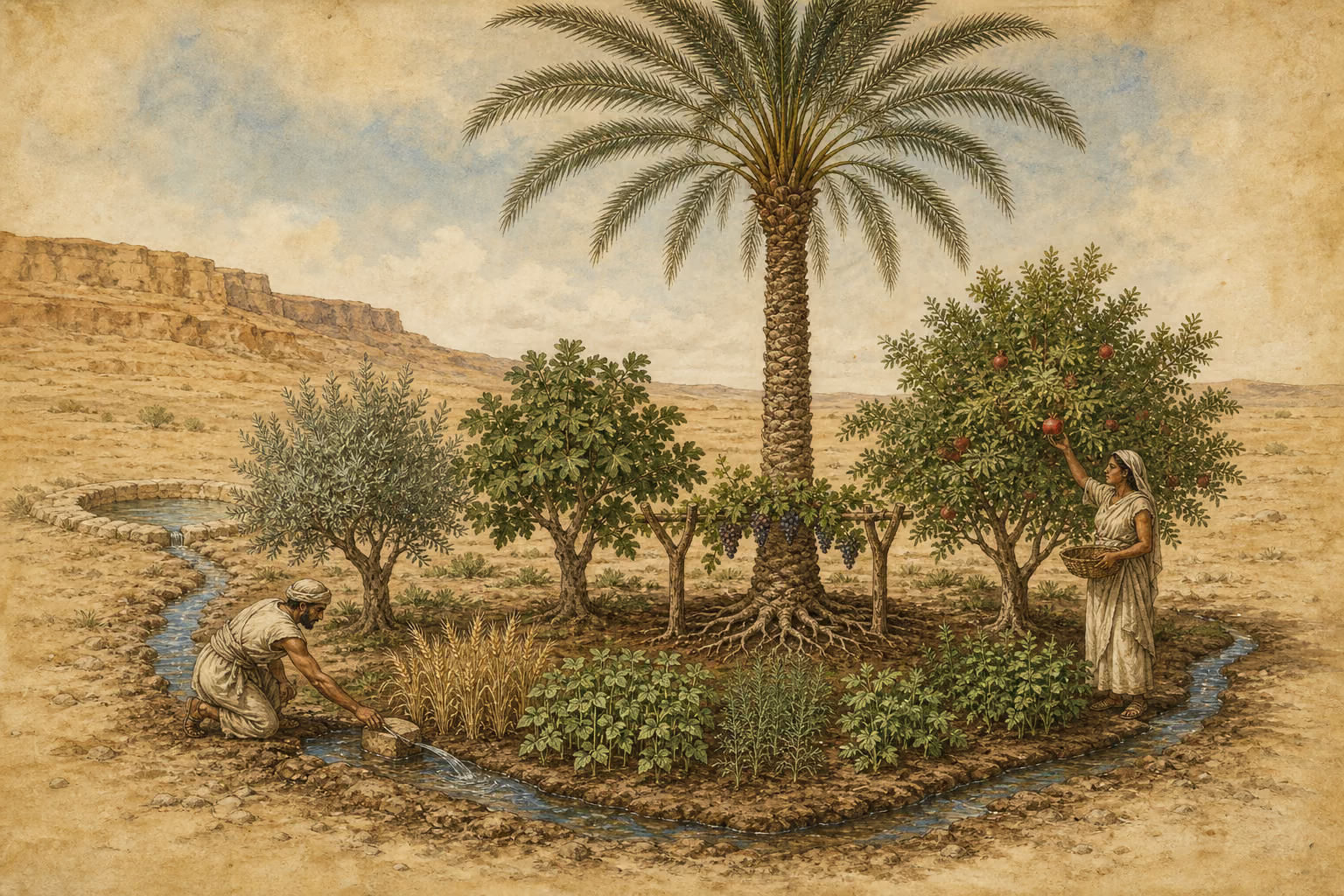
Civitas Africae in mediis harenis petentibus Syrtis Leptimque Magnam vocatur Tacape, felici super omne miraculum riguo solo. ternis fere milibus passuum in omnem partem fons abundat, largus quidem, sed certis horarum spatiis dispensatur inter incolas. palmae ibi praegrandi subditur olea, huic ficus, fico punica, illi vitis, sub vite seritur frumentum, mox legumen, deinde olus, omnia eodem anno, omniaque aliena umbra aluntur. quaterna cubita eius soli in quadratum, nec ut a porrectis metiantur digitis, sed in pugnum contractis, quaternis denariis venundantur. super omnia est bifera vite bis anno vindemiare. et nisi multiplici partu exinaniatur ubertas, pereant luxuria singuli fructus. nunc vero toto anno metitur aliquid, constatque fertilitati non occurrere homines. aquarum quoque differentia magna riguis. est in Narbonensi provincia nobilis fons Orgae nomine. in eo herbae nascuntur in tantum expetitae bubus, ut mersis capitibus totis eas quaerant. sed illas in aqua nascentes certum est non nisi imbribus ali. ergo suam quisque terram aquamque noverit.
English · Bostock & Riley 1855–57
There is a city of Africa, situate in the midst of the sands as you journey towards the Syrtes and Great Leptis, Tacape by name. The soil there, which is always well-watered, enjoys a degree of fertility quite marvellous. Through this spot, which extends about three miles each way, a spring of water flows—in great abundance it is true—but still, it is only at certain hours that its waters are distributed among the inhabitants. Here, beneath a palm of enormous size, grows the olive, beneath the olive the fig, beneath the fig, again, the pomegranate, beneath the pomegranate the vine, and beneath the vine we find sown, first wheat, then the leguminous plants, and after them garden herbs—all in the same year, and all growing beneath another’s shade. Four cubits square of this same ground—the cubit being measured with the fingers contracted and not extended—sell at the rate of four denarii. But what is more surprising than all, is the fact that here the vine bears twice, and that there are two vintages in the year. Indeed, if the fertility of the soil were not distributed in this way among a multitude of productions, each crop would perish from its own exuberance: as it is, there is no part of the year that there is not some crop or other being gathered in; and yet, it is a well-known fact, that the people do nothing at all to promote this fruitfulness.
There are very considerable differences, too, in the nature of water, as employed for the purposes of irrigation. In the province of Gallia Narbonensis there is a famous fountain, Orge by name; within it there grow plants which are sought for with such eagerness by the cattle, that they will plunge over head into the water to get at them; it is a well ascertained fact, however, that these plants, though growing in the water, receive their nutriment only from the rains that fall. It is as well then that every one should be fully acquainted with the nature, not only of the soil, but of the water too.