LIBER XVIII · CAPUT 21
THE METHODS OF HARROWING, STUBBING, AND HOEING, EMPLOYED FOR EACH DESCRIPTION OF GRAIN. THE USE OF THE HARROW
Latine · Mayhoff 1906
Siliginem, far, triticum, semen, hordeum occato, sarito, runcato quibus dictum erit diebus. singulae operae cuique generi in iugero sufficient. sarculatio induratam hiberno rigore soli tristitiam laxat temporibus vernis novosque soles admittit. qui sariet, caveat ne frumenti radices subfodiat. triticum, semen, hordeum, fabam bis sarire melius. runcatio, cum seges in articulum exiit, evolsis inutilibus herbis, frugum radices vindicat segetemque discernit a caespite. leguminum cicer eadem quae far desiderat. faba runcari non gestit. quoniam evincit herbas lupinum, occatur tantum. milium et panicum occatur et saritur, non iteratur, non runcatur. silicia et phasioli occantur tantum. sunt genera terrae, quorum ubertas pectinari segetem in herba cogat—cratis et hoc genus dentatae stilis ferreis —, eademque nihilominus et depascuntur. quae depasta sunt, sarculo iterum excitari necessarium. at in Bactris, Africa, Cyrenis omnia haec supervacua fecit indulgentia caeli, et a semente non nisi messibus in arva redeunt, quia siccitas coercet herbas, fruges nocturno tan- tum rore nutriens. Vergilius alternis cessare arva suadet — si patiantur ruris spatia, utilissimum procul dubio est —; quod si neget condicio, far serendum, unde lupinum aut vicia aut faba sublata sint et quae terram faciant laetiorem. inprimisque et hoc notandum, quaedam propter alia seri obiter, si parum provenere, ut priore diximus volumine, ne eadem saepius dicantur; plurimum enim refert soli cuiusque ratio.
English · Bostock & Riley 1855–57
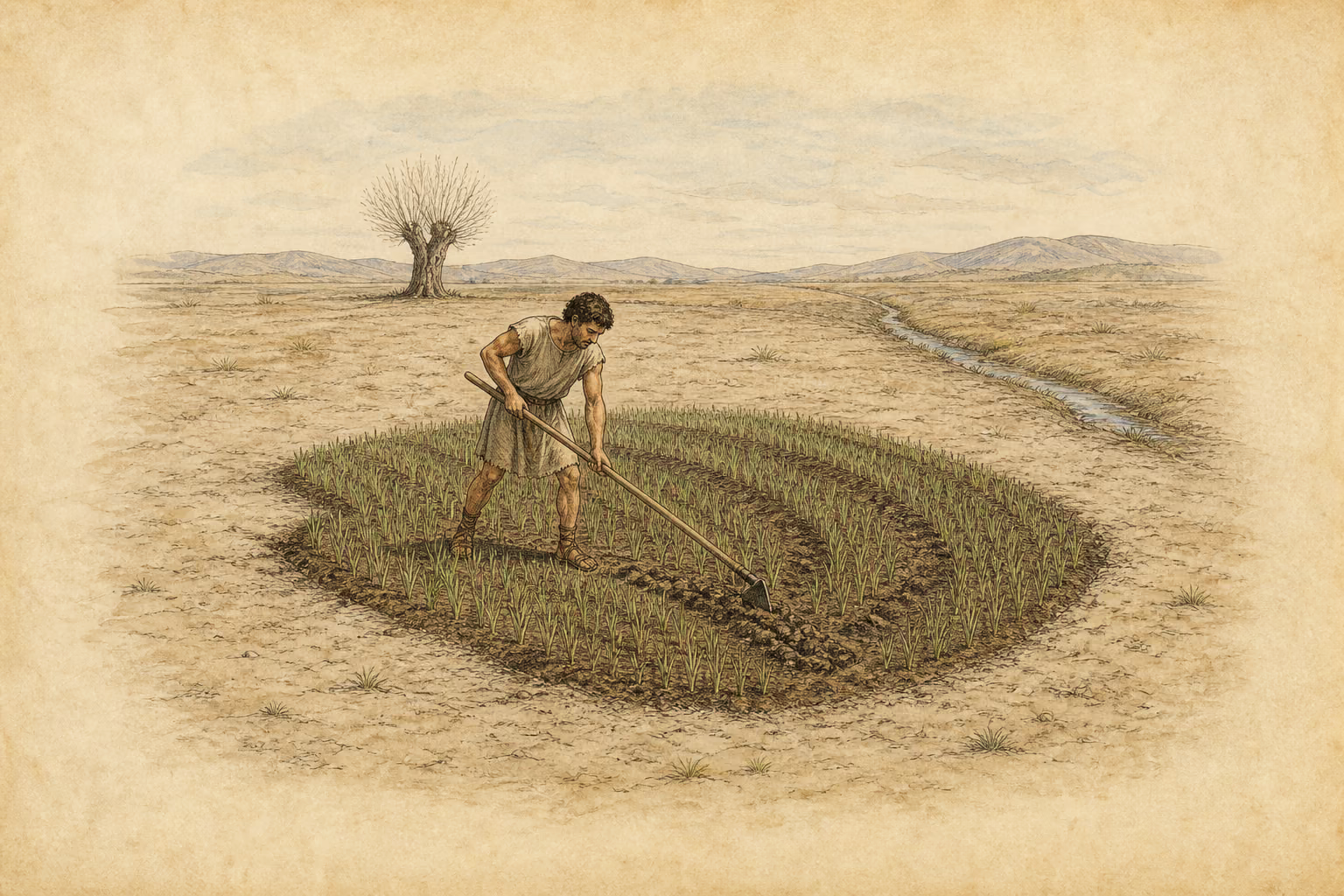
For winter wheat, spelt, wheat, zea, and barley, harrow, hoe and stub upon the days which will be mentioned in the sequel. A single hand per jugerum will be quite enough for any one of these kinds of grain. The operation of hoeing loosens the ground in spring when it has been hardened and saddened by the rigours of the winter, and admits the early sun to the interior. In hoeing, every care must be taken not to go beneath the roots of the corn; in the case of wheat, zea, and barley, it is best to give a couple of hoeings. Stubbing, when the crop is just beginning to joint, cleanses it of all noxious weeds, disengages the roots of the corn, and liberates the growing blade from the clods. Among the leguminous plants, the chick-pea requires the same treatment that spelt does. The bean requires no stubbing, being quite able of itself to overpower all weeds; the lupine, too, is harrowed only. Millet and panic are both harrowed and hoed; but this operation is never repeated, and they do not require stubbing. Fenugreek and the kidney-bean require harrowing only.
There are some kinds of ground, the extreme fertility of which obliges the grower to comb down the crops while in the blade—this is done with a sort of harrow armed with pointed iron teeth—and even then he is obliged to depasture cattle upon them. When, however, the blade has been thus eaten down, it stands in need of hoeing to restore it to its former vigour.
But in Bactria, and at Cyrenæ in Africa, all this trouble has been rendered quite unnecessary by the indulgent benignity of the climate, and after the seed is in, the owner has no occasion to return to the field till the time has come for getting in the harvest. In those parts the natural dryness of the soil prevents noxious weeds from springing up, and, aided by the night dews alone, the soil supplies its nutriment to the grain. Virgil recommends that the ground should be left to enjoy repose every other year; and this, no doubt, if the extent of the farm will admit of it, is the most advantageous plan. If, however, circumstances will not allow of it, spelt should be sown upon the ground that has been first cropped with lupines, vetches, or beans; for all these have a tendency to make the soil more fertile. We ought to remark here more particularly, that here and there certain plants are sown for the benefit of others, although, as already stated in the preceding Book, not to repeat the same thing over again, they are of little value themselves. But it is the nature of each soil that is of the greatest importance.