LIBER XVIII · CAPUT 20
THE MODE OF PLOUGHING
Latine · Mayhoff 1906
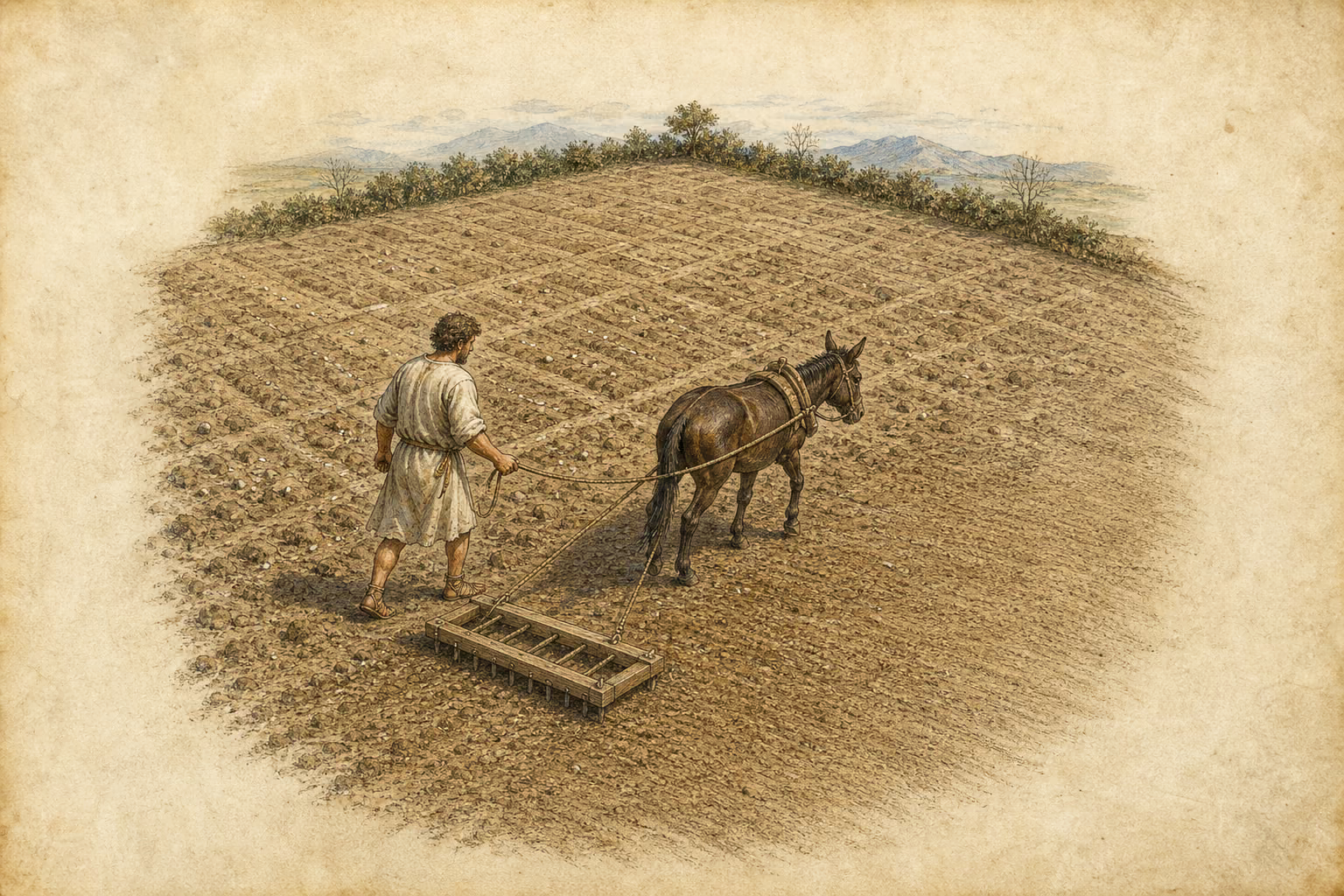
<3> Aratione per traversum iterata occatio sequitur, ubi res poscit, crate vel rastro, et sato semine iteratur haec quoque, ubi consuetudo patitur, crate contenta vel tabula aratro adnexa—quod vocant lirare — operiente semina; ni operiantur, quae primum appellata, deliratio est. quarto seri sulco Vergilius existimatur voluisse, cum dixit optimam esse segetem, quae bis soles, bis frigora sensisset. spissius solum, sicut plerumque in Italia, quinto sulco seri melius est, in Tuscis vero nono. at fabam et viciam non proscisso serere sine damno conpendium operae est.
<4> Non omittemus unam etiamnum arandi rationem in transpadana Italia bellorum iniuria excogitatam. Salassi cum subiectos Alpibus depopularentur agros, panicum miliumque iam excrescens temptavere. postquam respuebat natura, inararunt. at illae messes multiplicatae docuere quod nunc vocant artrare, id est aratrare, ut credo, tune dictum. hoc fit vel incipiente culmo, cum iam se ad bina ternave emiserit folia. nec recens subtrahemus exemplum in Treverico agro tertio ante hunc annum conpertum. nam cum hieme praegelida captae segetes essent, reseverunt etiam campos mense Martio uberrimasque messes habuerunt.
Nunc reliqua cultura tradetur per genera frugum.
English · Bostock & Riley 1855–57
After the furrows have been gone over again transversely, the clods are broken, where there is a necessity for it, with either the harrow or the rake; and this operation is repeated after the seed has been put in. This last harrowing is done, where the usage of the locality will allow of it, with either a toothed harrow, or else a plank attached to the plough. This operation of covering in the seed is called “lirare,” from which is derived the word “deliratio.” Virgil, it is generally thought, intends to recommend sowing after four ploughings, in the passage where he says that land will bear the best crop, which has twice felt the sun and twice the cold. Where the soil is dense, as in most parts of Italy, it is a still better plan to go over the ground five times before sowing; in Etruria, they give the land as many as nine ploughings first. The bean, however, and the vetch may be sown with no risk, without turning up the land at all; which, of course, is so much labour saved.
We must not here omit to mention still one other method of ploughing, which the devastations of warfare have suggested in Italy that lies beyond the Padus. The Salassi, when ravaging the territories which lay at the foot of the Alps, made an attempt to lay waste the crops of panic and millet that were just appearing above the ground. Finding, however, that Nature resisted all their endeavours, they passed the plough over the ground, the result of which was that the crops were more abundant than ever; and this it was that first taught us the method of ploughing in, expressed by the word “artrare,” otherwise “aratrare,” in my opinion the original form. This is done either just as the stem begins to develope itself, or else when it has put forth as many as two or three leaves. Nor must we withhold from the reader a more recent method, which was discovered the year but one before this, in the territory of the Treviri. The crops having been nipped by the extreme severity of the winter, the people sowed the land over again in the month of March, and had a most abundant harvest.
We shall now proceed to a description of the peculiar methods employed in cultivating each description of grain.