LIBER XVIII · CAPUT 19
THE MODE OF PLOUGHING
Latine · Mayhoff 1906
<1> In arando magnopere servandum est Catonis oraculum: quid est bene agrum colere? bene arare. quid secundum? arare. quid tertium? stercorare. sulco vario ne ares. tempestive ares. tepidioribus locis a bruma proscindi arva oportet, frigidioribus ab aequinoctio verno, et maturius sicca regione quam umida, maturius densa terra quam soluta, pingui quam macra. ubi siccae et graves aestates, terra cretosa aut gracilis, utilius inter solstitium et autumni aequinoctium aratur; ubi leves aestus, frequentes imbres, pingue herbosumque solum, ibi mediis caloribus. altum et grave solum etiam hieme moveri placet, tenue valde et aridum paulo ante sationem.
<2> Sunt et huic suae leges: lutosam terrain ne tangito. vi omni arato. prius quam ares proscindito. hoc utilitatem habet, quod inverso caespite herbarum radices necantur. quidam utique ab aequinoctio verno proscindi volunt.—quod vere semel aratum est, a temporis argumento vervactum vocatur. hoc in novali aeque necessarium est. novale est quod alternis annis seritur.—araturos boves quam artissime iungi oportet, ut capitibus sublatis arent—sic minime colla contundunt —; si inter arbores vitesque aretur, fiscellis capistrari, ne germinum tenera praecerpant; securiculam in stiva pendere, qua intercidantur radices—hoc melius quam convelli aratro bovesque luctari —; in arando versum peragi nec strigare in actu spiritus. iustum est proscindi sulco dodrantali iugerum uno die, iterari sesquiiugerum, si sit facilitas soli; si minus, proscindi semissem, iterari assem, quando et animalium labori natura leges statuit. omne arvum rectis sulcis, mox et obliquis subigi debet. in collibus traverso tantum monte aratur, sed modo in superiora modo in inferiora rostrante vomere, tantumque est laboris homini, ut etiam boum vice fungatur. certe sine hoc animali montanae gentes sarculis arant. arator nisi incurvus praevaricatur. inde tralatum hoc crimen in forum. ibi utique caveatur, ubi inventum est. purget vomerem subinde stimulus cuspidatus rallo. scamna inter duos sulcos cruda ne relinquantur, glaebae ne exultent. male aratur arvom, quod satis frugibus occandum est. id demum recte subactum erit, ubi non intellegetur, utro vomer ierit. in usu est et collicias interponere, si ita locus poscat, ampliore sulco, quae in fossas aquam educant.
English · Bostock & Riley 1855–57
In ploughing, the most rigid attention should be paid to the oracular precepts given by Cato on the subject. “What is the essence of good tillage? Good ploughing. What is the second point? Ploughing again. What is the third point? Manuring. Take care not to make crooked furrows. Be careful to plough at the proper time.” In warm localities it is necessary to open the ground immediately after the winter solstice, but where it is cold, directly after the vernal equinox: this, too, should be done sooner in dry districts than in wet ones, in a dense soil than a loose one, in a rich land than a meagre one. In countries where the summers are hot and oppressive, the soil cretaceous or thin, it is the best plan to plough between the summer solstice and the autumnal equinox. Where, on the other hand, the heat is moderate, with frequent falls of rain, and the soil rich and full of vegetation, the ploughing should be done during the prevalence of the heat. A deep, heavy soil, again, should be ploughed in winter; but one that is very thin and dry, only just before putting in the seed.
Tillage, too, has its own particular rules —Never touch the ground while it is wet and cloggy; plough with all your might; loosen the ground before you begin to plough. This method has its advantages, for by turning up the clods the roots of the weeds are killed. Some persons recommend that in every case the ground should be turned up immediately after the vernal equinox. Land that has been ploughed once in spring, from that circumstance has the name of “vervactum.” This, too, is equally necessary in the case of fallow land, by which term is meant land that is sown only in alternate years. The oxen employed in ploughing should be harnessed as tightly as possible, to make them plough with their heads up; attention paid to this point will prevent them from galling the neck. If it is among trees and vines that you are ploughing, the oxen should be muzzled, to prevent them from eating off the tender buds. There should be a small bill-hook, too, projecting from the plough-tail, for the purpose of cutting up the roots; this plan being preferable to that of turning them up with the share, and so straining the oxen. When ploughing, finish the furrow at one spell, and never stop to take breath in the middle.
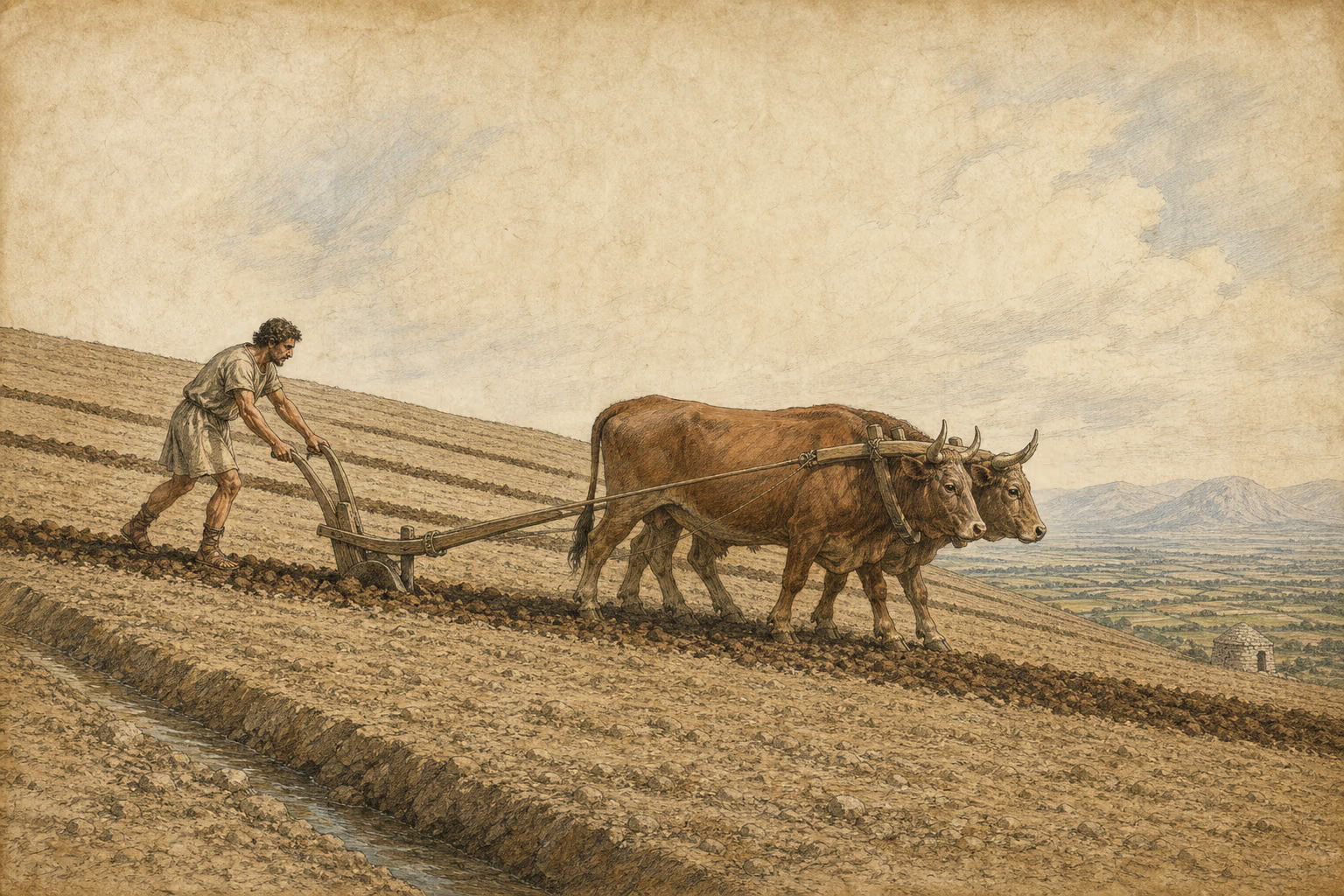
It is a fair day’s work to plough one jugerum, for the first time, nine inches in depth; and the second time, one jugerum and a half—that is to say, if it is an easy soil. If this, however, is not the case, it will take a day to turn up half a jugerum for the first time, and a whole jugerum the second; for Nature has set limits to the powers of animals even. The furrows should be made, in every case, first in a straight line, and then others should be drawn, crossing them obliquely. Upon a hill-side the furrows are drawn transversely only, the point of the share inclining upwards at one moment and downwards at another. Man, too, is so well fitted for labour, that he is able to supply the place of the ox even; at all events, it is without the aid of that animal that the mountain tribes plough, having only the hoe to help them.
The ploughman, unless he stoops to his work, is sure to prevaricate, a word which has been transferred to the Forum, as a censure upon those who transgress—at any rate, let those be on their guard against it, where it was first employed. The share should be cleaned every now and then with a stick pointed with a scraper. The ridges that are left between every two furrows, should not be left in a rough state, nor should large clods be left protruding from the ground. A field is badly ploughed that stands in need of harrowing after the seed is in; but the work has been properly done, when it is impossible to say in which direction the share has gone. It is a good plan, too, to leave a channel every now and then, if the nature of the spot requires it, by making furrows of a larger size, to draw off the water into the drains.