LIBER XVIII · CAPUT 29
REMEDIES AGAINST THESE NOXIOUS INFLUENCES
Latine · Mayhoff 1906
<2> Duae sunt praeter lunarem paucisque caeli locis constant. namque vergiliae privatim attinent ad fructus, ut quarum exortu aestas incipiat, occasu hiems, semestri spatio intra se messes vindemiasque et omnium maturitatem conplexae. est praeterea in caelo qui vocatur lacteus circulus, etiam visu facilis [huius defluvio velut ex ubere aliquo sata cuncta lactescunt] duorum siderum observatione, aquilae in septentrionali parte et in austrina caniculae, cuius mentionem suo loco fecimus. ipse circulus fertur per sagittarium atque geminos, solis centro bis aequinoctialem circulum secans, commissuras eorum optinente hinc aquila illinc canicula. ideo effectus utriusque ad omnes frugiferas pertinent terras, quoniam in his tantum locis solis terraeque centra congruunt. igitur horum siderum diebus si purus atque mitis aër genitalem ilium lacteumque sucum transmisit in terras, laeta adulescunt sata; si luna qua dictum est ratione roscidum frigus aspersit, admixta amaritudo ut in lacte puerperium necat. modus in terris huius iniuriae, quem fecit in quacumque convexitate comitatus utriusque causae, et ideo non pariter in toto orbe sentitur, ut nec dies. aquilam diximus in Italia exoriri a. d. XIII kal. Ian., nec patitur ratio naturae quicquam in satis ante eum diem spei esse certae. si vero interlunium incidat, omnes hibernos fructus et praecoces laedi necesse est.
<3> Rudis fuit priscorum vita atque sine litteris. non minus tamen ingeniosam fuisse in illis observationem apparebit quam nunc esse rationem. tria namque tempora fructibus metuebant, propter quod instituerunt ferias diesque festos, Robigalia, Floralia, Vinalia. Robigalia Numa constituit anno regni sui XI, quae nunc aguntur a. d. VII kal. Mai., quoniam tune fere segetes robigo occupat. hoc tempus Varro determinavit sole tauri partem x obtinente, sicut tune ferebat ratio. sed vera causa est, quod post dies undeviginti ab aequinoctio verno per id quadriduum varia gentium observatione in IIII kal. Mai. canis occidit, sidus et per se vehemens et cui praeoccidere caniculam necesse sit. itaque iidem Floralia IIII kal. easdem instituerunt urbis anno DXVI ex oraculis Sibyllae, ut omnia bene deflorescerent. hunc diem Varro determinat sole tauri partem XIIII obtinente. ergo si in hoc quadriduum inciderit plenilunium, fruges et omnia, quae florebunt, laedi necesse erit. Vinalia priora, quae ante hos dies sunt VIIII kal. Mai. degustandis vinis instituta, nihil ad fructus attinent, nec quae adhuc diximus ad vites oleasque, quoniam earum conceptus exortu vergiliarum incipit a. d. I id. Mai., ut docuimus. aliud hoc quadriduum est, quo neque rore sordidas velim—exurit enim frigidum sidus arcturi postridie occidens —, et multo minus plenilunium incidere. <4> IIII non. Iun. iterum aquila exoritur vesperi, decretorio die florentibus oleis vitibusque, si plenilunium in eum incidat. equidem et solstitium VIII kal. Iul. in simili causa duxerim et canis ortum post dies a solstitio XXIII, sed interlunio accidente, quoniam vapore constat culpa acinique praecocuntur in callum. rursus plenilunium nocet a. d. IIII non. Iul., cum Aegypto canicula exoritur, vel certe XVI kal. Aug., cum Italiae, item XII kal. Aug., cum aquila occidit, usque in X kal. easdem. extra has causas sunt Vinalia altera, quae aguntur a. d. XIII kal. Sept. Varro ea fidicula incipiente occidere mane determinat, quod vult initium autumni esse et hune diem festum tempestatibus leniendis institutum. nunc fidiculam occidere a. d. vi id. Aug. servatur.
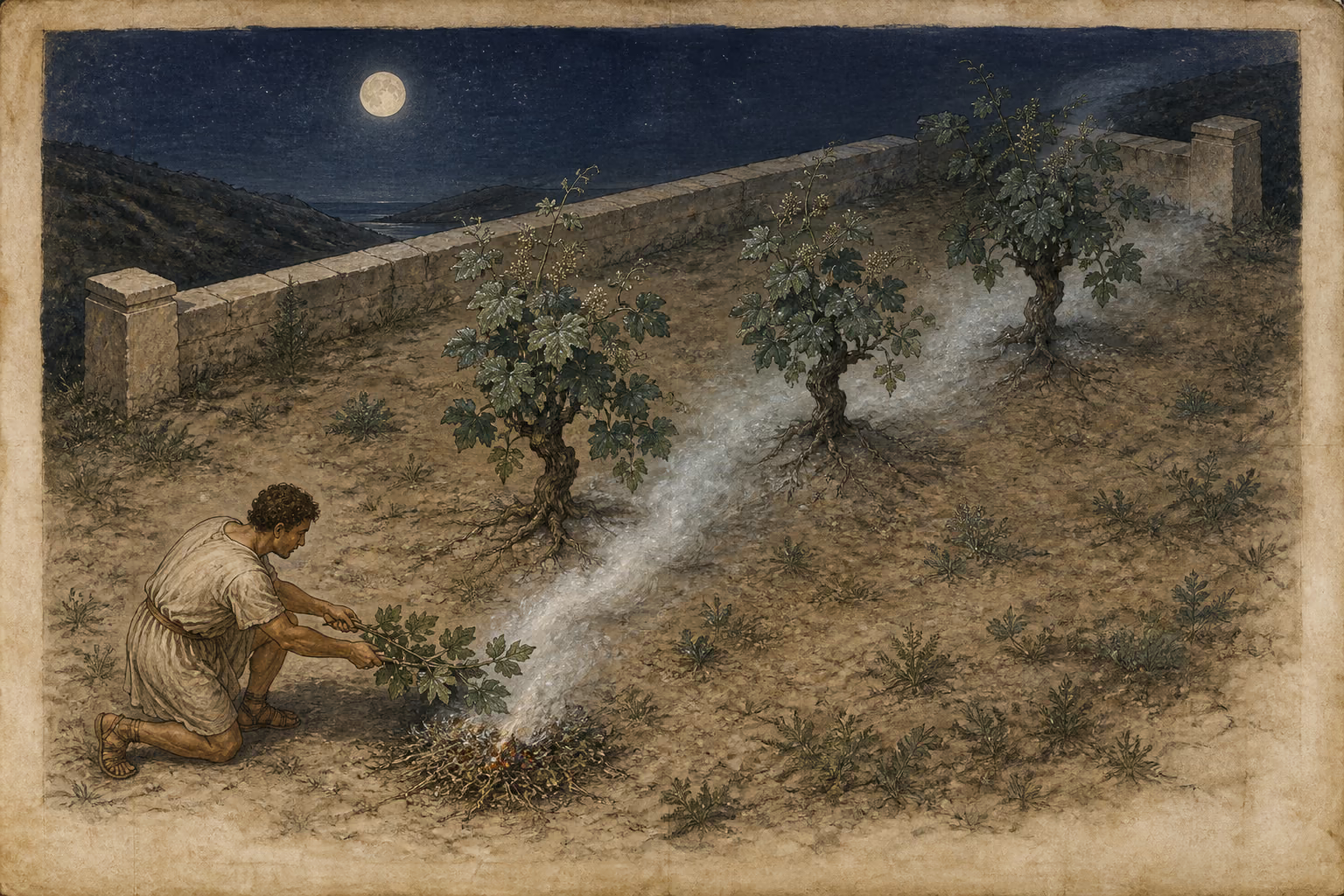
<5> Intra haec constat caelestis sterilitas,neque negaverim posse ea permutarialgentium locorum et aestuantium natura. set a nobis rationem demonstratam esse satis est; reliqua observatione cuiusque constabunt. alterutrum quidem fore in causa, hoc est plenilunium aut interlunium, non erit dubium. et in hoc mirari benignitatem naturae succurrit: iam primum hanc iniuriam omnibus annis accidere non posse propter statos siderum cursus, nec nisi paucis noctibus anni, idque quando sit futurum facile nosci ac, ne per omnes menses timeretur, earum quoque lege divisum: aestate interlunia praeterquam biduo secura esse, hieme plenilunia, nec nisi aestivis brevissimisque noctibus metui, diebus non idem valere; praeterea tam facile intellegi, ut formica, minimum animal, interlunio quiescat, plenilunio operetur etiam noctibus; avem parram oriente sirio ipso die non apparere et donec occidat, e diverso chlorionem prodire ipso die solstitii; neutrum vero lunae statum noxium esse, ne noctibus quidem nisi serenis et omni aura quiescente, quoniam neque in nube neque in flatu cadunt rores, sic quoque non sine remedio. sarmenta aut palearum acervos et evulsas herbas fruticesque per vineas camposque, cum timebis, incendito: fumus medebitur hic; e paleis et contra nebulas auxiliatur, ubi nebulae nocent. quidam tres cancros vivos cremari iubent in arbustis, ut carbunculus ne noceat; alii siluri carnem leniter uri a vento, ut per totam vineam fumus dispergatur. Varro auctor est, si fidiculae occasu, quod est initium autumin, uva picta consecretur inter vites, minus nocere tempestates. Archibius ad Antiochum Syriae regem scripsit, si fictili novo obruatur rubeta rana in media segete, non esse noxias tempestates.
Opera rustica huius intervalli:terram iterare, arbores circumfodere aut, ubi aestuosa regio poscat, adcumulare —germinantia nisi in solo luxurioso fodienda non sunt—, seminaria purgare sarculo, messem hordeaciam facere, aream messi praeparare, Catonis sententia amurca temperatam, creta Vergili operosius. maiore ex parte aequant tantum et fimo bubulo dilutiore inlinuunt. id satis ad pulveris remedium videtur.
English · Bostock & Riley 1855–57
Independently of the moon, there are two principal causes of these calamities, which emanate more particularly from two quarters of the heavens of but limited extent. On the one hand, the Vergiliæ exercise an especial influence on our harvests, as it is with their rising that the summer begins, and with their setting, the winter; thus embracing, in the space of six months, the harvest, the vintage, and the ripening of all the vegetable productions. In addition to this, there is a circular tract in the heavens, quite visible to the human eye even, known as the Milky Way. It is the emanations from this, flowing as it were from the breast, that supply their milky nutriment to all branches of the vegetable world. Two constellations more particularly mark this circular tract, the Eagle in the north, and Canicula in the south; of this last, we have already made mention in its appropriate place. This circle traverses also Sagittarius and Gemini, and passing through the centre of the sun, cuts the equinoctial line below, the constellation of the Eagle making its appearance at the point of intersection on the one side, and Canicula on the other. Hence it is that the influences of both these constellations develope themselves upon all cultivated lands; it being at these points only that the centre of the sun is brought to correspond with that of the earth. If, then, at the moments of the rising and the setting of these constellations, the air, soft and pure, transmits these genial and milky emanations to the earth, the crops will thrive and ripen apace; but if, on the other hand, the moon, as already mentioned, sheds her chilling dews, the bitterness thereof infuses itself into these milky secretions, and so kills the vegetation in its birth. The measure of the injury so inflicted on the earth depends, in each climate, upon the combination of the one or other of these causes; and hence it is that it is not felt in equal intensity throughout the whole earth, nor even precisely at the same moment of time. We have already said that the Eagle rises in Italy on the thirteenth day before the calends of January, and the ordinary course of Nature does not permit us before that period to reckon with any degree of certainty upon the fruits of the earth; for if the moon should happen to be in conjunction at that time, it will be a necessary consequence, that all the winter fruits, as well as the early ones, will receive injury more or less.
The life led by the ancients was rude and illiterate; still, as will be readily seen, the observations they made were not less remarkable for ingenuity than are the theories of the present day. With them there were three set periods for gathering in the produce of the earth, and it was in honour of these periods that they instituted the festive days, known as the Robigalia, the Floralia, and the Vinalia. The Robigalia were established by Numa in the fortieth year of his reign, and are still celebrated on the seventh day before the calends of May, as it is at this period that mildew mostly makes its first attacks upon the growing corn. Varro fixes this crisis at the moment at which the sun enters the tenth degree of Taurus, in accordance with the notions that prevailed in his day: but the real cause is the fact, that thirty-one days after the vernal equinox, according to the observations of various nations, the Dog-star sets between the seventh and fourth before the calends of May, a constellation baneful in itself, and to appease which a young dog should first be sacrificed. The same people also, in the year of the City 513, instituted the Floralia, a festival held upon the fourth before the calends of May, in accordance with the oracular injunctions of the Sibyl, to secure a favourable season for the blossoms and flowers. Varro fixes this day as the time at which the sun enters the fourteenth degree of Taurus. If there should happen to be a full moon during the four days at this period, injury to the corn and all the plants that are in blossom, will be the necessary result. The First Vinalia, which in ancient times were established on the ninth before the calends of May, for the purpose of tasting the wines, have no signification whatever in reference to the fruits of the earth, any more than the festivals already mentioned have in reference to the vine and the olive; the germination of these last not commencing, in fact, till the rising of the Vergiliæ, on the Sixth day before the ides of May, as already mentioned on previous occasions. This, again, is another period of four days, which should never be blemished by dews, as the chilling constellation of Arcturus, which sets on the following day, will be sure to nip the vegetation; still less ought there to be a full moon at this period.
On the fourth before the nones of June, the Eagle rises again in the evening, a critical day for the olives and vines in blossom, if there should happen to be a full moon. For my part, I am of opinion that the eighth before the calends of July, the day of the summer solstice, must be a critical day, for a similar reason; and that the rising of the Dog-star, twenty-three days after the summer solstice, must be so too, in case the moon is then in conjunction; for the excessive heat is productive of injurious effects, and the grape becomes prematurely ripened, shrivelled, and tough. Again, if there is a full moon on the fourth before the nones of July, when Canicula rises to the people of Egypt, or at least on the sixteenth before the calends of August, when it rises in Italy, it is productive of injurious results. The same is the case, too, from the thirteenth day before the calends of August, when the Eagle sets, to the tenth before the calends of that month. The Second Vinalia, which are celebrated on the fourteenth before the calends of September, bear no reference to these influences. Varro fixes them at the period at which the Lyre begins its morning setting, and says that this indicates the beginning of autumn, the day having been set apart for the purpose of propitiating the weather: at the present day, however, it is observed that the Lyre sets on the sixth before the ides of August.
Within these periods there are exerted the sterilizing influences of the heavens, though I am far from denying that they may be considerably modified by the nature of the locality, according as it is cold or hot. Still, however, it is sufficient for me to have demonstrated the theory; the modifications of its results depending, in a great degree, upon attentive observation. It is beyond all question too, that either one of these two causes will be always productive of its own peculiar effects, the full moon, I mean, or else the moon’s conjunction. And here it suggests itself how greatly we ought to admire the bounteous provisions made for us by Nature; for, in the first place, these calamitous results cannot by any possibility befall us every year, in consequence of the fixed revolutions of the stars; nor indeed, when they do happen, beyond a few nights in the year, and it may be easily known beforehand which nights those are likely to be. In order, too, that we might not have to apprehend these injuries to vegetation in all the months, Nature has so ordained that the times of the moon’s conjunction in summer, and of the full moon in winter, with the exception of two days only at those respective periods, are well ascertained, and that there is no danger to be apprehended on any but the nights of summer, and those nights the shortest of all; in the day-time, on the other hand, there is nothing to fear. And then, besides, these phænomena may be so easily understood, that the ant even, that most diminutive of insects, takes its rest during the moon’s conjunction, but toils on, and that during the night as well, when the moon is at the full; the bird, too, called the “parra” disappears upon the day on which Sirius rises, and never reappears until that star has set; while the witwall, on the other hand, makes its appearance on the day of the summer solstice. The moon, however, is productive of no noxious effects at either of these periods, except when the nights are clear, and every movement of the air is lulled; for so long as clouds prevail, or the wind is blowing, the night dews never fall. And then, besides, there are certain remedies to counteract these noxious influences.
When you have reason to fear these influences, make bonfires in the fields and vineyards of cuttings or heaps of chaff, or else of the weeds that have been rooted up; the smoke will act as a good preservative. The smoke, too, of burning chaff will be an effectual protection against the effects of fogs, when likely to be injurious. Some persons recommend that three crabs should be burnt alive among the trees on which the vines are trained, to prevent these from being attacked by coal blight; while others say that the flesh of the silurus should be burnt in a slow fire, in such a way that the smoke may be dispersed by the wind throughout the vineyard.
Varro informs us, that if at the setting of the Lyre, which is the beginning of autumn, a painted grape is consecrated in the midst of the vineyard, the bad weather will not be productive of such disastrous results as it otherwise would. Archibius has stated, in a letter to Antiochus, king of Syria, that if a bramble-frog is buried in a new earthen vessel, in the middle of a corn-field, there will be no storms to cause injury.
The following are the rural occupations for this interval of time—the ground must have another turning up, and the trees must be cleared about the roots and moulded up, where the heat of the locality requires it. Those plants, however, which are in bud must not be spaded at the roots, except where the soil is particularly rich. The seed-plots, too, must be well cleared with the hoe, the barley-harvest got in, and the threshing-floor prepared for the harvest with chalk, as Cato tells us, slackened with amurca of olives; Virgil makes mention of a method still more laborious even. In general, however, it is considered sufficient to make it perfectly level, and then to cover it with a solution of cow-dung and water; this being thought sufficient to prevent the dust from rising.