LIBER XVIII · CAPUT 9
WINTER WHEAT. SIMILAGO, OR FINE FLOUR
Latine · Mayhoff 1906
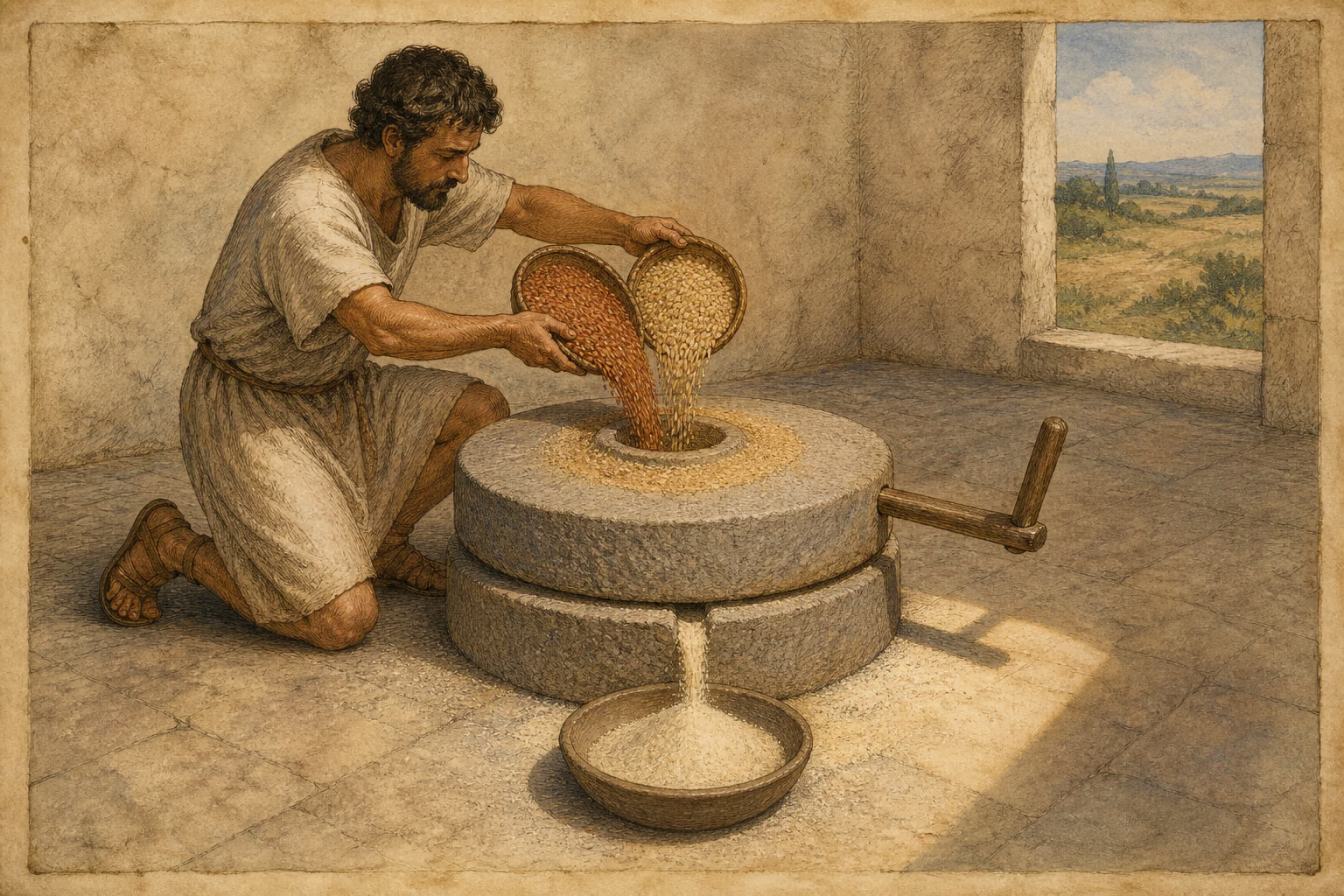
e siligine lautissimus panis pistrinarumque opera laudatissima. praecellit in Italia, si Campana Pisis natae misceatur. rufior illa, at Pisana candidior ponderosiorque cretacea. iustum est e grano Campanae, quam vocant castratam, e modio redire sextarios IV siliginis vel e gregali sine castratura sextarios V, praeterea floris semodium et cibarii, quod secundarium vocant, sextarios IV, furfuris sextarios totidem, e Pisana autem siliginis sextarios V, cetera paria sunt. Clusina Arretinaque etiamnum sextarios siliginis adiciunt, in reliquis pares. si vero pollinem facere libeat, XVI pondo panis redeunt et cibarii III furfurumque semodius. molae discrimine hoc constat. nam quae sicca moluntur, plus farinae reddunt, quae salsa aqua sparsa, candidiorem medullam, verum plus retinent in furfure. farinam a farre dictam nomine ipso apparet. siligineae farinae modius Gallicae XX libras panis reddit, Italicae duabus tribusve amplius in artopticio pane. nam furnaceis binas adiciunt libras in quocumque genere.
English · Bostock & Riley 1855–57
Winter wheat furnishes bread of the very finest quality and the most esteemed delicacies of the bakers. The best bread that is known in Italy is made from a mixture of Campanian winter wheat with that of Pisæ. The Campanian kind is of a redder colour, while the latter is white; when mixed with chalk, it is increased in weight. The proper proportion for the yield of Campanian wheat to the modius of grain is four sextarii of what is known as bolted flour; but when it is used in the rough and has not been bolted, then the yield should be five sextarii of flour. In addition to this, in either case there should be half a modius of white meal, with four sextarii of coarse meal, known as “seconds,” and the same quantity of bran. The Pisan wheat produces five sextarii of fine flour to the modius; in other respects it yields the same as that of Campania. The wheat of Clusium and Arretium gives another sextarius of fine flour, but the yield is similar to that of the kinds already mentioned in all other respects. If, however, as much of it as possible is converted into fine wheat meal, the modius will yield sixteen pounds weight of white bread, and three of seconds, with half a modius of bran. These differences, however, depend very materially upon the grinding; for when the grain is ground quite dry it produces more meal, but when sprinkled with salt water a whiter flour, though at the same time a greater quantity of bran. It is very evident that “farina,” the name we give to meal, is derived from “far.” A modius of meal made from Gallic winter wheat, yields twenty-two pounds of bread; while that of Italy, if made into bread baked in tins, will yield two or three pounds more. When the bread is baked in the oven, two pounds must be added in weight in either case.