LIBER XIX · CAPUT 9
FOUR KINDS OF FERULACEOUS PLANTS. HEMP
Latine · Mayhoff 1906
Reliqua sunt ferulacei generis, ceu feniculum anguibus, ut diximus, gratissimum, ad condienda plurima, cum inaruit, eique perquam similis thapsia, de qua diximus inter externos frutices; deinde utilissima funibus cannabis. seritur a favonio; quo densior est, eo tenerior. semen eius, cum est maturum, ab aequinoctio autumni destringitur et sole aut vento aut fumo siccatur. ipsa cannabis vellitur post vindemiam ac lucubrationibus decorticata purgatur. optima Alabandica, plagarum praecipue usibus. tria eius ibi genera: inprobatur cortici proximum aut medullae; laudatissima est e medio quae mesa vocatur. secunda Mylasea. quod ad proceritatem quidem attinet, Rosea agri Sabini arborum altitudinem aequat. ferulae duo genera in peregrinis fruticibus diximus. semen eius in Italia cibus est; conditur quippe duratque in urceis vel anni spatio. duo ex ea genera, caules et racemi. corymbian hanc vocant corymbosque quos condiunt.
English · Bostock & Riley 1855–57
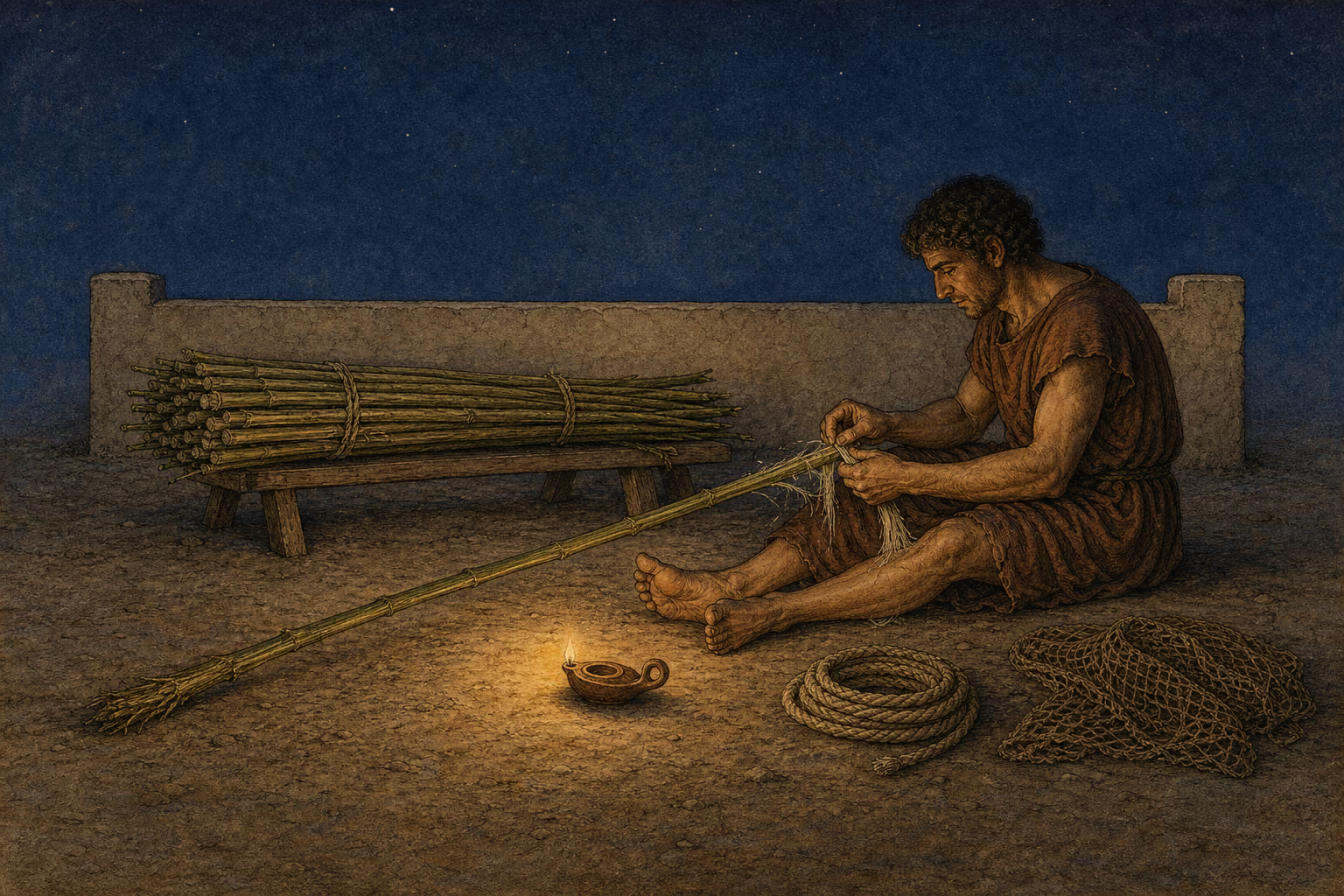
The other garden plants are of the ferulaceous kind, such as fennel, for instance, very grateful to serpents, as already stated, and used for numerous seasonings when dried; thapsia, too, which bears a close resemblance to fennel, and already mentioned by us when speaking of the exotic shrubs. Then, too, there is hemp, a plant remarkably useful for making ropes, and usually sown after the west winds have begun to prevail: the more thickly it is sown, the thinner are the stalks. The seed is gathered when ripe, just after the autumnal equinox, and is dried by the agency of the sun, the wind, or smoke. The hemp itself is plucked just after vintage-time, and is peeled and cleaned by the labourers at night.
The best hemp is that of Alabanda, which is used more particularly for making hunting-nets, and of which there are three varieties. The hemp which lies nearest the bark or the pith is the least valuable, while that which lies in the middle, and hence has the name of “mesa,” is the most esteemed. The hemp of Mylasa occupies the second rank. With reference to the size to which it grows, that of Rosea, in the Sabine territory, equals the trees in height.
We have already mentioned two kinds of fennel-giant when speaking of the exotic shrubs: the seed of it is used in Italy for food; the plant, too, admits of being preserved, and, if stored in earthen pots, will keep for a whole year. There are two parts of it that are used for this purpose, the upper stalks and the umbels of the plant. This kind of fennel is sometimes known by the name of “corymbia,” and the parts preserved are called “corymbi.”