LIBER II · CAPUT 106
PLACES WHICH ARE ALWAYS BURNING
Latine · Mayhoff 1906
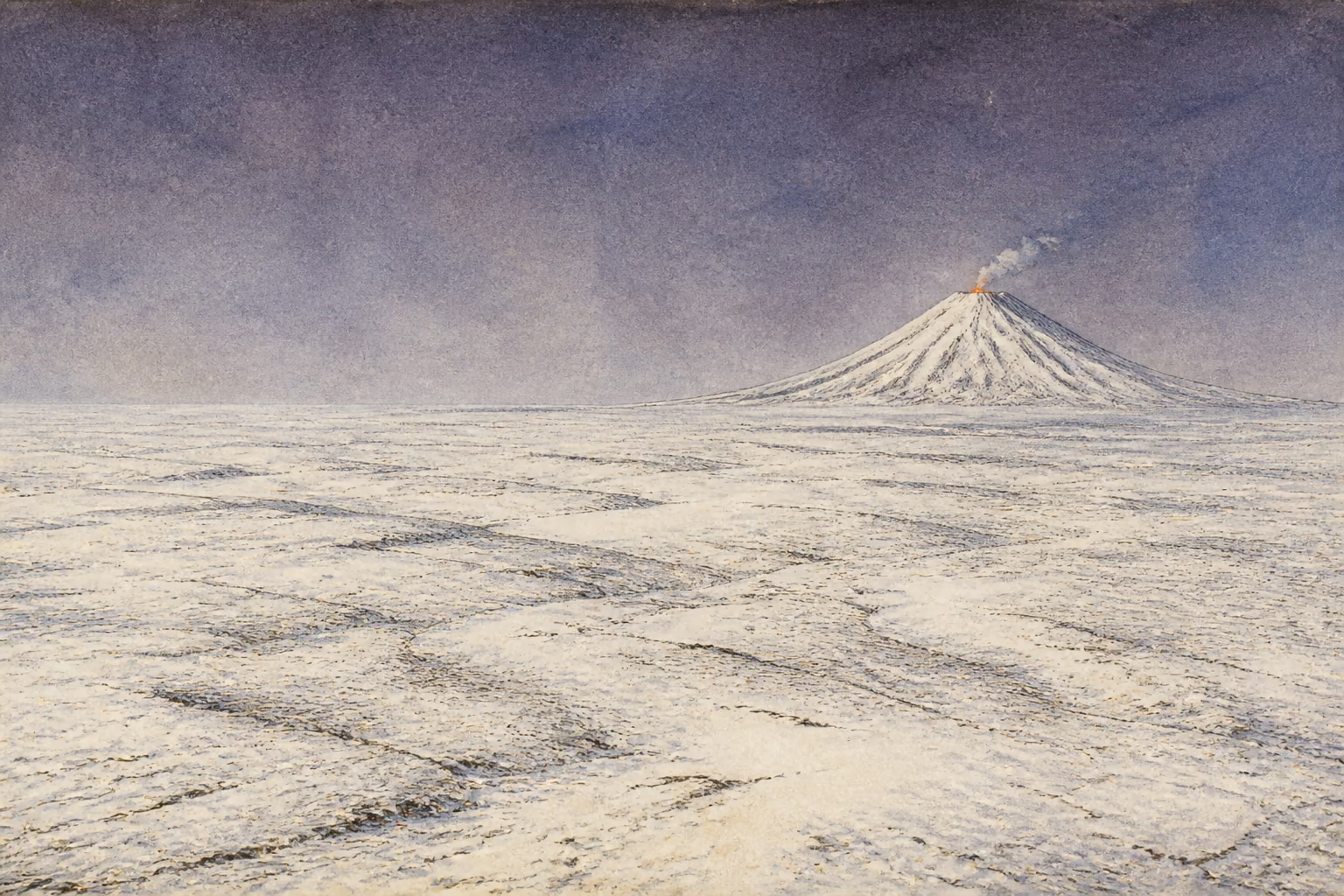
verum in montium miraculis ardet Aetna noctibus semper tantoque aevo materia ignium sufficit, nivalis hibernis temporibus egestumque cinerem pruinis operiens. nec in illo tantum natura saevit exustionem terris denuntians: flagrat in Phaselitis mons Chimaera, et quidem inmortali diebus ac noctibus flamma; ignem eius accendi aqua, extingui vero terra aut fimo Cnidius Ctesias tradit. eadem in Lycia Hephaesti montes taeda flammante tacti flagrant, et adeo ut lapides quoque rivorum et harenae in ipsis aquis ardeant, aliturque ignis ille pluviis; baculo si quis ex iis accenso traxerit sulcum, rivos ignium sequi narrant. flagrat in Bactris Cophanti noctibus vertex. flagrat in Medis et in Sittacene confinio Persidis, Susis quidem ad Turrim Albam XV caminis, maximo eorum et interdiu, campus. Babylone flagrate quadam veluti piscina iugeri magnitudine, Aethiopum iuxta Hesperu montem stellarum modo campi noctu; similiter in Megalopolitanorum agro. nam si intermisit ille iucundus frondemque densi supra se nemoris non adurens et iuxta gelidum fontem semper ardens Nymphaei crater, dira Apolloniatis suis portendit, ut Theopompus tradidit; augetur imbribus egeritque bitumen temperandum fonte illo ingustabili, et alias omni bitumine dilutius. sed quis haec miretur? in medio mari Hiera et Lipara insulae Aeoliae iuxta Italiam cum ipso mari arsere per aliquot dies sociali bello, donec legatio senatus piavit. maximo tamen ardet incendio Theon ochema dictum Aethiopum iugum torrentesque solis ardoribus flammas egerit. tot locis, tot incendiis rerum natura terras cremat!
English · Bostock & Riley 1855–57
Among the wonders of mountains there is Ætna, which always burns in the night, and for so long a period has always had materials for combustion, being in the winter buried in snow, and having the ashes which it has ejected covered with frost. Nor is it in this mountain alone that nature rages, threatening to consume the earth; in Phaselis, the mountain Chimæra burns, and indeed with a continual flame, day and night. Ctesias of Cnidos informs us, that this fire is kindled by water, while it is extinguished by earth and by hay. In the same country of Lycia, the mountains of Hephæstius, when touched with a flaming torch, burn so violently, that even the stones in the river and the sand burn, while actually in the water: this fire is also increased by rain. If a person makes furrows in the ground with a stick which has been kindled at this fire, it is said that a stream of flame will follow it. The summit of Cophantus, in Bactria, burns during the night; and this is the case in Media and at Sittacene, on the borders of Persia; likewise in Susa, at the White Tower, from fifteen apertures, the greatest of which also burns in the daytime. The plain of Babylon throws up flame from a place like a fish-pond, an acre in extent. Near Hesperium, a mountain of the Æthiopians, the fields shine in the night-time like stars; the same thing takes place in the territory of the Megalopolitani. This fire, however, is internal, mild, and not burning the foliage of a dense wood which is over it. There is also the crater of Nymphæum, which is always burning, in the neighbourhood of a cold fountain, and which, according to Theopompus, presages direful calamities to the inhabitants of Apollonia. It is increased by rain, and it throws out bitumen, which, becoming mixed with the fountain, renders it unfit to be tasted; it is, at other times, the weakest of all the bitumens. But what are these compared to other wonders? Hiera, one of the Æolian isles, in the middle of the sea, near Italy, together with the sea itself, during the Social war, burned for several days, until expiation was made, by a deputation from the senate. There is a hill in Æthiopia called Θεῶν ὄχημα, which burns with the greatest violence, throwing out flame that consumes everything, like the sun. In so many places, and with so many fires, does nature burn the earth!