LIBER II · CAPUT 107
WONDERS OF FIRE ALONE
Latine · Mayhoff 1906
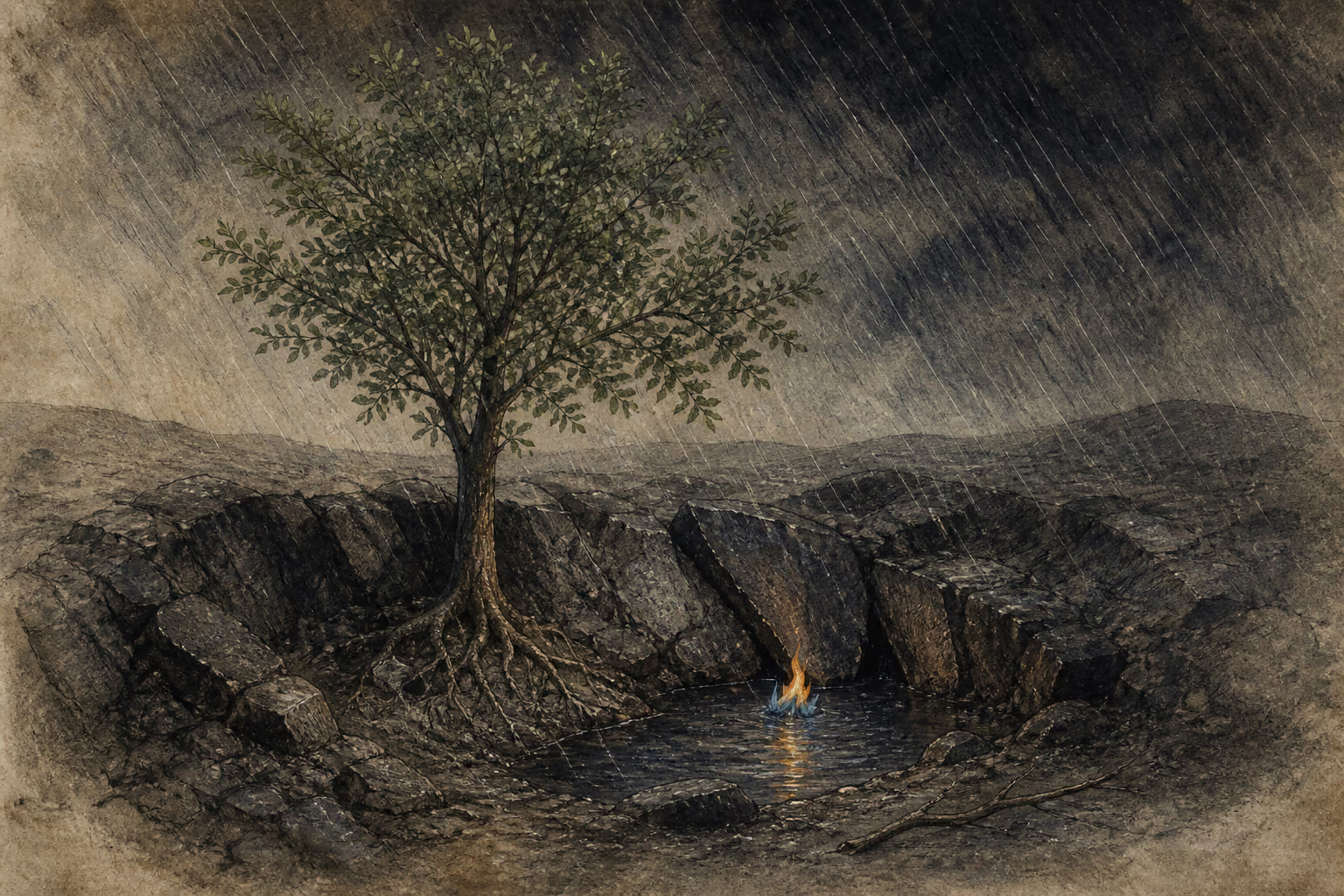
Praeterea cum sit huius unius elementi ratio fecunda seque ipsa pariat et minimis crescat a scintillis, quid fore putandum est in tot rogis terrae quae est illa natura, quae voracitatem in toto mundo avidissimam sine damno sui pascit? addantur his sidera innumera ingensque sol, addantur humani ignes et lapidum quoque insiti naturae attritique inter se ligni, iam nubium et origines fulminum: excedet profecto miracula omnia ullum diem fuisse, quo non cuncta conflagrarent, cum specula quoque concava adversa solis radiis facilius etiam accendant quam ullus alius ignis. quid quod innumerabiles parvi, sed naturales, scatent? in Nymphaeo exit e petra flamma, quae pluviis accenditur; exit et ad aquas Scantias, haec quidem invalida, cum transit, nec longe in alia durans materia — viret aeterno hunc fontem igneum contegens fraxinus —; exit in Mutinensi agro statis Volcano diebus. reperitur apud auctores subiectis Ariciae arvis, si carbo deciderit, ardere terram, in agro Sabino et Sidicino unctum flagrare lapidem, in Sallentino oppido Gnatia inposito ligno in saxum quoddam ibi sacrum protinus flammam existere, in Laciniae Iunonis ara sub diu sita cinerem inmobilem esse perflantibus undique procellis; quin et repentinos existere ignes et in aquis et in corporibus, etiam humanis: Trasimenum lacum arsisse totum; Servio Tullio dormienti in pueritia ex capite flammam emicuisse, L. Marcio in Hispania interemptis Scipionibus contionanti et milites ad ultionem exhortanti arsisse simili modo Valerius Antias narrat. plura mox et distinctius; nunc enim quadam mixtura rerum omnium exhibentur miracula. verum egressa mens interpretationem naturae festinat legentium animos per totum orbem veluti manu ducere.
English · Bostock & Riley 1855–57
But since this one element is of so prolific a nature as to produce itself, and to increase from the smallest spark, what must we suppose will be the effect of all those funeral piles of the earth? What must be the nature of that thing, which, in all parts of the world, supplies this most greedy voracity without destroying itself? To these fires must be added those innumerable stars and the great sun itself. There are also the fires made by men, those which are innate in certain kinds of stones, those produced by the friction of wood, and those in the clouds, which give rise to lightning. It really exceeds all other wonders, that one single day should pass in which everything is not consumed, especially when we reflect, that concave mirrors placed opposite to the sun’s rays produce flame more readily than any other kind of fire; and that numerous small but natural fires abound everywhere. In Nymphæum there issues from a rock a fire which is kindled by rain; it also issues from the waters of the Scantia. This indeed is a feeble flame, since it passes off, remaining only a short time on any body to which it is applied: an ash tree, which overshadows this fiery spring, remains always green. In the territory of Mutina fire issues from the ground on the days that are consecrated to Vulcan. It is stated by some authors, that if a burning body falls on the fields below Aricia, the ground is set on fire; and that the stones in the territory of the Sabines and of the Sidicini, if they be oiled, burn with flame. In Egnatia, a town of Salentinum, there is a sacred stone, upon which, when wood is placed, flame immediately bursts forth. In the altar of Juno Lacinia, which is in the open air, the ashes remain unmoved, although the winds may be blowing from all quarters.
It appears also that there are sudden fires both in waters and even in the human body; that the whole of Lake Thrasymenus was on fire; that when Servius Tullius, while a child, was sleeping, flame darted out from his head; and Valerius Antias informs us, that the same flame appeared about L. Marcius, when he was pronouncing the funeral oration over the Scipios, who were killed in Spain; and exhorting the soldiers to avenge their death. I shall presently mention more facts of this nature, and in a more distinct manner; in this place these wonders are mixed up with other subjects. But my mind, having carried me beyond the mere interpretation of nature, is anxious to lead, as it were by the hand, the thoughts of my readers over the whole globe.