LIBER II · CAPUT 14
OF THE MOTION OF THE MOON
Latine · Mayhoff 1906
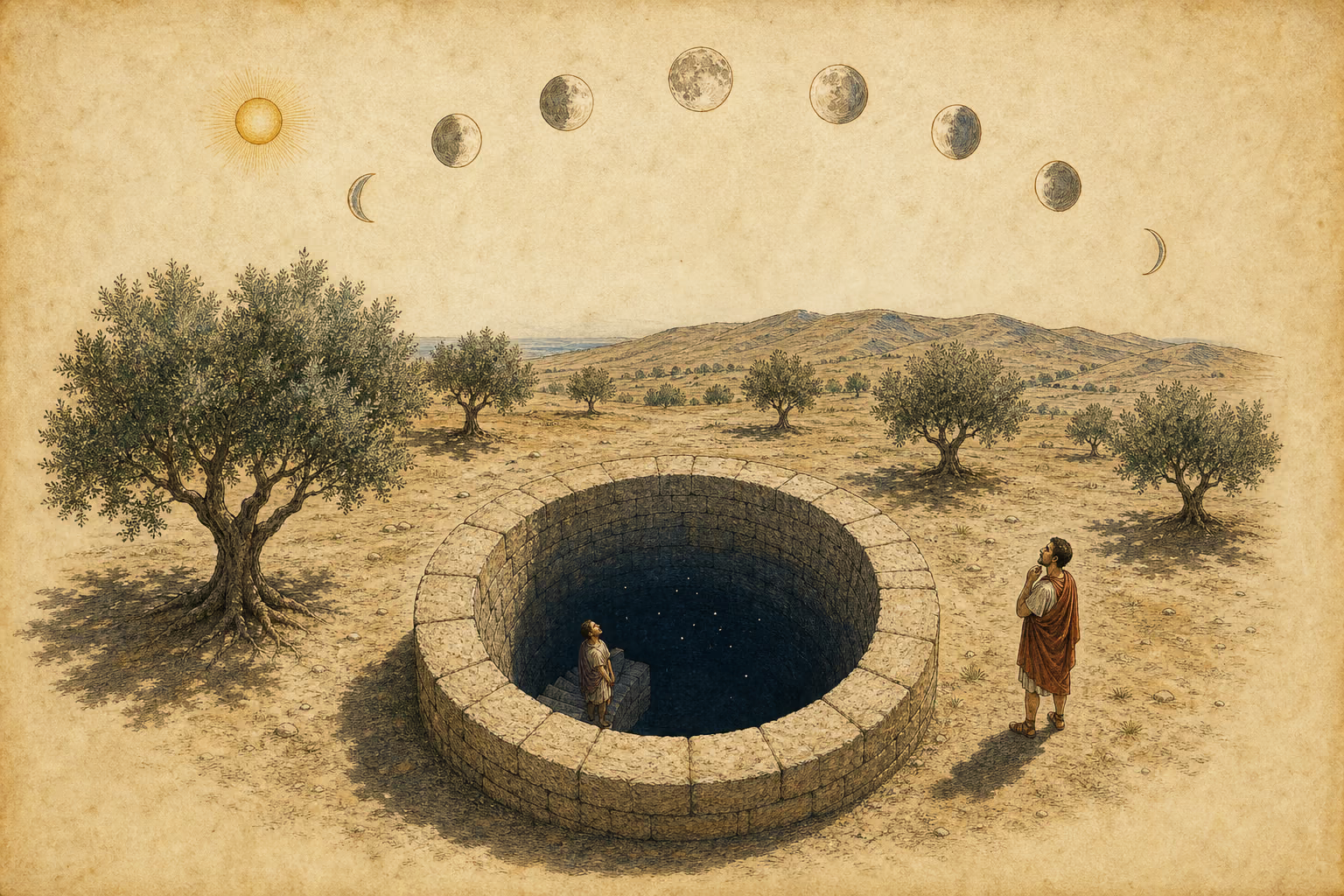
Lunam semper aversis a sole cornibus, si crescat, ortus spectare, si minuatur, occasus, haut dubium est; lucere dodrantes semuncias horarum ab secunda adicientem usque ad plenum orbem detrahentemque in deminutionem; intra XIIII autem partes solis semper occultam esse. quo argumento amplior errantium stellarum quam lunae magnitude colligitur, quando illae et a septenis interdum partibus emergant. sed altitudo cogit minores videri, sicut adfixas caelo solis fulgor interdiu non cerni, cum aeque ac noctu luceant idque manifestum fiat defectu solis et praealtis puteis.
English · Bostock & Riley 1855–57
It is certain that the moon, having her horns always turned from the sun, when she is waxing, looks towards the east; when she is waning, towards the west. Also, that, from the second day after the change, she adds 47 1 ⁄ 2 minutes each day, until she is full, and again decreases at the same rate, and that she always becomes invisible when she is within 14 degrees of the sun. This is an argument of the greater size of the planets than of the moon, since these emerge when they are at the distance of 7 degrees only. But their altitude causes them to appear much smaller, as we observe that, during the day, the brightness of the sun prevents those bodies from being seen which are fixed in the firmament, although they shine then as well as in the night: that this is the case is proved by eclipses, and by descending into very deep wells.