LIBER II · CAPUT 13
ON THE RECURRENCE OF THE ECLIPSES OF THE SUN AND THE MOON
Latine · Mayhoff 1906
Defectus CCXXIII mensibus redire in suos orbes certum est,solis defectus non nisi novissima primave fieri luna, quod vocant coitum, lunae autem non nisi plena, semperque citra quam proxime fuerint; omnibus autem annis fieri utriusque sideris defectus statis diebus horisque sub terra nec tamen, cum superne fiant, ubique cerni, aliquando propter nubila, saepius globo terrae obstante convexitatibus mundi. intra ducentos annos Hipparchi sagacitate compertum est et lunae defectum aliquando quinto mense a priore fieri, solis vero septimo, eundem bis in XXX diebus super terras occultari, sed ab aliis hoc cerni, quaeque sunt in hoc miraculo maxime mira, cum conveniat umbra terrae lunam hebetari, nunc ab occasus parte hoc ei accidere, nunc ab exortus, quanam ratione, cum solis exortu umbra illa hebetatrix sub terra esse debeat, semel iam accident ut in occasu luna deficeret utroque super terram conspicuo sidere. nam ut XV diebus utrumque sidus quaereretur, et nostro aevo accidit imperatoribus Vespasianis patre III. filio consulibus.
English · Bostock & Riley 1855–57
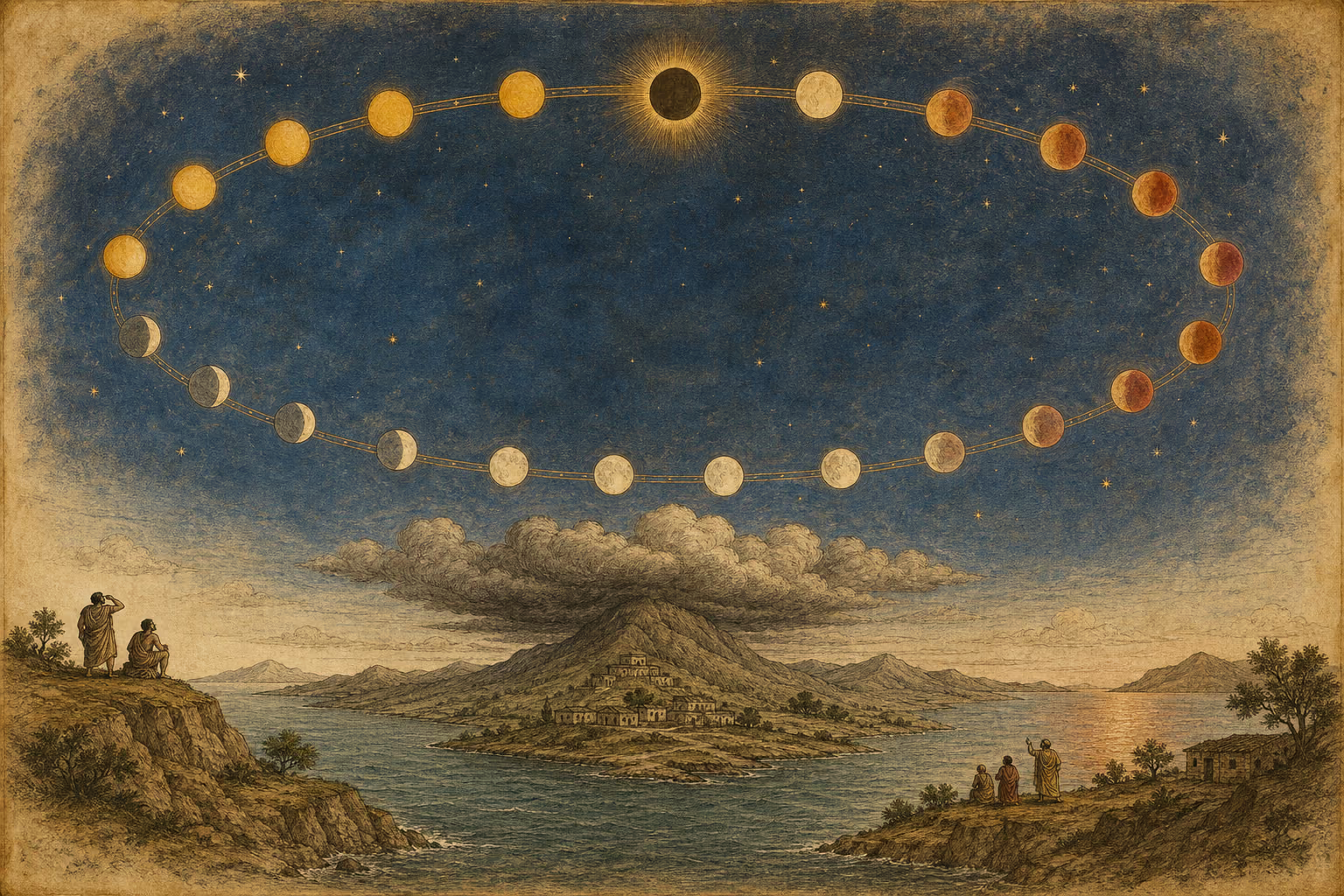
It is ascertained that the eclipses complete their whole revolution in the space of 223 months, that the eclipse of the sun takes place only at the conclusion or the commencement of a lunation, which is termed conjunction, while an eclipse of the moon takes place only when she is at the full, and is always a little farther advanced than the preceding eclipse. Now there are eclipses of both these stars in every year, which take place below the earth, at stated days and hours; and when they are above it they are not always visible, sometimes on account of the clouds, but more frequently, from the globe of the earth being opposed to the vault of the heavens. It was discovered two hundred years ago, by the sagacity of Hipparchus, that the moon is sometimes eclipsed after an interval of five months, and the sun after an interval of seven; also, that he becomes invisible, while above the horizon, twice in every thirty days, but that this is seen in different places at different times. But the most wonderful circumstance is, that while it is admitted that the moon is darkened by the shadow of the earth, this occurs at one time on its western, and at another time on its eastern side. And farther, that although, after the rising of the sun, that darkening shadow ought to be below the earth, yet it has once happened, that the moon has been eclipsed in the west, while both the luminaries have been above the horizon. And as to their both being invisible in the space of fifteen days, this very thing happened while the Vespasians were emperors, the father being consul for the third time, and the son for the second.