LIBER II · CAPUT 12
AN ACCOUNT OF THE OBSERVATIONS THAT HAVE BEEN MADE ON THE HEAVENS BY DIFFERENT INDIVIDUALS
Latine · Mayhoff 1906
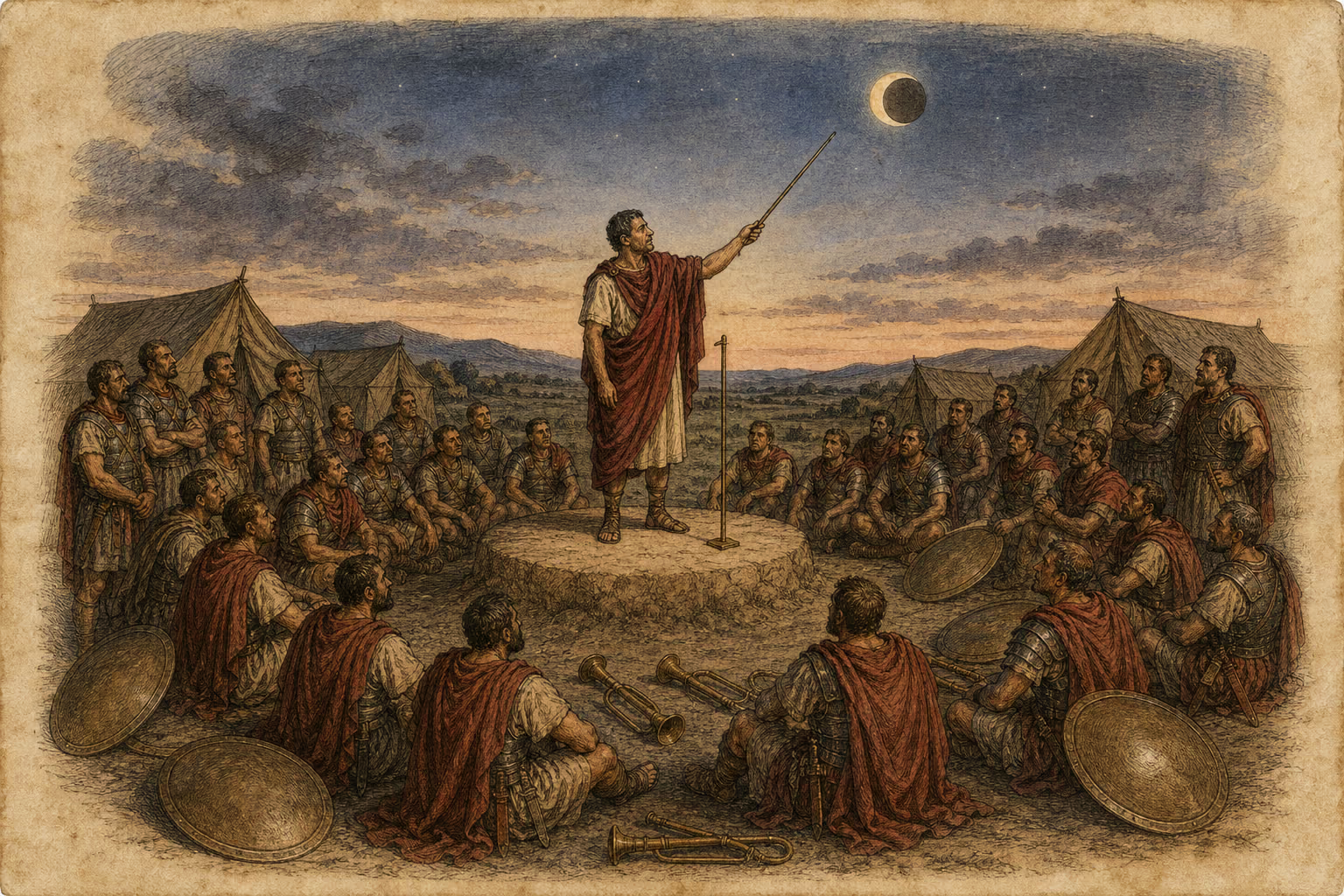
Et rationem quidem defectus utriusque primus Romani genesis in vulgum extulit Sulpicius Gallus, qui consul cum M. Marcello fuit, sed tum tribunus militum, sollicitudine exercitu liberato pridie quam Perses rex superatus a Paulo est in concionem ab imperatore productus ad praedicendam eclipsim, mox et composito volumine. apud Graecos autem investigavit primus omnium Thales Milesius Olympiadis XLVIII anno quarto praedicto solis defectu, qui Alyatte rege factus est urbis conditae anno CLXX. post eos utriusque sideris cursum in sexcentos annos praececinit Hipparchus, menses gentium diesque et horas ac situs locorum et visus populorum complexus, aevo teste baut alio modo quam consiliorum naturae particeps. viri ingentes supraque mortalia, tantorum numinum lege deprehensa et misera hominum mente iam soluta, in defectibus scelera aut mortem aliquam siderum pavente —quo in metu fuisse Stesichori et Pindari vatum sublimia ora palam est deliquio solis—aut in luna veneficia arguente mortalitate et ob id crepitu dissono auxiliante —quo pavore ignarus causae Nicias Atheniensium imperator veritus classem portu educere opes eorum adflixit —: macte ingenio este, caeli interpretes rerumque naturae capaces, argumenti repertores, quo deos hominesque vicistis! quis enim haec cernens et statos siderum (quoniam ita appellate placuit) labores non suae necessitati mortales genitos ignoscat?
Nunc confessa de iisdem breviter atque capitulatim attingam ratione admodum necessariis locis strictimque reddita, nam neque instituti operis talis argumentatio est neque omnium rerum afferri posse causas minus mirum est quam constare in aliquis.
English · Bostock & Riley 1855–57
The first among the Romans, who explained to the people at large the cause of the two kinds of eclipses, was Sulpicius Gallus, who was consul along with Marcellus; and when he was only a military tribune he relieved the army from great anxiety the day before king Perseus was conquered by Paulus; for he was brought by the general into a public assembly, in order to predict the eclipse, of which he afterwards gave an account in a separate treatise. Among the Greeks, Thales the Milesian first investigated the subject, in the fourth year of the forty-eighth olympiad, predicting the eclipse of the sun which took place in the reign of Alyattes, in the 170th year of the City. After them Hipparchus calculated the course of both these stars for the term of 600 years, including the months, days, and hours, the situation of the different places and the aspects adapted to each of them; all this has been confirmed by experience, and could only be acquired by partaking, as it were, in the councils of nature. These were indeed great men, superior to ordinary mortals, who having discovered the laws of these divine bodies, relieved the miserable mind of man from the fear which he had of eclipses, as foretelling some dreadful events or the destruction of the stars. This alarm is freely acknowledged in the sublime strains of Stesichorus and Pindar, as being produced by an eclipse of the sun. And with respect to the eclipse of the moon, mortals impute it to witchcraft, and therefore endeavour to aid her by producing discordant sounds. In consequence of this kind of terror it was that Nicias, the general of the Athenians, being ignorant of the cause, was afraid to lead out the fleet, and brought great distress on his troops. Hail to your genius, ye interpreters of heaven! ye who comprehend the nature of things, and who have discovered a mode of reasoning by which ye have conquered both gods and men! For who is there, in observing these things and seeing the labours which the stars are compelled to undergo (since we have chosen to apply this term to them), that would not cheerfully submit to his fate, as one born to die? I shall now, in a brief and summary manner, touch on those points in which we are agreed, giving the reasons where it is necessary to do so; for this is not a work of profound argument, nor is it less wonderful to be able to suggest a probable cause for everything, than to give a complete account of a few of them only.